A typical opera, in general, consists of 3 or 4 acts. The first act is usually a kind of introduction where key players are introduced. It’s also a chance to get a sneak peak at sinister characters that may come back to play a role at a later time.
Act 2 involves some kind of significant conflict or adversity. Act 3 is about fallout, death, despair, – the consequences of Act 2. And Act 4 is reserved for resolution/reconciliation.
The last 9 weeks have often felt like an opera, sometimes comic and, at times, verging on the tragic.
Chile is all of these things and more. I had a sense of this, even as a tangential participant in the planning of the itinerary. My previous experiences with humping across the Middle East and Europe told me that the distances involved and the ambitious travel schedule would be a test of our endurance.
Our first month in Santiago was our Act 1. We had a chance to get familiar with the language and culture before setting out. We also got a taste of the forces at play here – the Yin and the Yang of Chilean society.
Act 2 was our time spent in the North, picking up Howie, and the prep for the W trek in Patagonia.
The indescribable experience in the South – our week of Agony and Ecstasy – was a life highlight, as it is for almost everyone who survives it. Act 3 for sure.
And the last 2 weeks of our trip, Act 4, travelling through Wine Country, and driving up along the Pacific Coast to the Elqui Valley, has been a journey that has helped to heal our broken bodies and wounded spirits.
The aches and pains and bruises of the W Trek are mostly healed. However, all three of us dream nightly of horrors on the trail, and imagined near-death experiences, despite the warm embrace of copious amounts of sun-kissed fermented Chilean beverages.
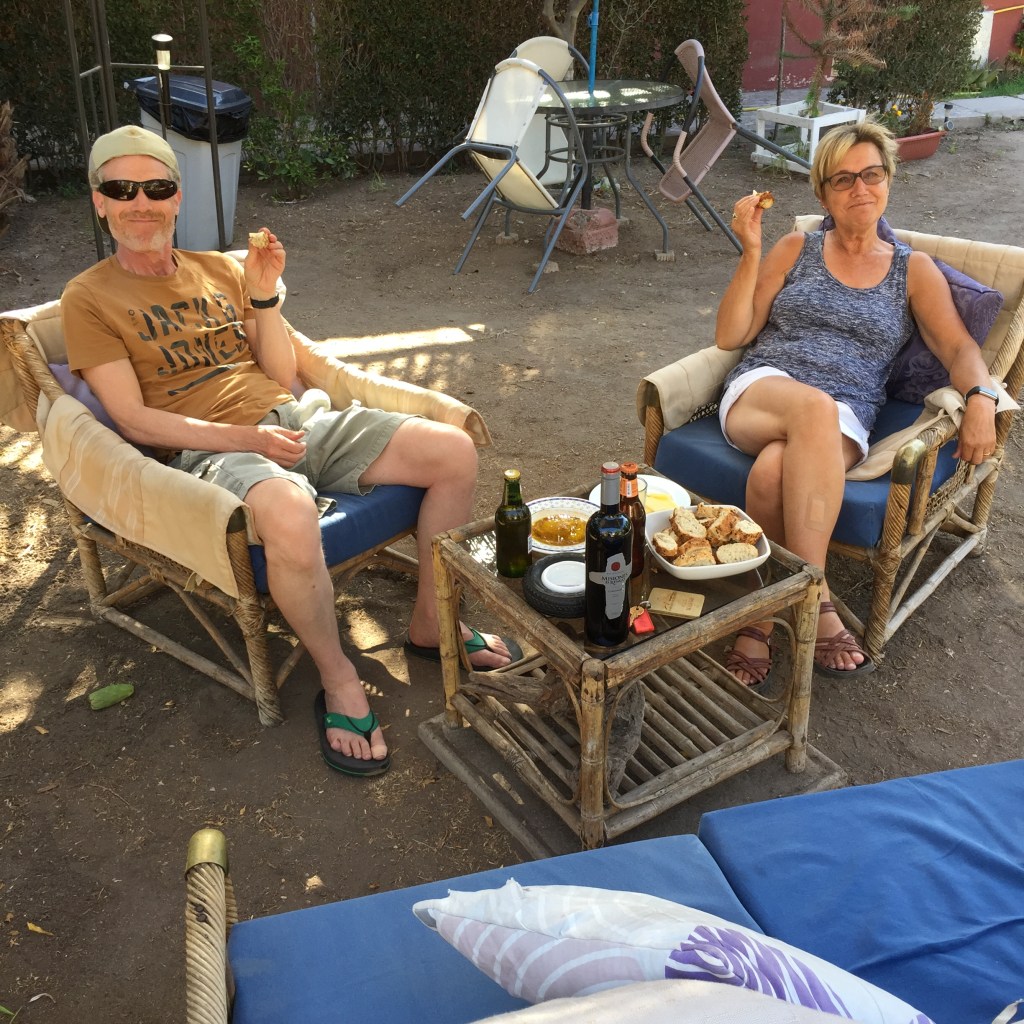
Being in the Elqui Valley is very much a dreamlike experience. We arrived in Vicuna a couple of days ago, happy to leave the better known Fort-Lauderdale-like La Serena. Vicuna is a genuine agricultural pueblo, with a slow and friendly vibe. Tourist season has just ended here, so the locals were in the process of reclaiming their town. We stayed at Hostal Michel, which was what paradise would look like, if it was run by the Swiss. High walls and multiple caged entrances secured by locks, chains, and security cameras on the perimeter. On the inside, and oasis of fruit trees, local plants, restful sitting areas, and more CCTV.
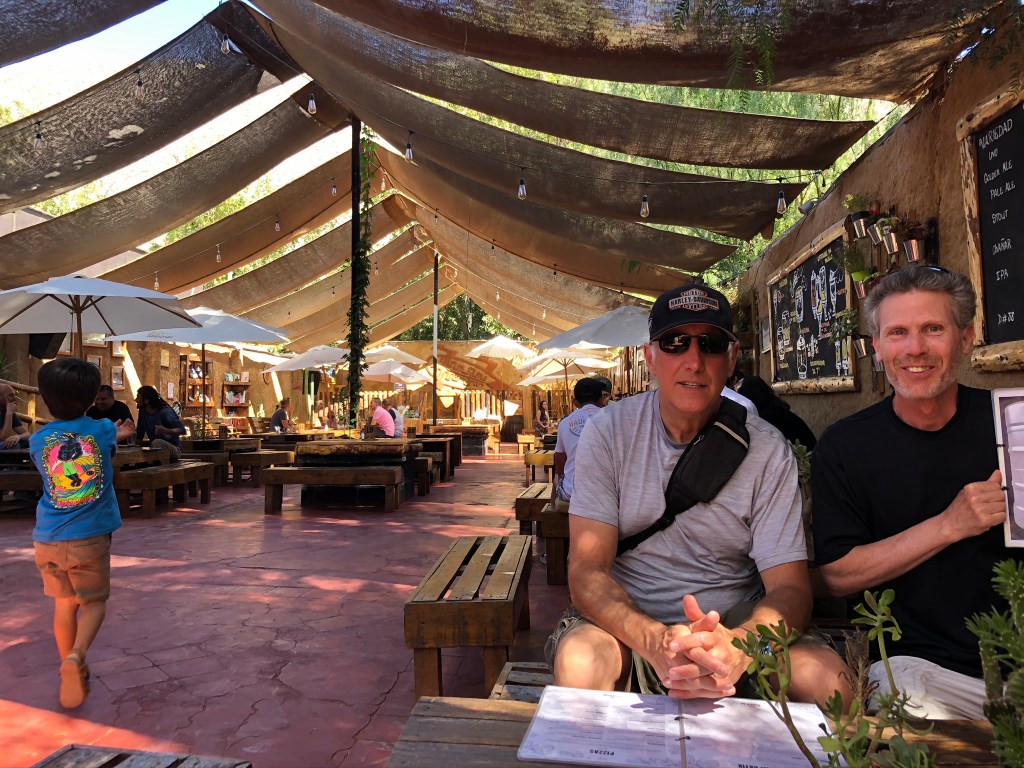
Our vehicle was locked inside Gate #3, cell block B. When Truus announced that we wanted to leave to visit a local craft brewery, and asked if Frauline Lila could open the door, she looked us straight in the eye and said “No… no drinking and driving. Absolutely not, I will not let you go.” We convinced her that we would be having Truus as a DD, she relented, but not without another strern warning.
The next day, we spent the day driving through the Valley. We stopped at an artisanal “Pisco” distillery. Pisco is the National Spirit of Chile. It is not unlike the Chileanos – strong and underpaid. We lucked into a great tour of the place, and took the winding road back to Vicuna feeling slightly buzzed and quite contented, with a sober Howie at the wheel.
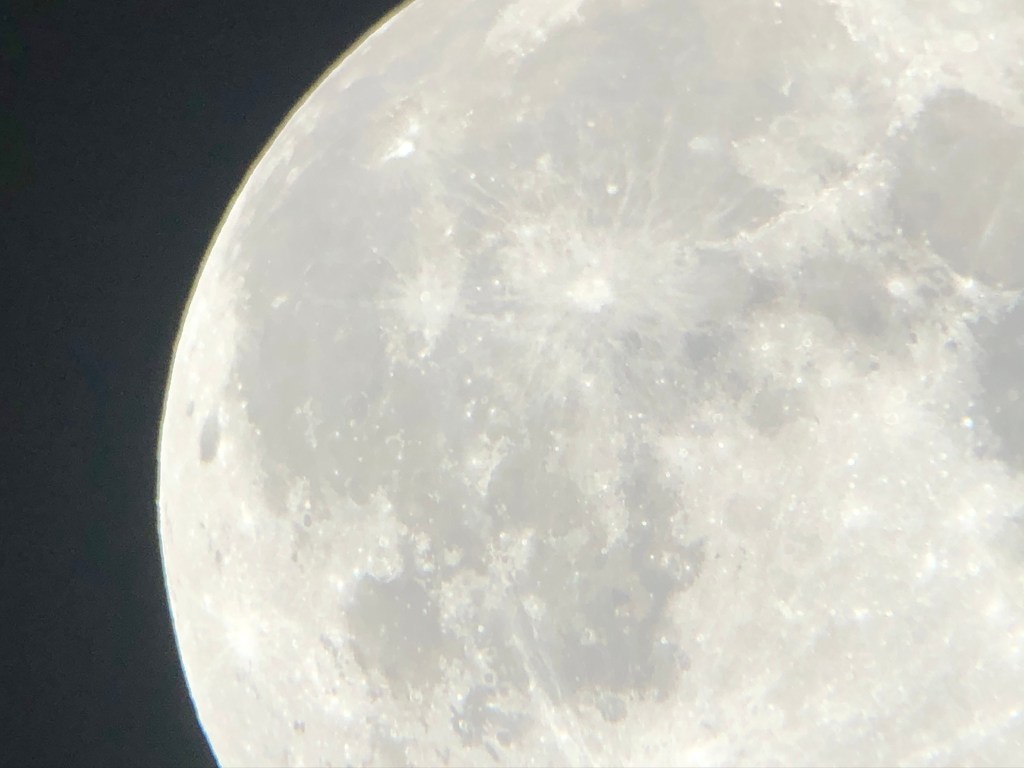
Our final adventure in Vicuna was a midnight “Star Gazing” tour at one of the many observatories in the Valley. The night skies here are some of the clearest in the world. The astrophysical/astronomical scientific community in Chile can’t get money from the government to fund research. However, foreign governments and organizations pay for the construction of high-powered telescopes here in the Valley. Chile lends them the sky, and the partnership has led to many very important discoveries.
Our tour was very detailed. We were able to view constellations, stars, and nebula through various telescopes. We were shown pictures and videos of astronomical events and given a 101 on our universe. All very fascinating stuff. Being in Patagonia gives you a sense of how small you are versus the natural forces of the earth. Being in the Elqui Valley Mamalluca Observatory reminds you how our entire planet is but a spec of cosmic dust in the infinite expanse that is the Multiverse.
So it ends as it began. The trip to Chile started with a dream. We wanted to see South America and learn Espanol. We had a primal instinct that Chile was a place of great interest and complexity. This has proven to be an understatement, to say the least. But at its heart was the curiosity to explore uncharted ground, and a willingness to do the hard stuff to turn the unknown into the familiar. Just like all forms of discovery, the most profound revelation is not what you have learned, but the knowledge of how much more there remains to explore.
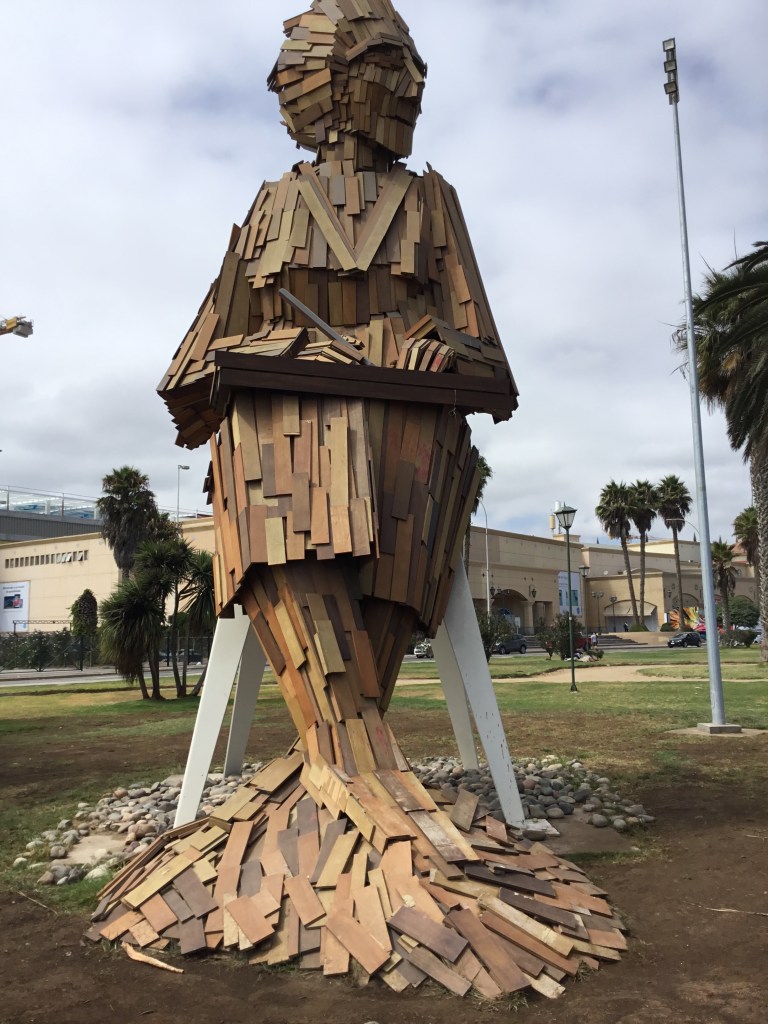
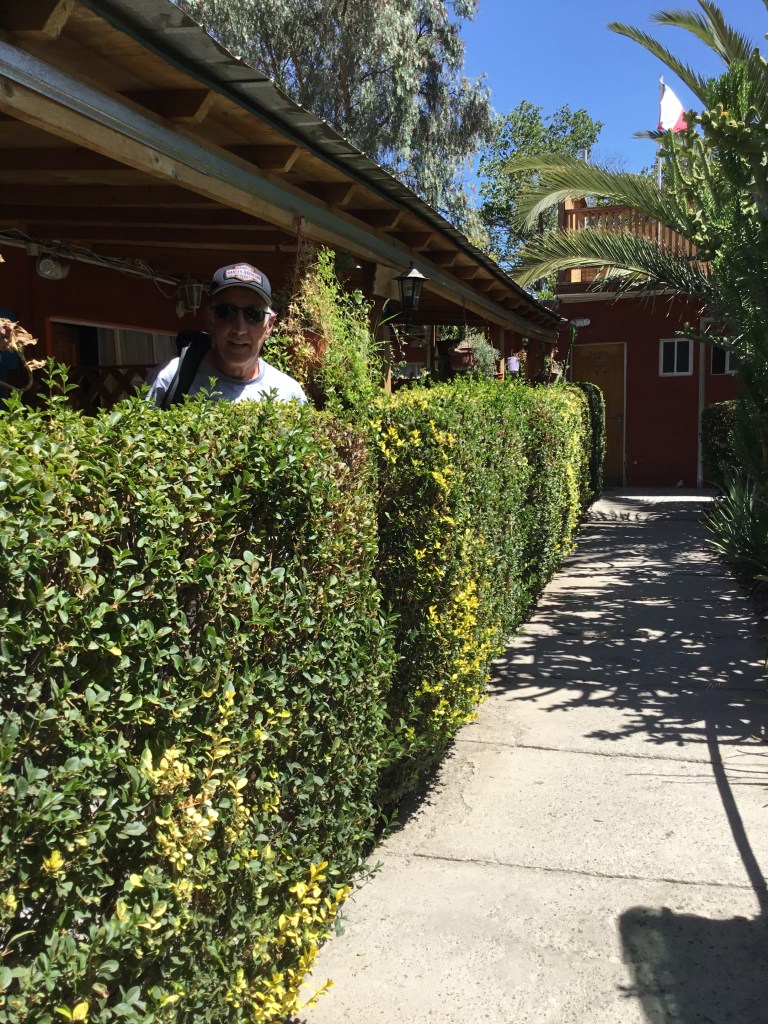
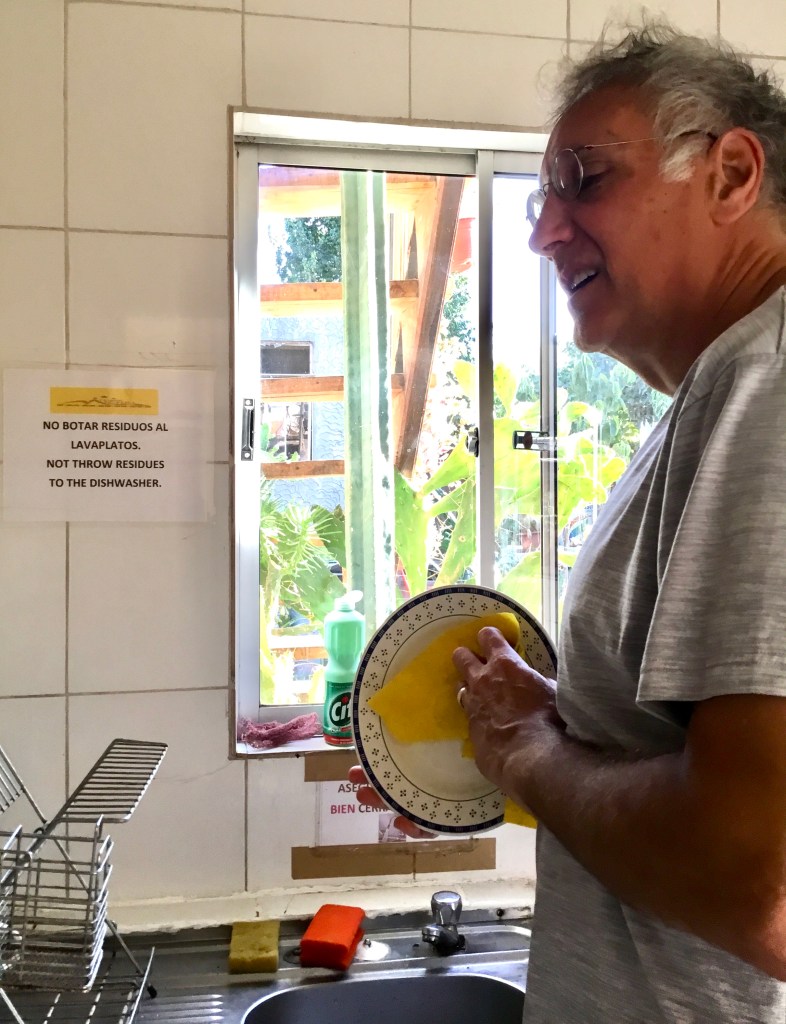
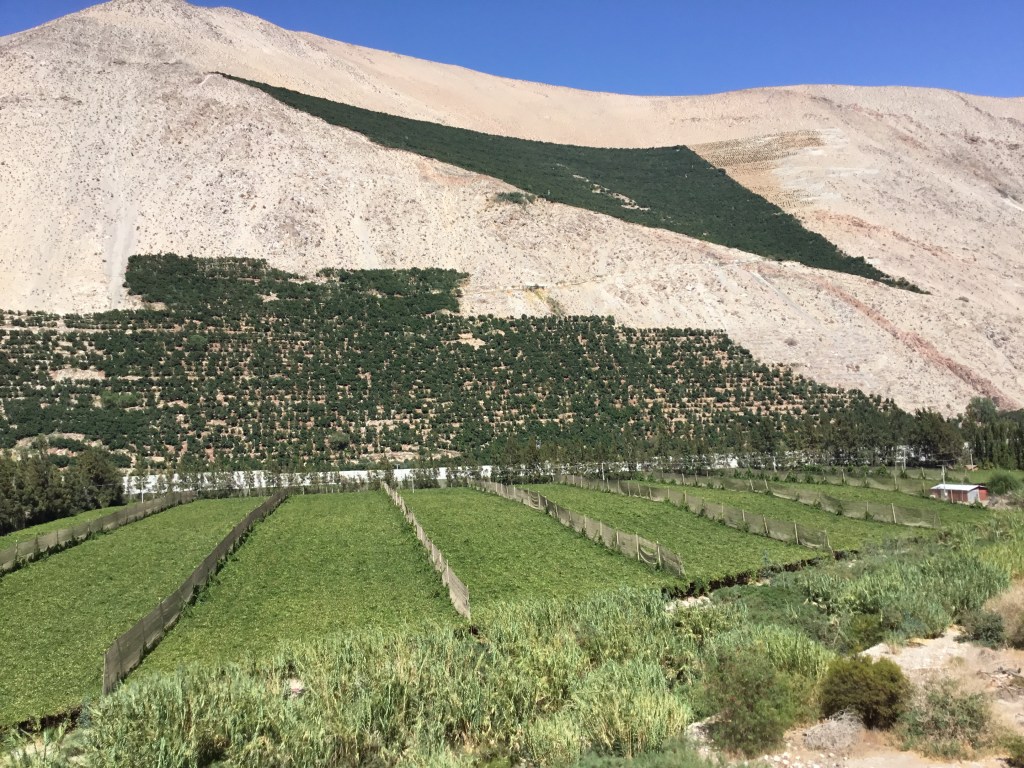
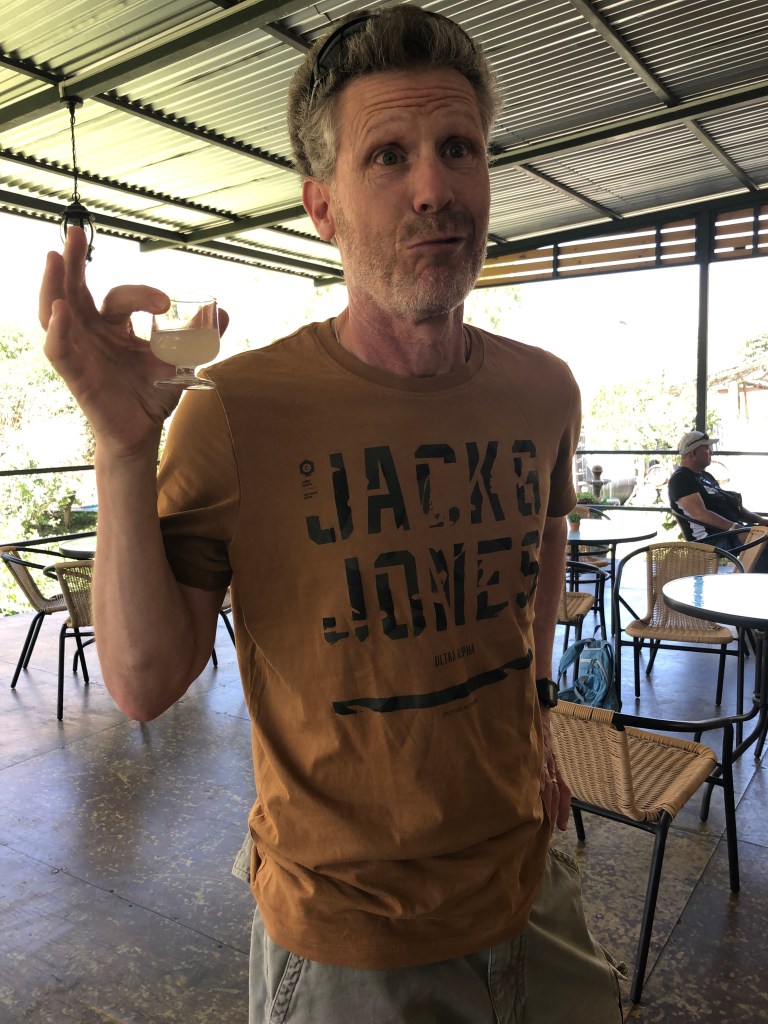
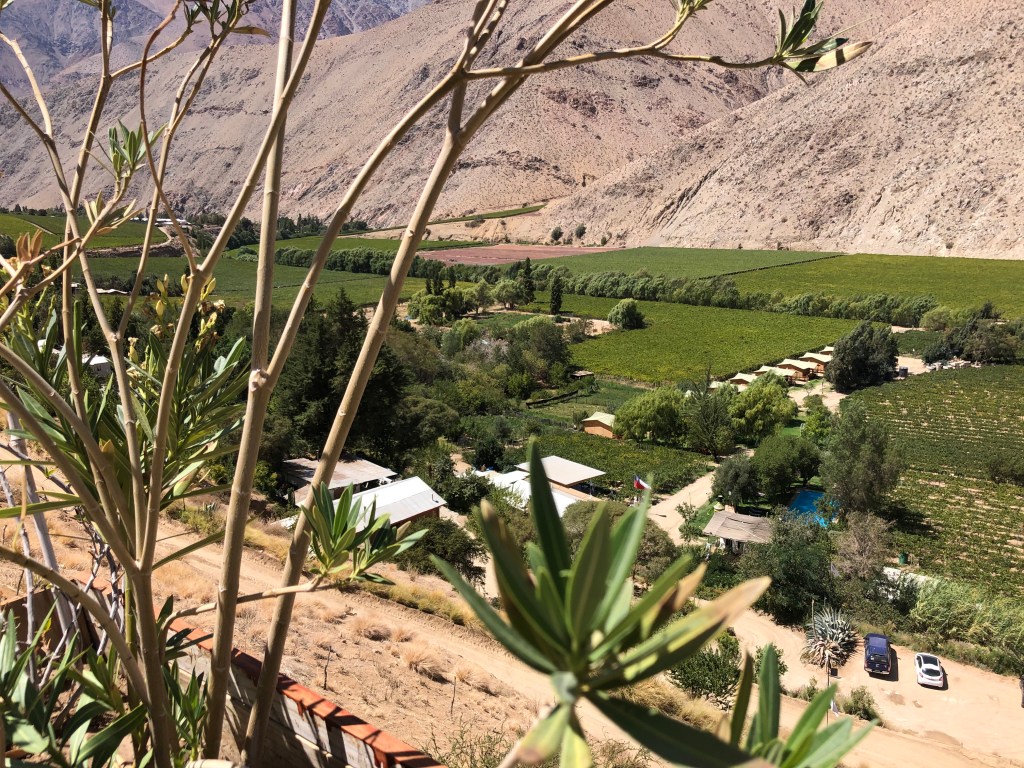
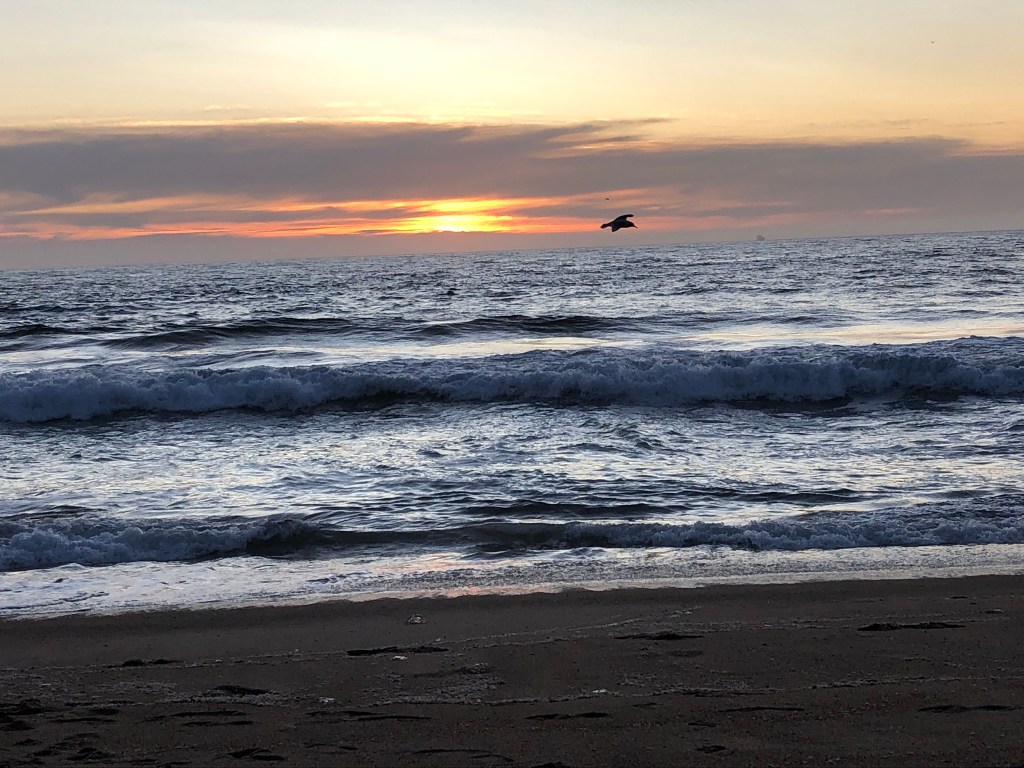
Statue of gabriela mistral in la serenaHowiecomingoutofhisPrivatedomainathostalmichelStill Enjoying hostel michelYes hostel michel came with a dishwasherthe boys are excited: beer tasting in Elqui valleyVineyards in elqui valleyAn other tasting: pisco sour! It does taste great!!DistilerLía pisco artesanalStargazing at observatorio mamalluca, soper moon!Sunset in chile!
As I was packing up the SUV getting ready to leave our little-slice-of-heaven in Santa Cruz, one of our fellow residents in the compound walked by the vehicle and stopped by to chat. It was one of those, “Where are you heading? What’s next?” conversations that travelers like to share.
The previous evening, I had engaged this gentleman and his wife in an animated Spanish conversation (“animated” being the operative word – lots of hand and foot gestures on my part to be able to communicate) around and about the fig tree between our apartment and theirs.
That morning, I mentioned, we were heading to Vina Del Mar and Valparaiso. “Vina Del Mar is nice, very peaceful”, he said, “but watch yourself in Valparaiso”. I nodded solemnly, saying that I understood. The seat of the Chilean government is in Valparisso. It is the Wolf’s Lair, and, not coincidentally, also the beating heart of the social revolution movement that is underway in Chile. Everyone in Chile knows about Valparaiso. The government and the establishment have successfully demonized the place. Most Chileans know to stay away from Valparaiso, and encourage others to do the same.
When the spouse of my well-intentioned travel amigo wandered over to pick up on the conversation, she offered the following advice, “Valparaiso is full of delinquents and malcontents. It is very dangerous, as most of these people will try to rob you – take care!”
The approach of the Chilean government has been to play the long game. The protest movement started in the last months of 2019. Under fierce pressure and civic disobedience, the government reluctantly agreed to hold a plebiscite as to whether the people of Chile want to approve changing the National Constitution. Tactically, this was done to forestall a collapse of social order. The vote is scheduled to take place in May 2020.
In the meantime, the government has tried everything possible to disrupt the daily lives of people across the country under the auspices of “safety” and “order”. It started with the enforcement of a general curfew. Since the curfew was lifted, many “emergency” measures have remained in place. Banks are only open 4 hours per day. ATM currency withdrawals have a daily cap, and availability/hours are severely restricted. Some Metro subway stations in Santiago have been closed since riots occurred back in December. Street lights in big cities that were damaged months ago haven’t been repaired. Traffic at these intersections is directed by junkies and vagrants wearing makeshift fluorescent orange vests, who are tipped by grateful motorists and pedestrians as they pass by. Access to many public spaces and buildings has been severely restricted.
The Government’s playbook is to have the general population associate all of these bad things with the protest movement, in order to dissuade popular support for a “Yes” alternative. The message is ‘Better-the-devil-that-you-know’, than the potential for Venezuela type chaos if Chile votes to go down the “social justice road”. There has also been a concerted propaganda campaign to use fear and people’s natural inclination for order to plant doubt in the minds of the middle class. Sad to say, but it may yet prove to be effective.
No matter what the government does, they’ve got their hands full in Valparaiso. The city has a long and rich history of defiance. The Chilean Navy is based in Valparaiso. We walked by lots of military and police buildings across the city. As we passed the Royal Naval base, a group of commandos, locked and loaded in full combat gear, were boarding a troop transport bus. The government was expecting trouble in the city that evening, and wanted to be ready to respond.
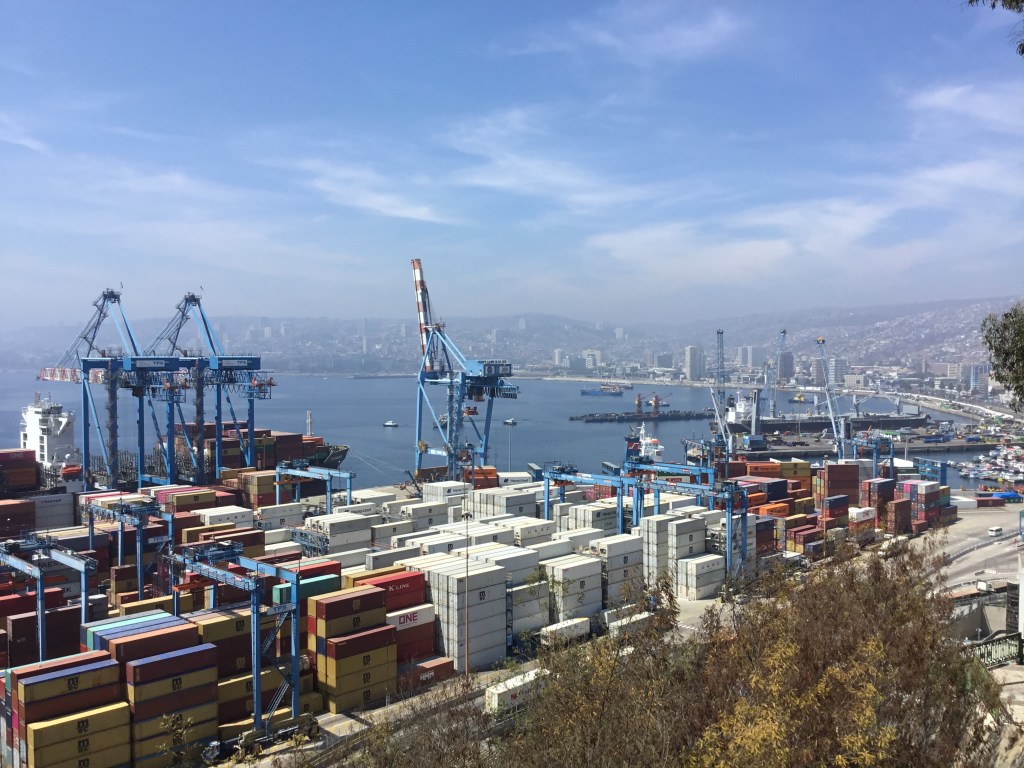
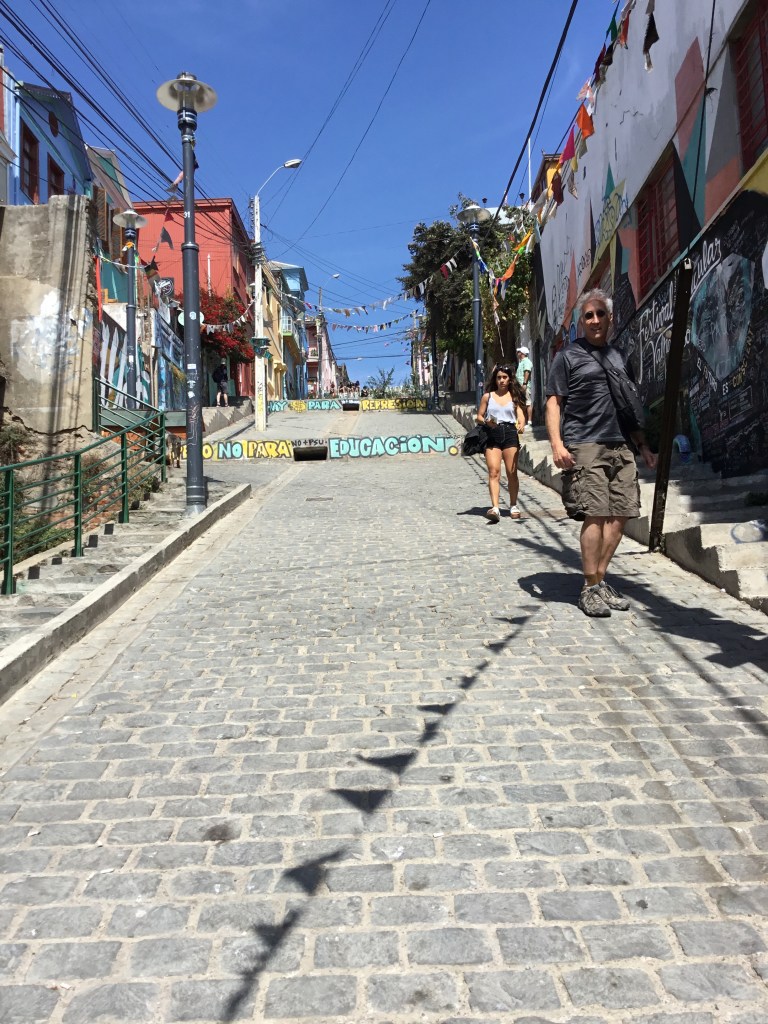
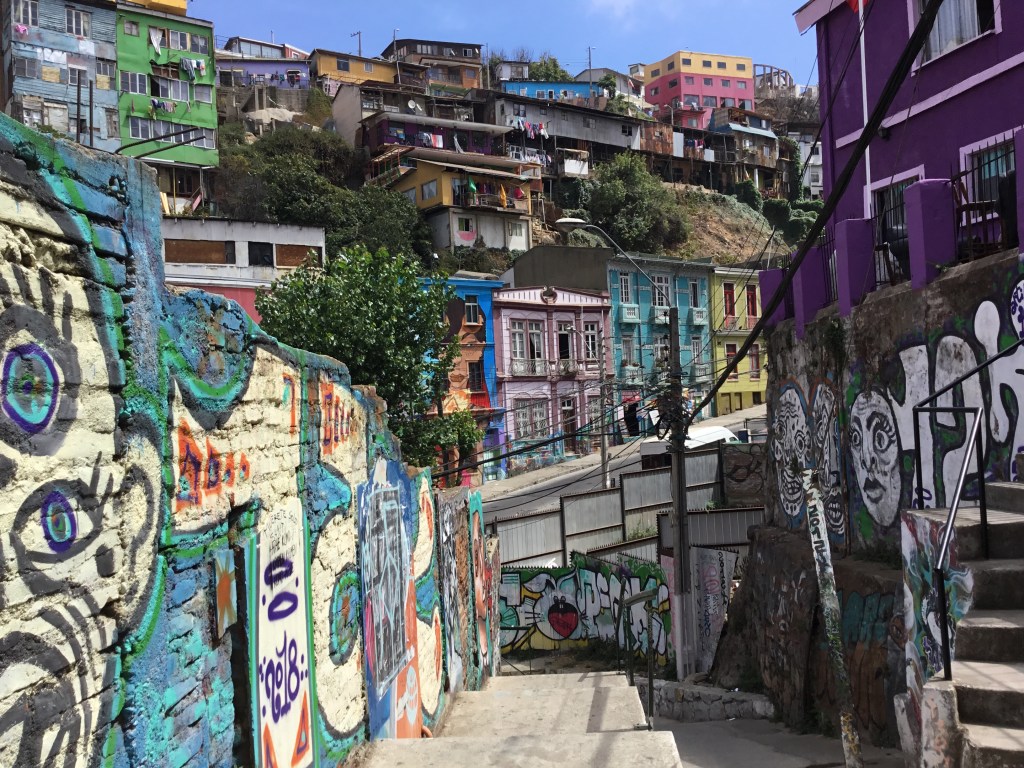
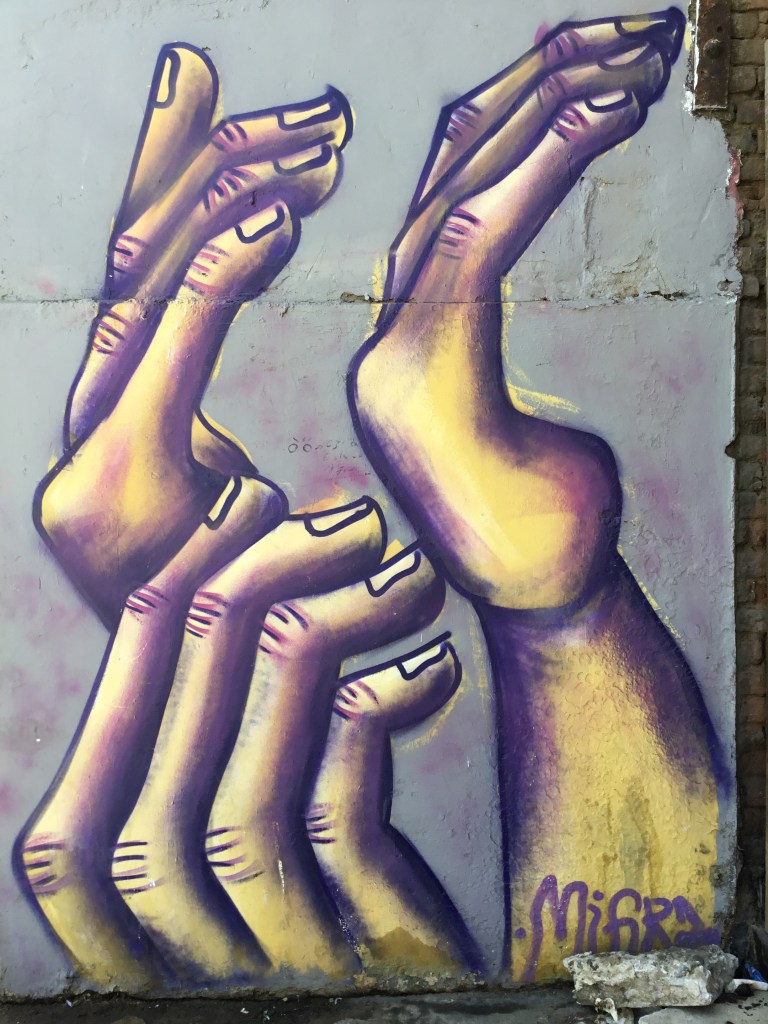
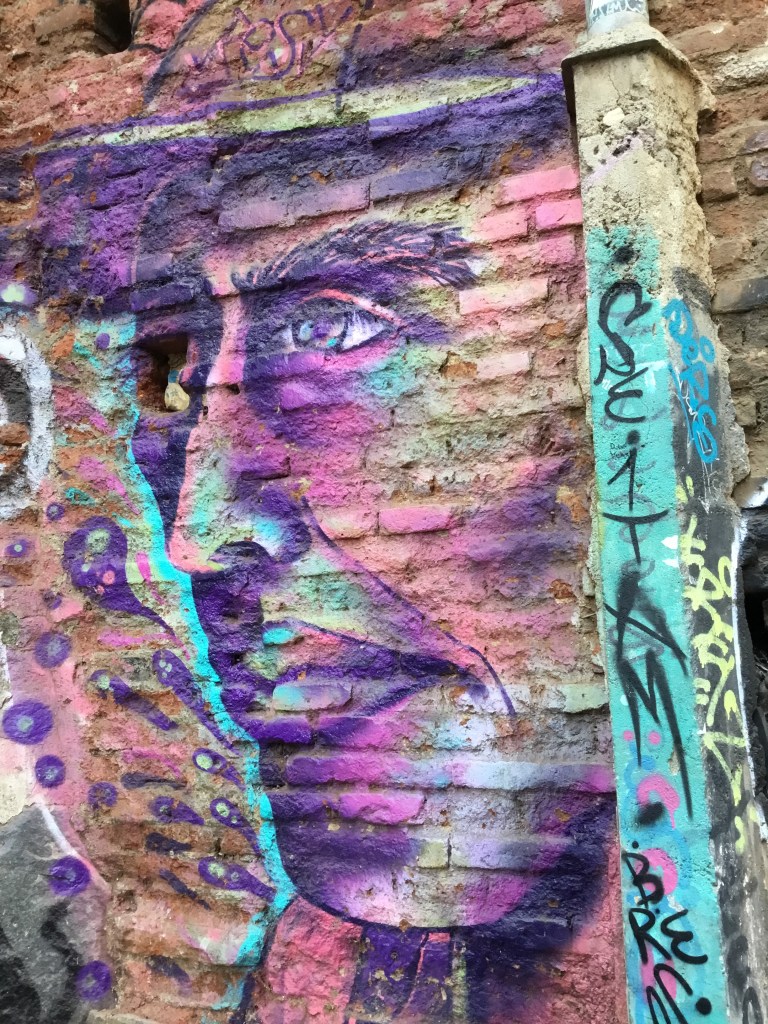
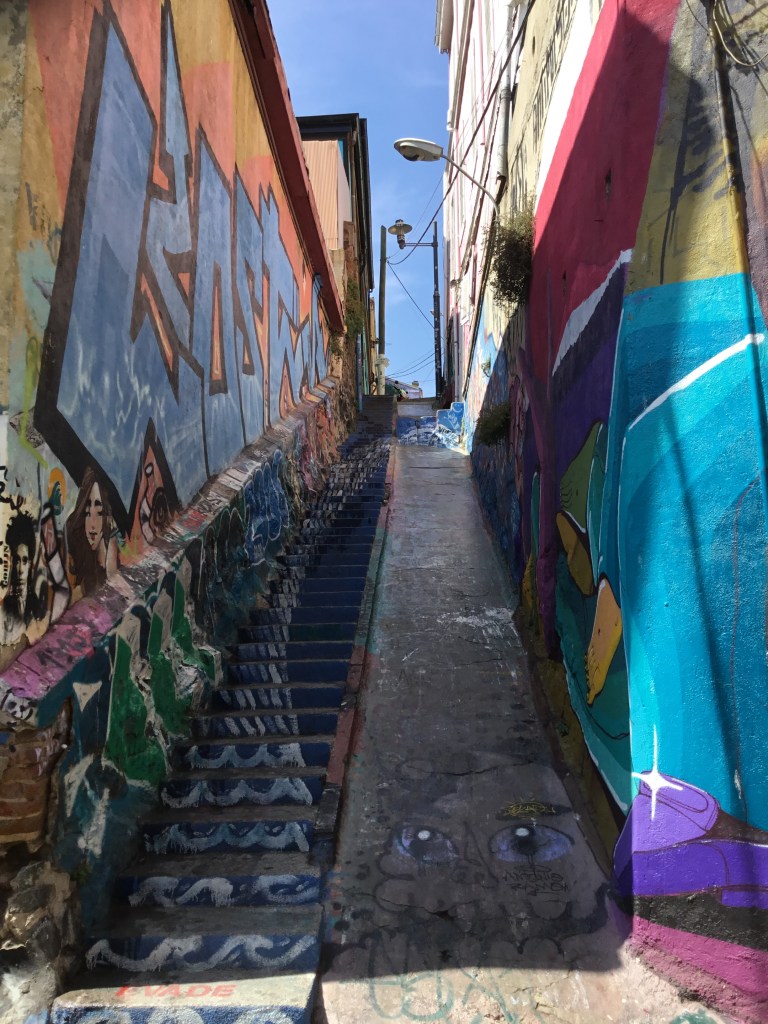
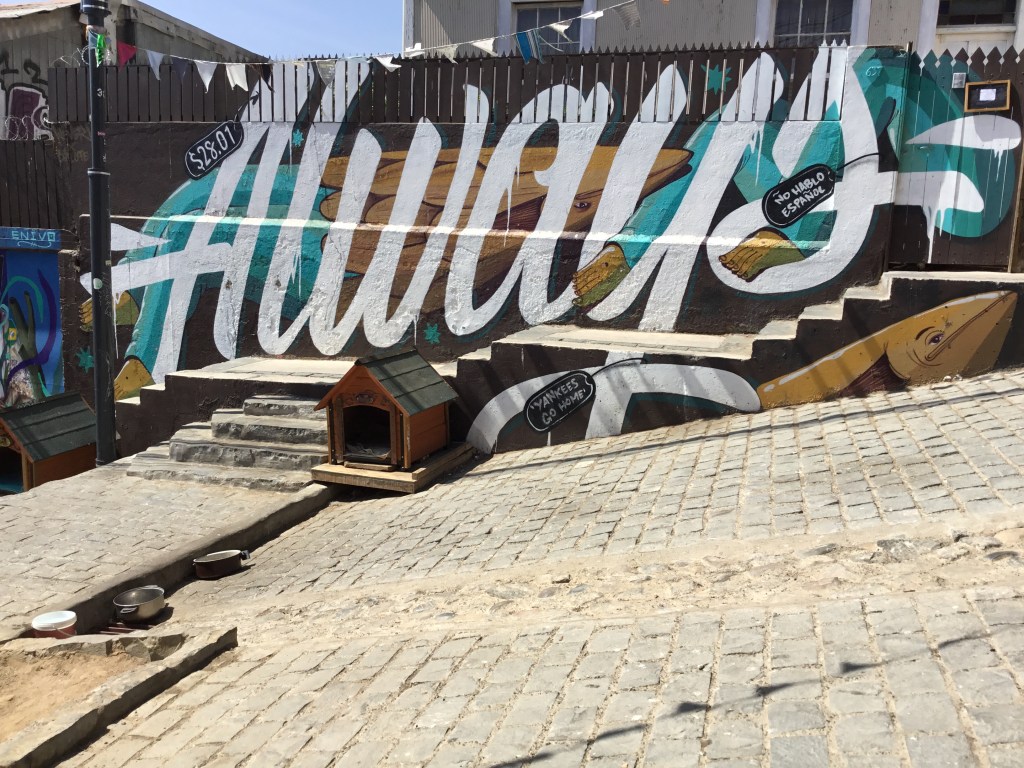
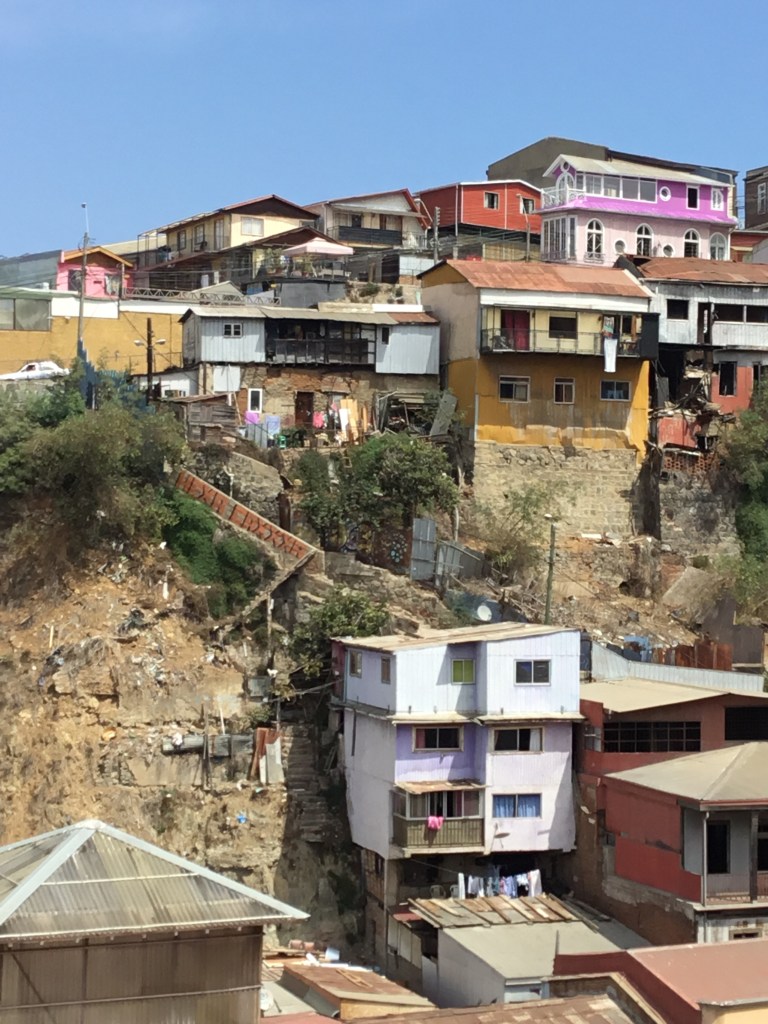
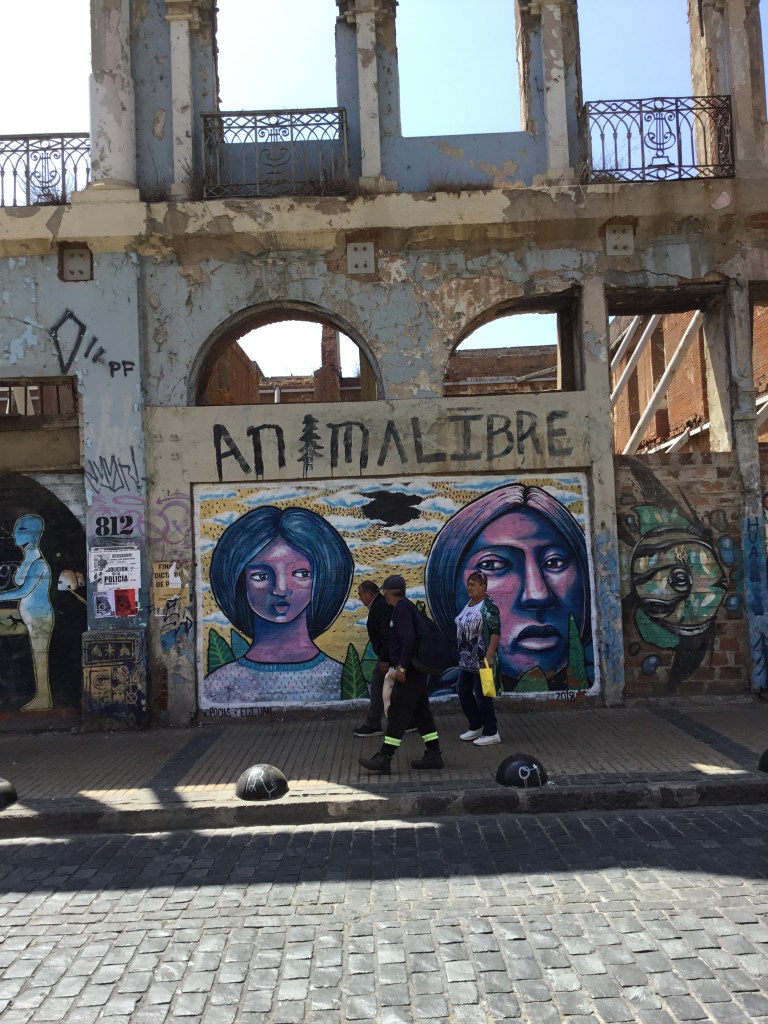
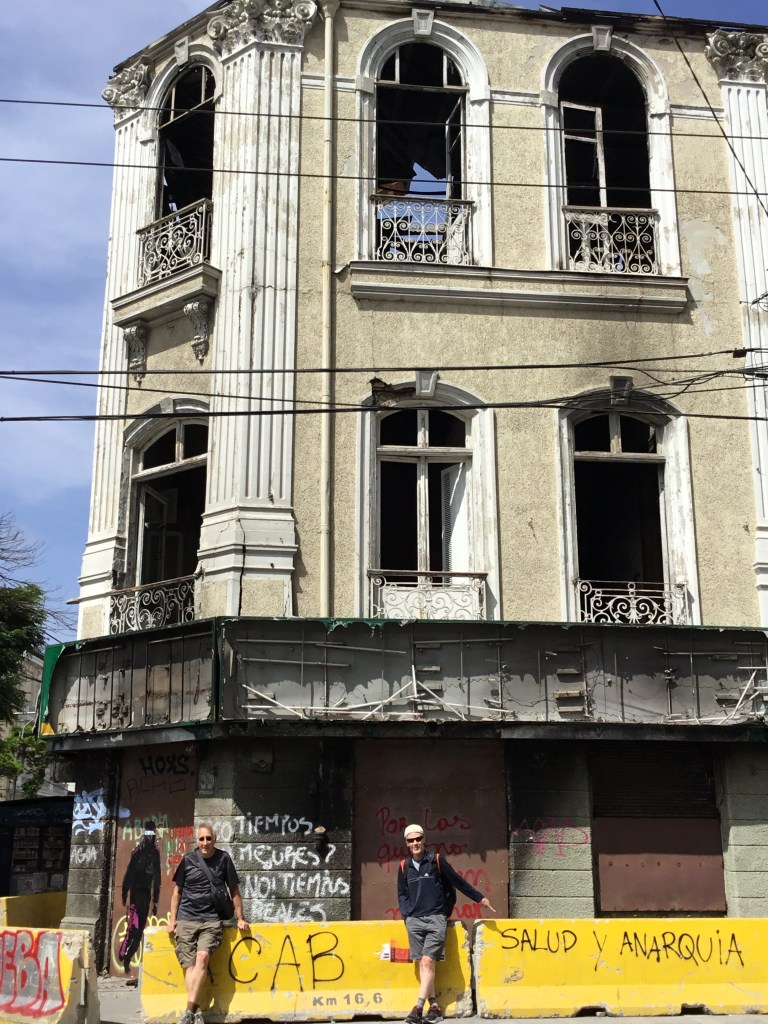
Valparaiso is a vibrant, artistic, bohemian hub. The waterfront is dominated by a very busy, bustling container port. The surrounding neighbourhoods overlook the water, balancing precariously on the hills that rise sharply and connect in a horseshoe pattern above the bay. The blue-collar grit of the city is contrasted by the abundance of colours of the painted houses, and the world-famous murals that illuminate the streets. Graffiti is everywhere. It takes the form of words, images, sculptures, and street art. Some of it is beauty-for-beauty’s-sake, but much of it reflects a social/political bent.
Our time in Valparaiso was short – only one full day. We had booked our apartment in the neighbouring community of Vina Del Mar, about a 10 minute ride by subway. Ironically, this place proved to be the more irritating and confounding of the two cities. Far from being a sea of contentment and idyllic beachfront living (fake news), Vina Del Mar is a South American version of Florida’s South Beach. Not a great blueprint to follow.
The drive into Vina Del Mar was choked with Manhattan grade traffic. The maze of one-way streets confused even Google Maps – the directions on Truus’ phone kept switching every 10M, as if Dr. Google was saying, ‘I give up, good luck, you people are on your own’. When we finally arrived at the appointed address, there was a tremendous mix up at the condo. Truus was told at the front desk that we had to go elsewhere to first pick up our room key. Howie was stuck in purgatory, parked at the entrance to a locked parking garage in front of the building, not able to enter, but not daring to leave for fear of not being able to find his way back. I was bouncing between Truus + the concierge, and giving updates to a somewhat anxious and weary Slim at the wheel of the Suzuki.
Finally, reluctantly, Truus and I walked outside with directions to the other place to be able to pick up our room key. However, when we exited the building, there was not a single sign of Howie. It was as if aliens had beamed him and the two ton SUV up to the Mothership. Traffic was still completely clogged in front of the building, but Slim and the vehicle, and all or our belongings, were gone.
This was one of those absurd moments that don’t make it to most travel blogs. You’re tired and starving after an entire day driving. The logistics are unwinding wildly and unexpectedly, and there’s no one there to solve your problems. You’re in a strange city, speaking your 3rd or 4thbest language, and the guy who is least equipped to navigate these rapids – no cell phone, no GPS, no city map, and has only learned how to say “Beer, please” and “Fuck the cops” in Spanish” – has suddenly gone AWOL.
Truus looked at me with a WTF look, and a can-this-evening-get-any-worse shake of her head. I just shrugged and said, “Don’t worry… Slim is resourceful. He’ll figure it out.” About 15 minutes later, as I was still looking for signs of the lost SUV in the tangle of traffic, an out-of-breath Howie ran around the corner and suddenly appeared next to Truus. “I’m parked about a mile away”, he said. “I had to leave, ‘cause there was a car exiting the parking garage and another one behind me wanting to enter the garage. I was trapped.”
This was Slim’s Captain “Sully” Sullenberger moment. In the face of disastrous circumstances, Howie manoeuvred blindly though brutal traffic in an urban wasteland to a place of safety, and then made his way back to get us. Shackleton would have been proud.
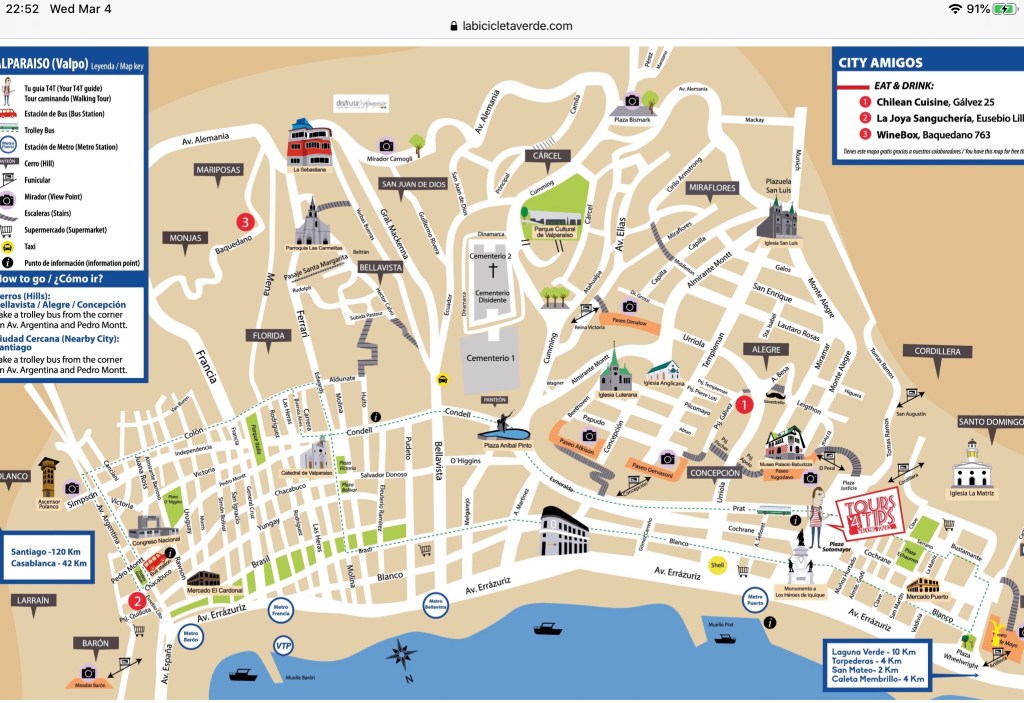
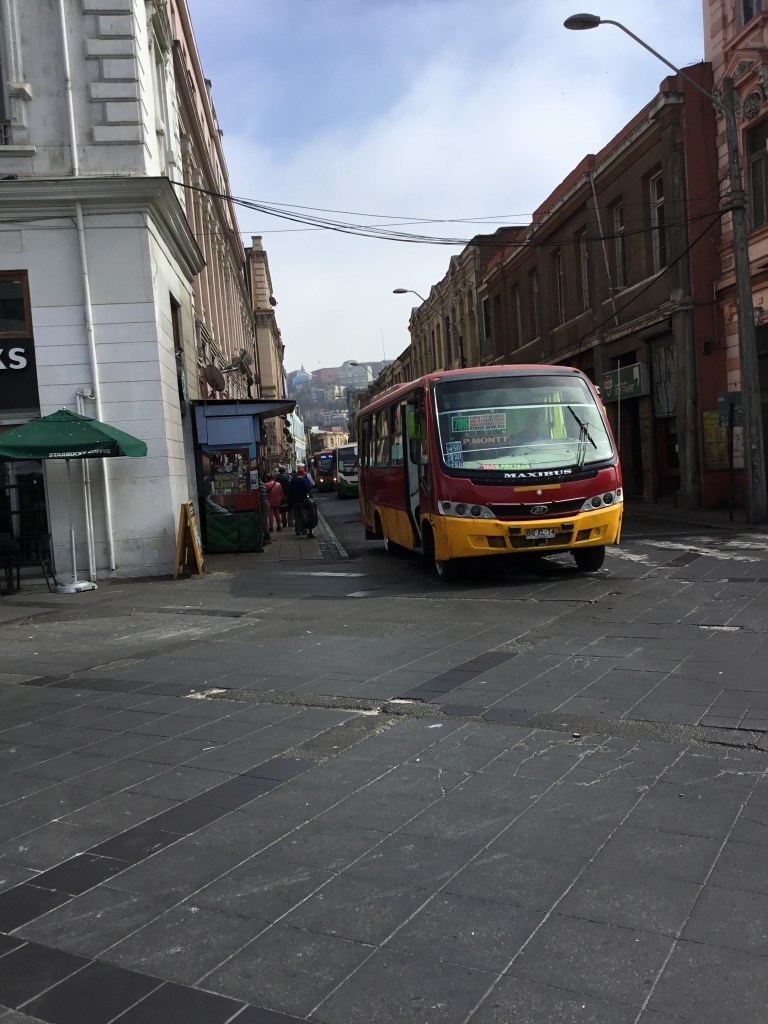
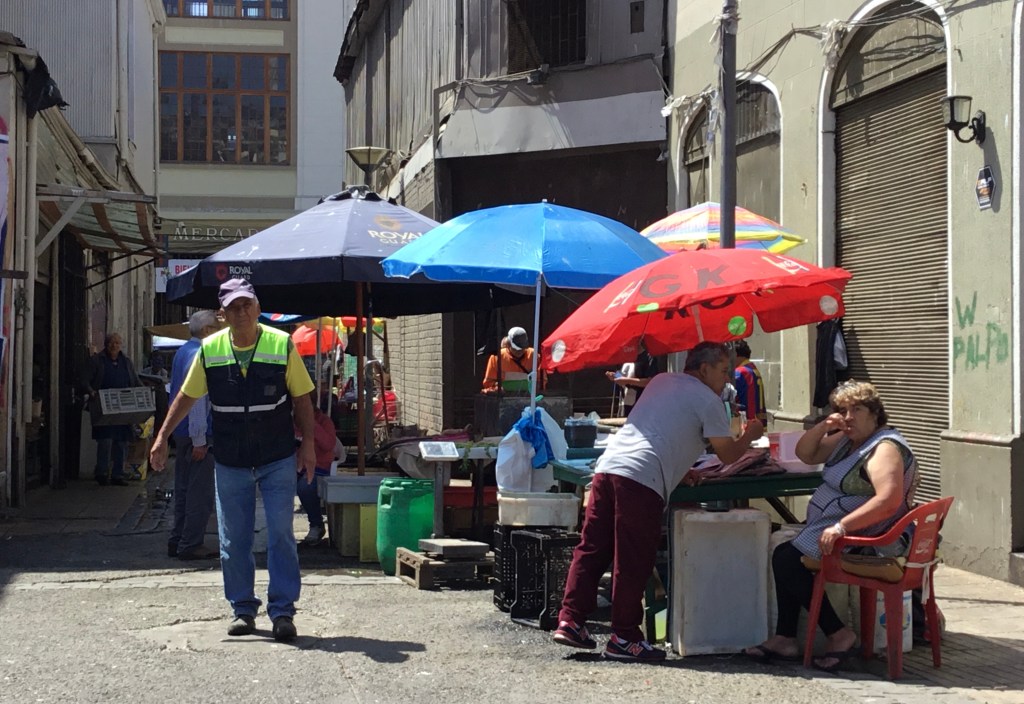
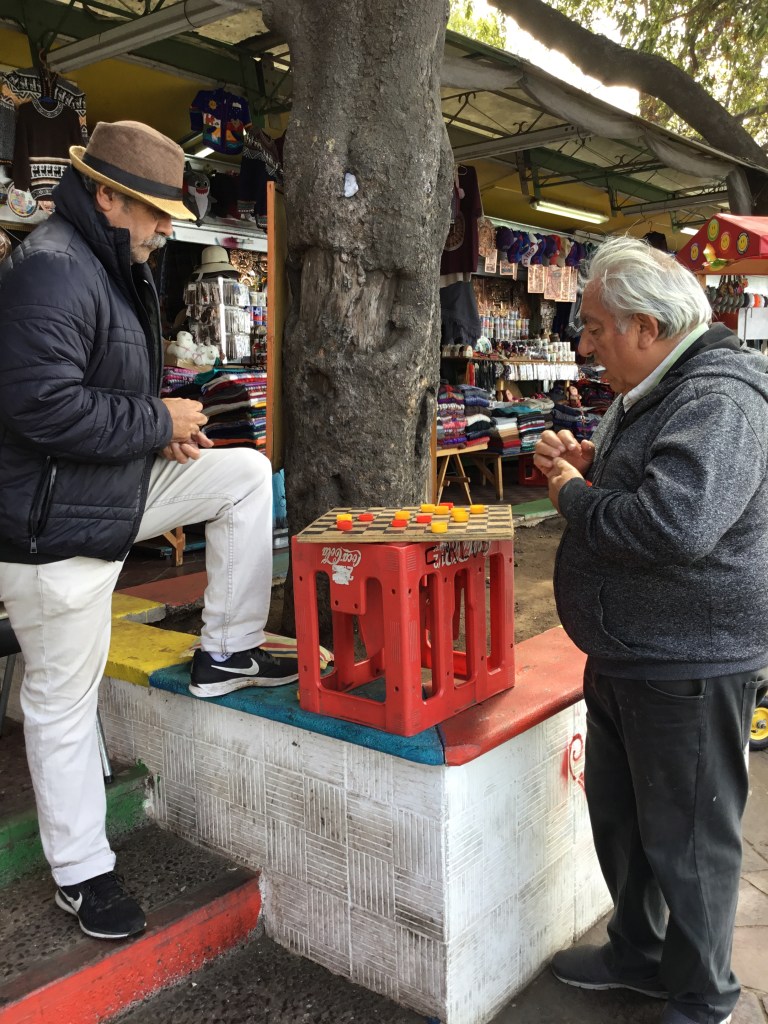
Tourist map of valparaisoCity buses in valparaiso, just raise your hand when the bus approach you and the bus stopsValparaiso open for businessstreet view, howard coming down!some of the many colours of valparaisoThe graffiti Shows the power of the people of valparaiso!The people here look after their stray dogs! TheRe are bowls with food and water and even a place to stay out of the sun!Old valparaisoFresh fish for dinner?A checkerboard, Empty bottle caps, a good friend, and a spot under the treeenjoy your afternoon.valparaisoThe ‘bad’ sTooges
Chile is a land of epic proportions. It is roughly as long top-to-bottom as Canada is broad side-to-side. And, just like Canada, Chile offers up grand variances in temperature, landscape, geography, topography, and more. About the only constant here are the 5 standard items on offer at the bodegas, snack bars, restaurants, cafés, and street kiosks – Pastel de Choclo, Papas Fritas, Hambergueses, Completos, y Empenadas.
Flying into Santiago from Punta Arenas in the far South takes about 3.5 hours thanks to the devilishly efficient folks at SKY Airlines. But it is a world away in more ways than I can describe.
Arriving in Santiago, we proceeded confidently past the official and vulture taxi drivers to the bank of rental car companies. Howard had recently booked our rental vehicle for the last part of our trip with a kind of leasing/discount broker. When we went to the broker’s usual carrier of choice, Europcar, there was no record of a reservation for us. Several calls and reassurances later, “Don’t panic”, we collected our rental vehicle from a very friendly young guy named Fabian who had been wandering around the International Arrivals terminal (we were flying Domestic) with a “Howard Frank” sign, while we had exited the terminal and were waiting outside the building.
Fabian walked us to our Suzuki SUV in the terminal parking garage. The rental transaction was completed on the hood of our car using a portable payment device, and a pre-agreed upon wad of Howie’s American Greenbacks. Looking for a cash discount? Chile is the place for you. We filled the beast with all of our baggage – roughly an amount equal to what Hannibal took along when he crossed the Alps, and all four of us piled in. Fabian, our best friend del dia drove us out of the airport and explained what direction to follow to get to Wine Country, about 3 hrs drive southwest of Santiago. In Spanish, he explained some things about the vehicle and answered our questions. He also said, while driving on the highway, that he would be leaving the vehicle soon, when he got close to his office in Santiago. Less than a minute later, we came to a red light (you get that here, when the highway passes through a residential area) and he jumped out of the vehicle with a cheery “Ciao” and “Have a good trip”. After a moment of shocked hesitation, Howie scrambled to run around the front of the vehicle before the light turned green, and Truus ran in the opposite direction to take the co-pilot seat and help Howie navigate. It looked something like one of the ubiquitous street performances that happen like clockwork in Chile at traffic signals, so no one in the surrounding vehicles was taken aback in the slightest.
With Santiago in our rear view mirror, the dry and dusty mountains gradually gave way to lush rolling hills. In place of urban sprawl, there were orchards and fields, and roadside vendors selling nature’s abundance for pennies on the peso. The daylight faded before we arrived in Santa Cruz. We crept through another new city in darkness, and somehow Truus navigated us old-school sans GPS to an inauspicious turnoff nearly beyond the end of the zona urbano. The entrance to our lodging, Refugio Nativa, was lightly marked. We stood parked outside a 7 foot metal wall wondering how to get in. Suddenly, the barrier slid open like the entrance to the Bat Cave and we were welcomed in like distant family members returning to the fold.
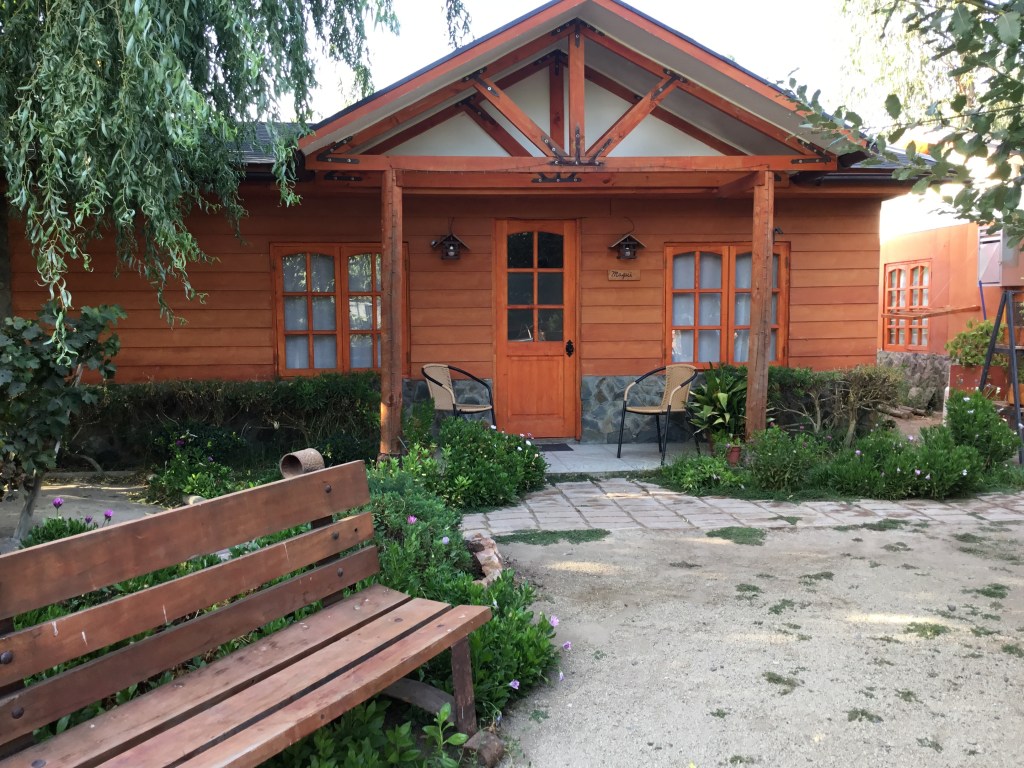
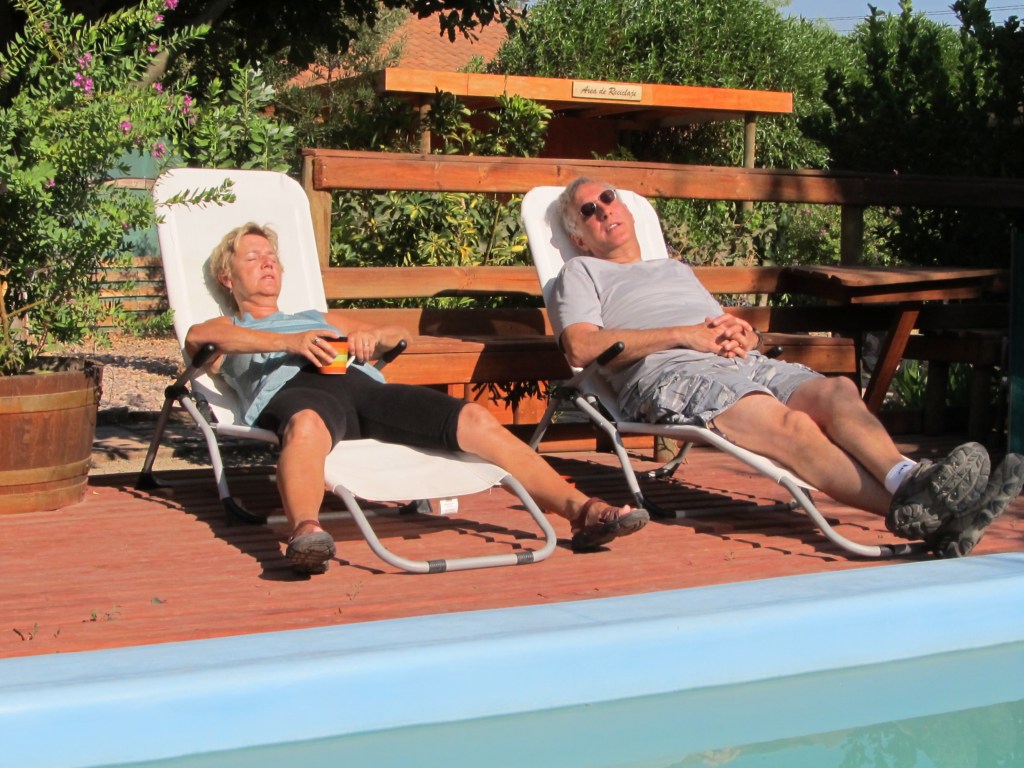
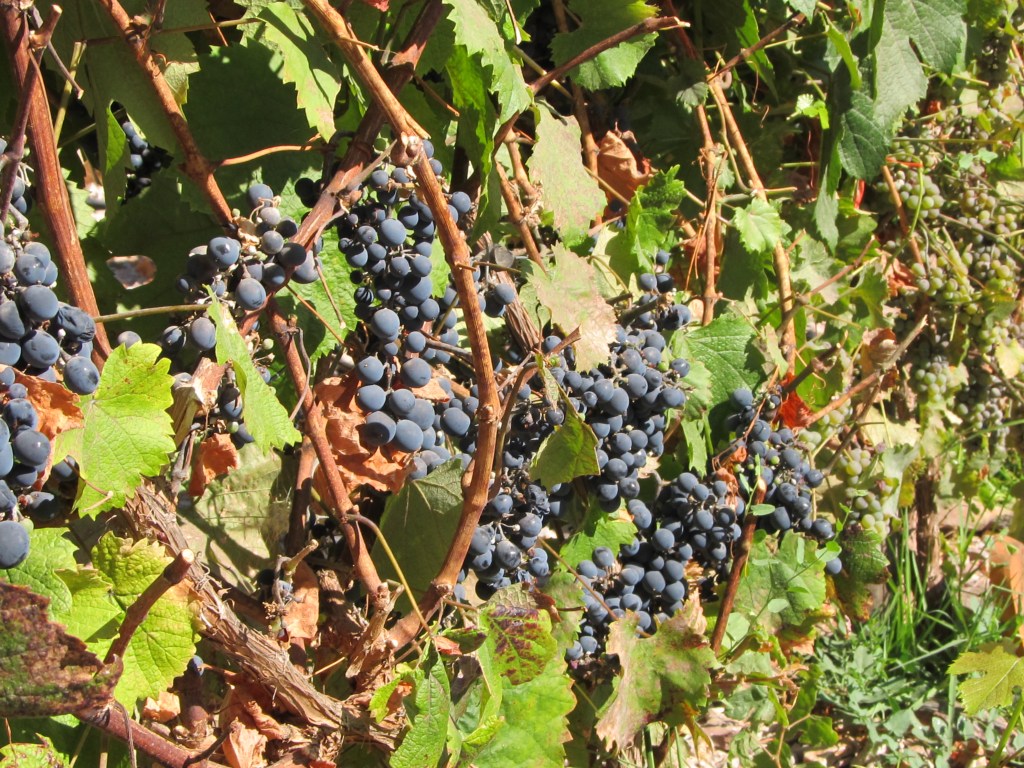
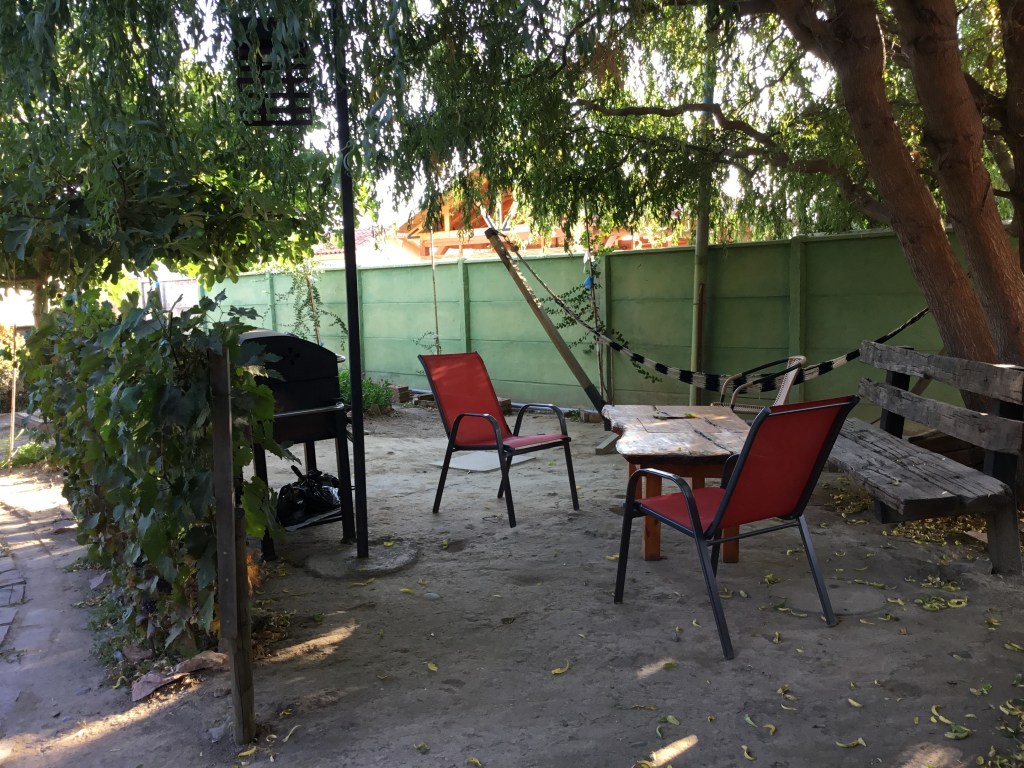
It really wan’t until the following morning that we got a sense of the place. The compound had 6 or 7 units surrounding a central area that was filled with an oasis of native trees, grapevines, herbs, flowers and fruit trees. In the middle of the square was a small swimming pool with lounge chairs. Each house was named, and had its own BBQ and outdoor seating area. No detail had been overlooked. We hung out by the pool in the morning, exchanging more war stories from Torres Del Paine, and then saddled up for our self-directed bicycle tour of a few wineries in the neighbouring area. The whiplash from where we had been a short while previous – trudging through a hellscape in hurricane winds, to eating fresh figs and merlot grapes off of the vine next to a sun soaked swimming pool – was nearly too much for our brains to process.
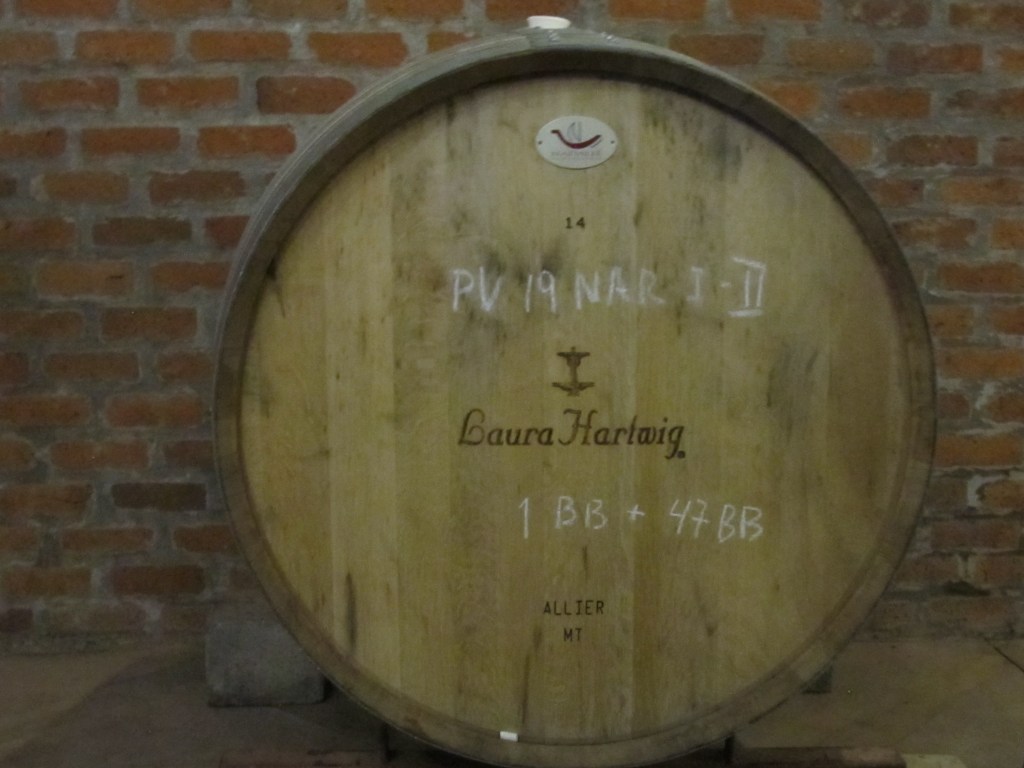
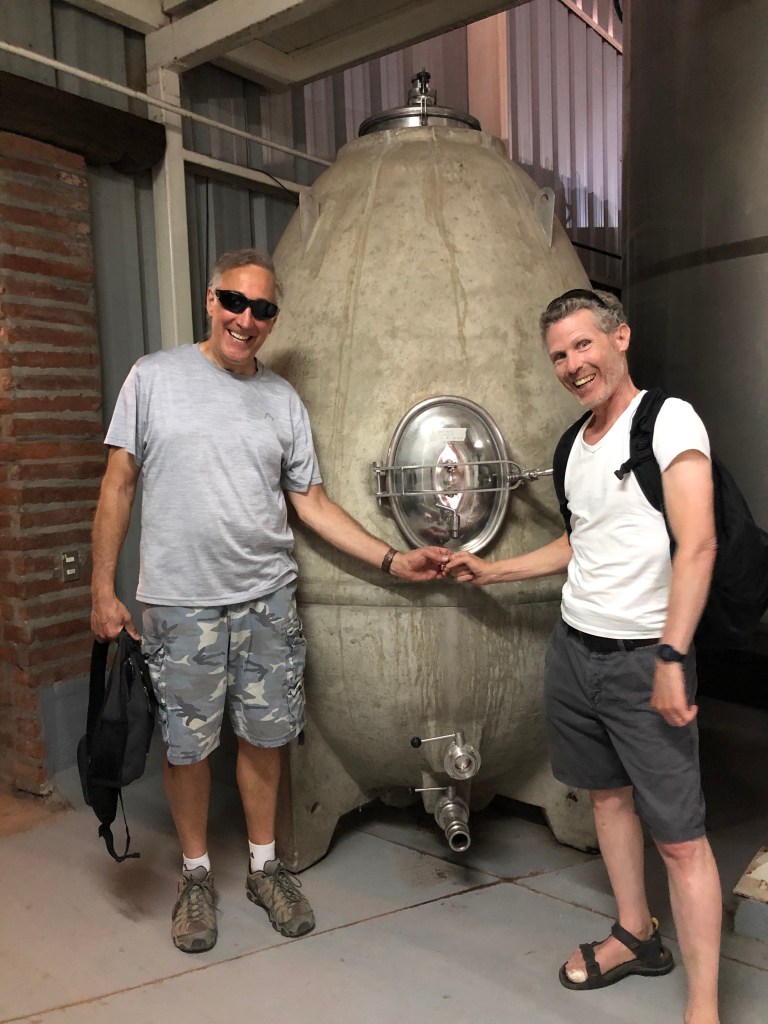
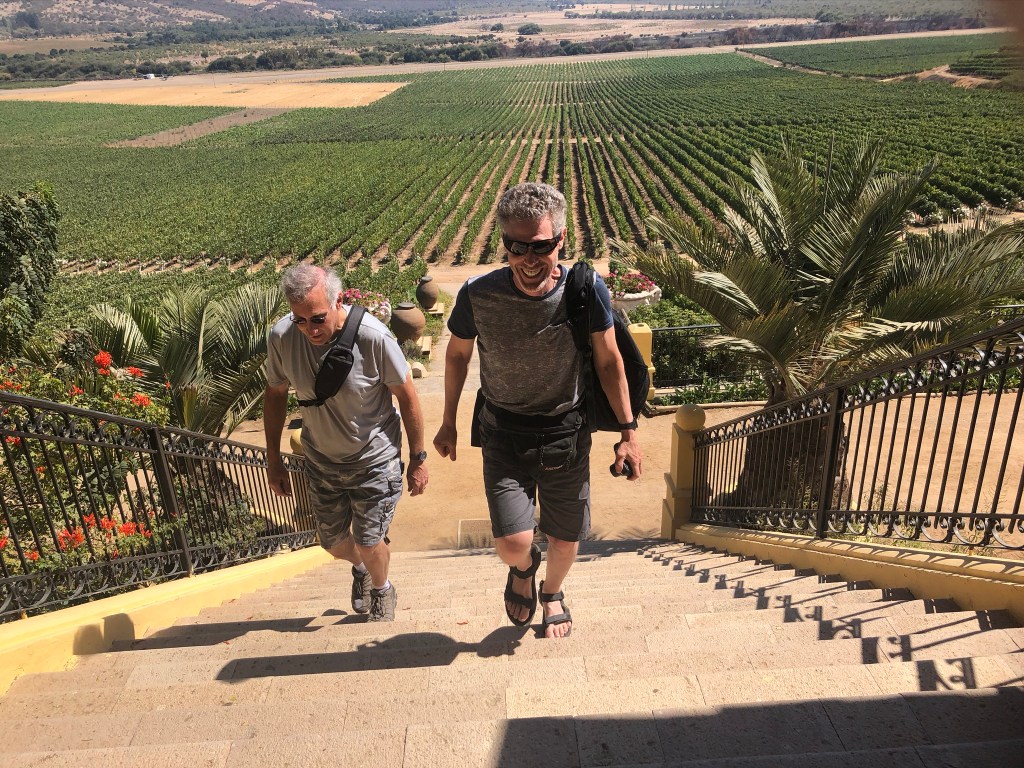
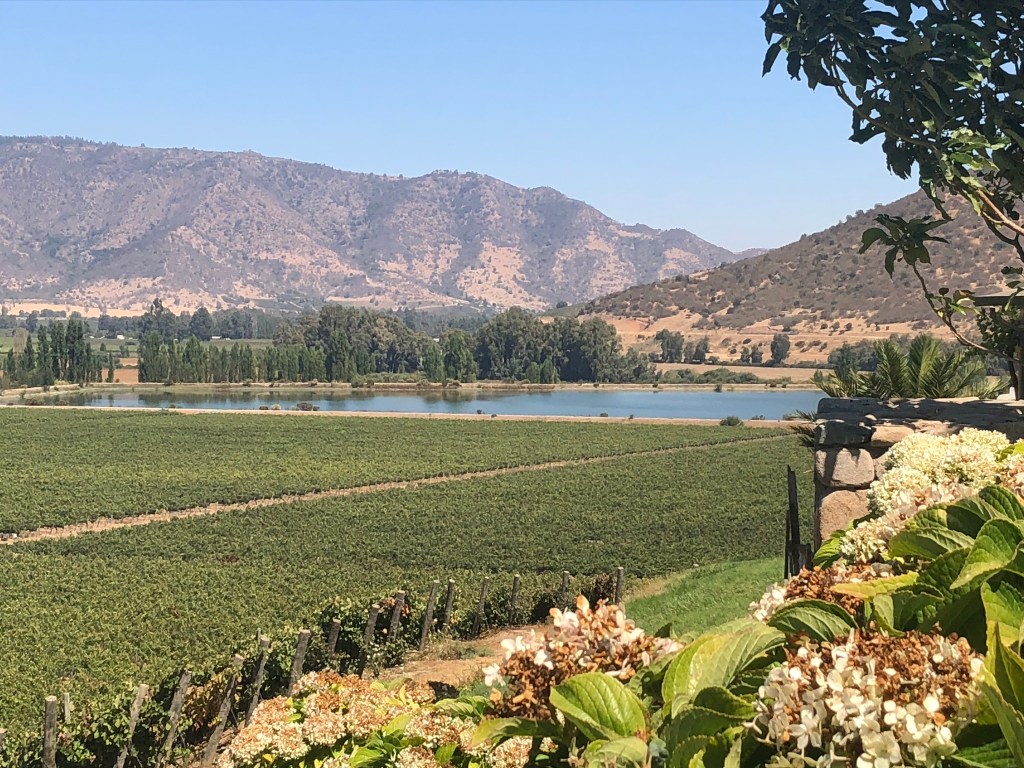
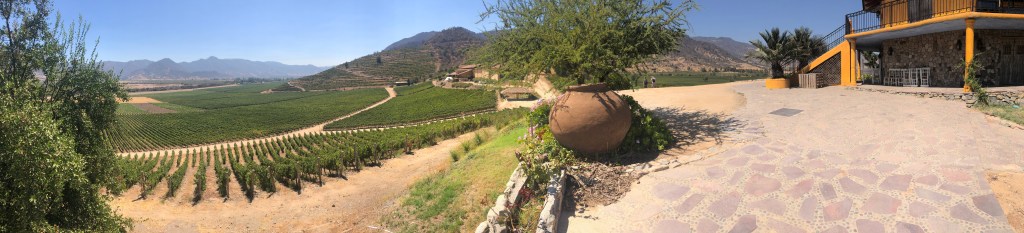
The two wineries that we visited were unknown to us, but quite famous in Chile. Their product is not exported to Canada in any significant volume. The wines we tasted were excellent, and far better than anything I’ve ever had on offer at Canadian wineries. But the thing that impressed more than the wines was the beauty and peacefulness of the wineries themselves. We basically had the entire wineries to ourselves. We were virtually the only visitors in these places, and were treated like valued guests. In each of the wineries that we visited, we had a young guide who stayed with us for well in excess of 30 minutes, and engaged us in broad ranging conversations that were instructive and personalized. No tour buses, no mass merchandizing, no hawking of sub-par Ontario red wines at inflated LCBO prices. This was a different experience than what I was expecting.
The next morning, we headed back to the pool. None of us was really in any hurry to leave our warm horticultural cocoon and drive North to Vina del Mar. Finally, being the insufferable practical fool that I am, I rose from the pool deck to pack up the SUV. Howie and Truus looked at each other wearily (the what-the-fuck-is-wrong-with-this-guy look that I’m very familiar with), and reluctantly conceded that we needed to head out.
We decided to take extend our time in wine country by taking a detour to the Santa Cruz Winery along the way. Santa Cruz Winery is the grandaddy of Chilean wineries. It’s one of the oldest and most prestigious players. The drive to Santa Cruz Wineries carried us through beautiful countryside, acres of vineyards, picturesque haciendas, and small tidy villages. This setting looked like The Shire from the Lord of the Rings lore. All that was missing was Irish pipe melodies and small people with oversized feet (present company excepted).
The site of the Santa Cruz winery is epic. The main buildings are built on two hills that overlook the winery’s vineyards. A sky of azul blankets a rolling sea of green. This place is a testament to human ingenuity and dedication. The chemistry of wine-making was first discovered 3000 years BC. The Santa Cruz winery melds the cumulative technical understanding of oenology to date, with an old world respect for tradition. Besides making some of the best wine on the planet, Santa Cruz is 100% solar powered. The Spanish-style architecture fits seamlessly into the hillsides as though the buildings were ordained to be there by a higher order. It could easily be mistaken for a monastery – thick stone walls, bricked stairs, and oak beams.
Yet another magical chapter to add to our trip diary. The layers of joy and pain that you get with this kind of travel are nearly overwhelming. It’s such a dense experience, filled with things we’re seeing and experiencing every day that are each in themselves so unique.
We’re feeling the window closing now. We head to Valparisso/Vina Del Mar, then La Serena, and end out trip in Vicuna. Still time for a few more posts, and, hopefully, a few more pleasant surprises along the way to the finish line next week.
Refugio nativo, our Homewe are going nowhere!Grapes at our refugioOur little own oases,Great wineryIf we onlycould open it!VinA santa cruzVina santa cruzvina santa cruz
Back in Spring, when we (read: Truus) were putting together a plan for our trip to Chile, the subject of Penguins came up. Truus was explaining in great detail about an extra side trip we could do at the end of our stay in Patagonia. It went something like, “when we’re done with the W in Torres del Paine, we can take a 3 hour bus ride to Punta Arenas, and, weather permitting, a 2.5 hour boat ride to Penguin Island.”
Truth be told, I was not really paying full attention, being somewhat preoccupied with mental revisions to my will and testament as I tried to visualize a way to survive the W, and being partially distracted by binge-watching the latest season of Peaky Blinders. “Huh… ya, sounds good,” I mumbled at the time.
Over the subsequent 7 months, I must have asked Truus a dozen times if we were leaving for the W trek from Puerto Natales or Punto Arenas. To her credit, she never lost it on me and repeated our Patagonian agenda with the patience she reserves for the aged and the mentally infirm.
Still, it never sunk in. I never looked at a map or did any research into Punta Arenas. I just knew that it was somewhere south of Puerto Natales, and that Penguins could possibly be in play.
The city of Punta Arenas owes its existence to its unique geographic position related to its proximity to the Strait of Magellan. Until 1920, when the Panama Canal was inaugurated, all ships looking to cross over from the Atlantic and Pacific Oceans had to go through Punta Arenas.
The other thing that Punta Arenas is famous for is Antarctic Exploration. For a thirty year stretch starting at the end of the 19th century, Antarctica was the final unexplored continent on the planet. Adventurers from across the globe came to Punta Arena in a race to get to be the first to reach the South Pole. It was called The Heroic Age of Antarctic exploration. Punta Arenas was both the staging area, and the port from which the eventual requisite rescue missions were launched.
The most famous of these misadventures was the voyage of Ernest Shackleton in 1916. Shackleton led three expeditions to Antarctica. He was a well-known figure in Punta Arenas, and was knighted for his accomplishments. In 1916, having lost the race to the South Pole in December 1911, Shackleton tried to better his peers with a crossing of Antarctica from sea to sea, via the pole. Disaster struck when his ship, Endurance, became trapped in Antartic ice and was slowly crushed.
The rest is the stuff of lore. Shackleton rallied his men to somehow survive the elements. Shackleton ultimately navigated a lifeboat to Elephant Island and then the South Georgia whaling station – an open ocean voyage of more than a thousand kilometres – to get help for his men.
According to Shackleton’s Wiki page, at his 1956 address to the British Science Association, Sir Raymond Priestley, one of Shackleton’s contemporaries, rated the GOAT polar explorers as follows: “Scott for scientific method, Amundsen for speed and efficiency but when disaster strikes and all hope is gone, get down on your knees and pray for Shackleton”.
Could have used Shackleton on the W trek.
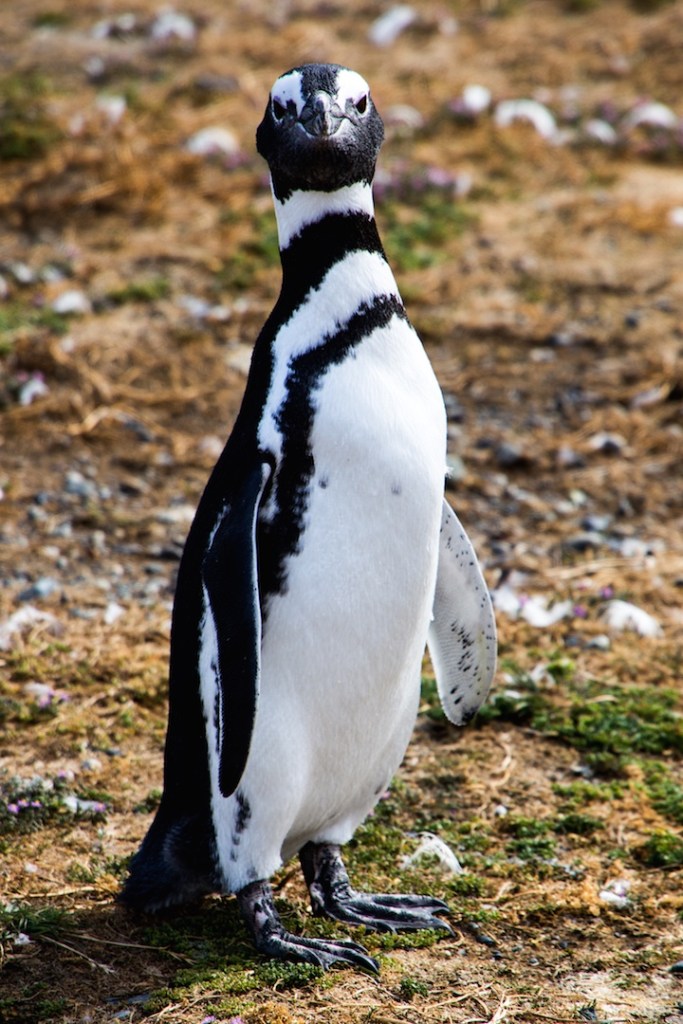
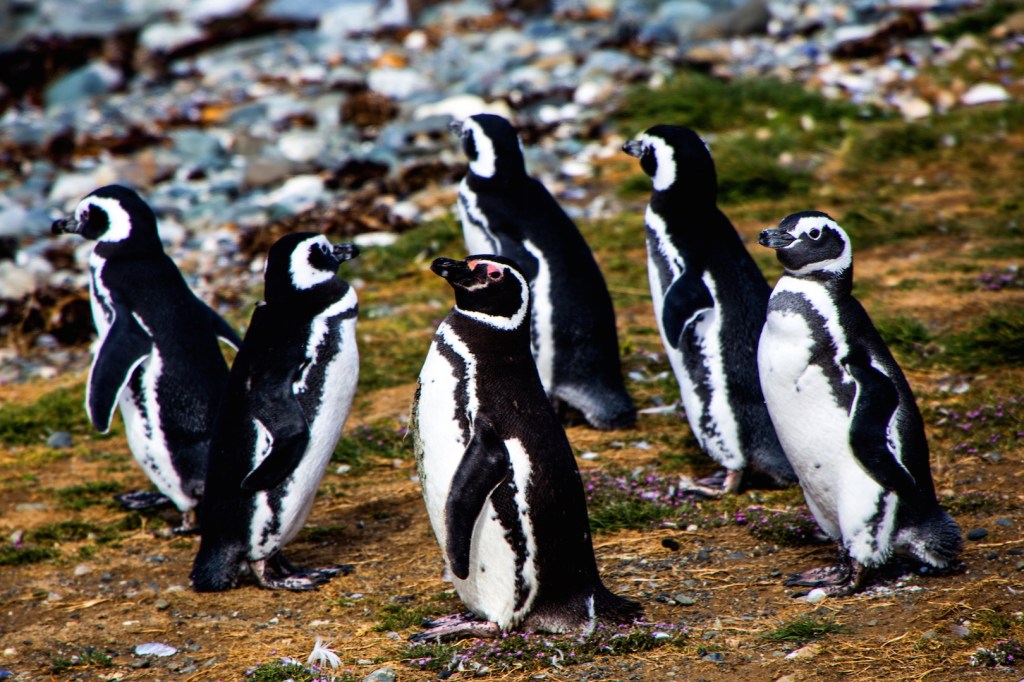
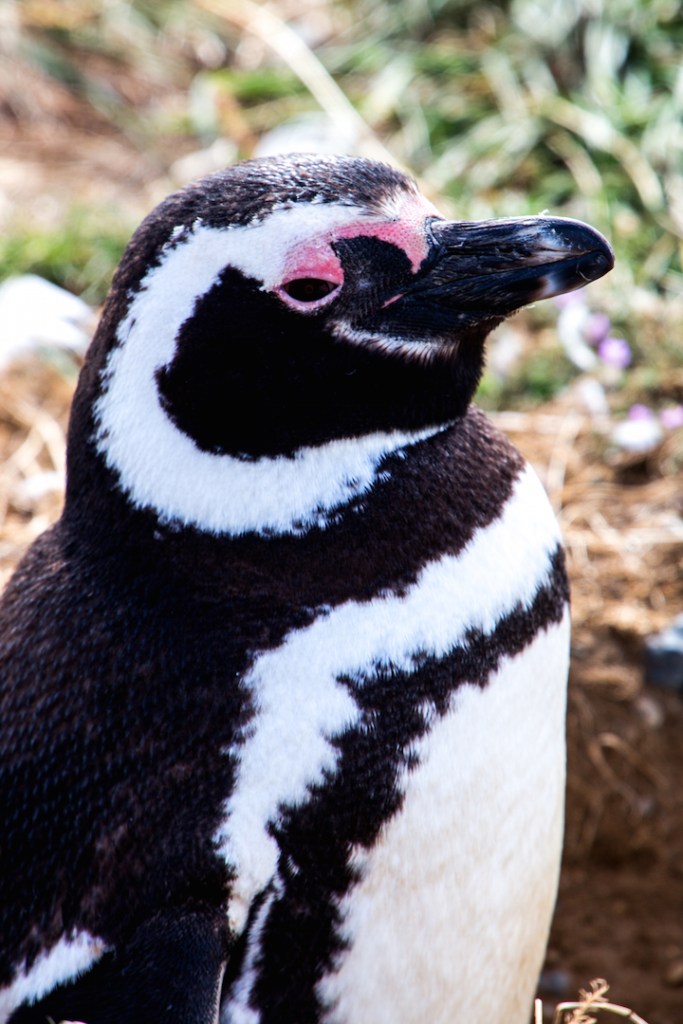
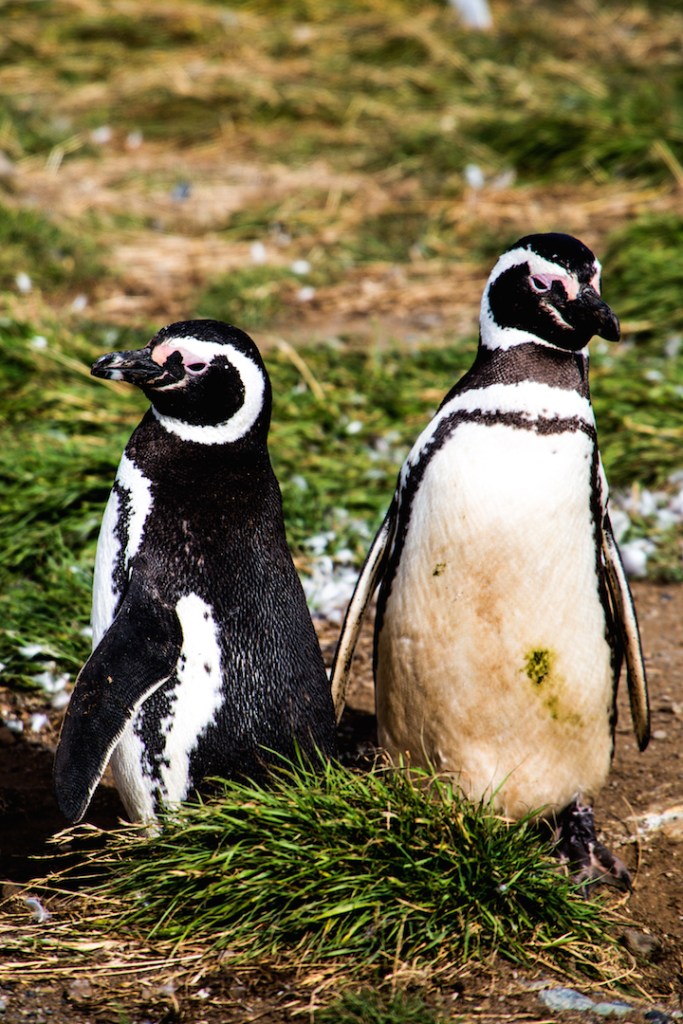
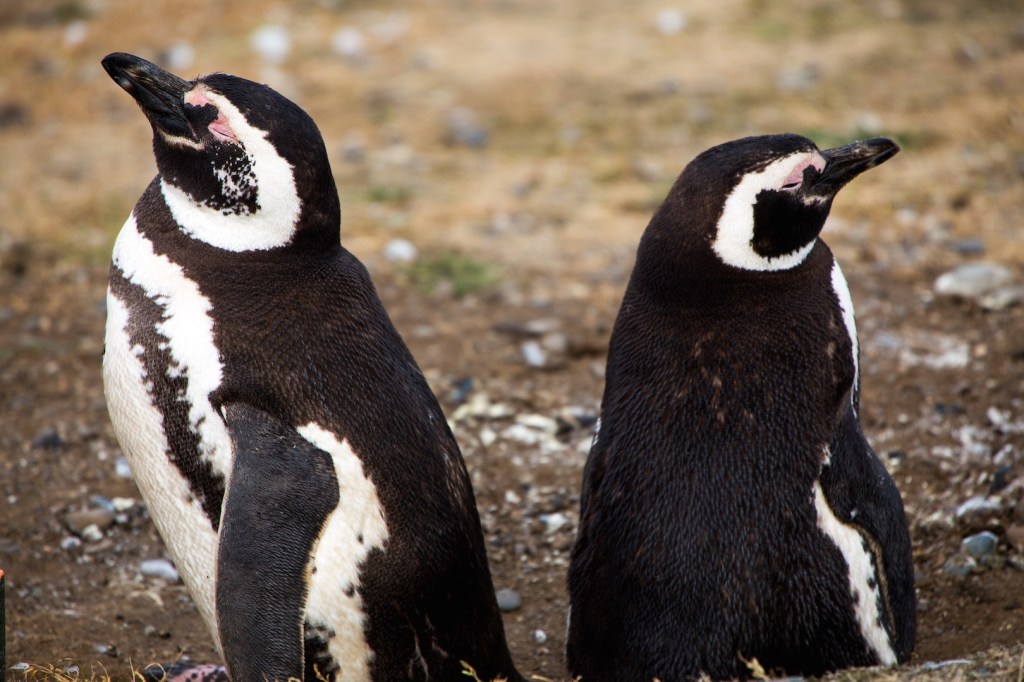
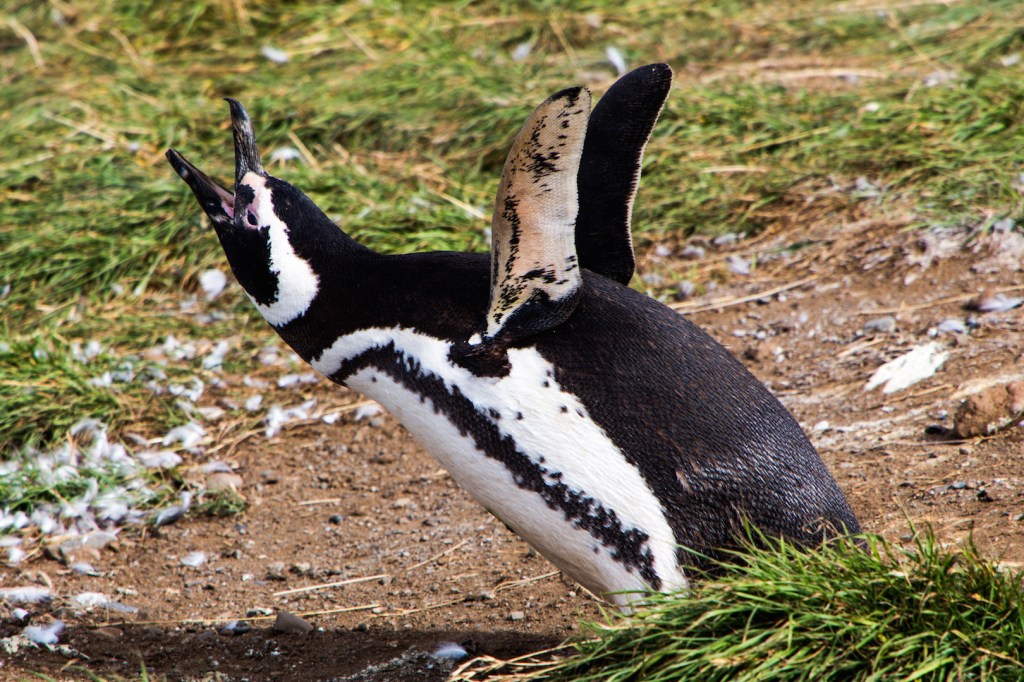
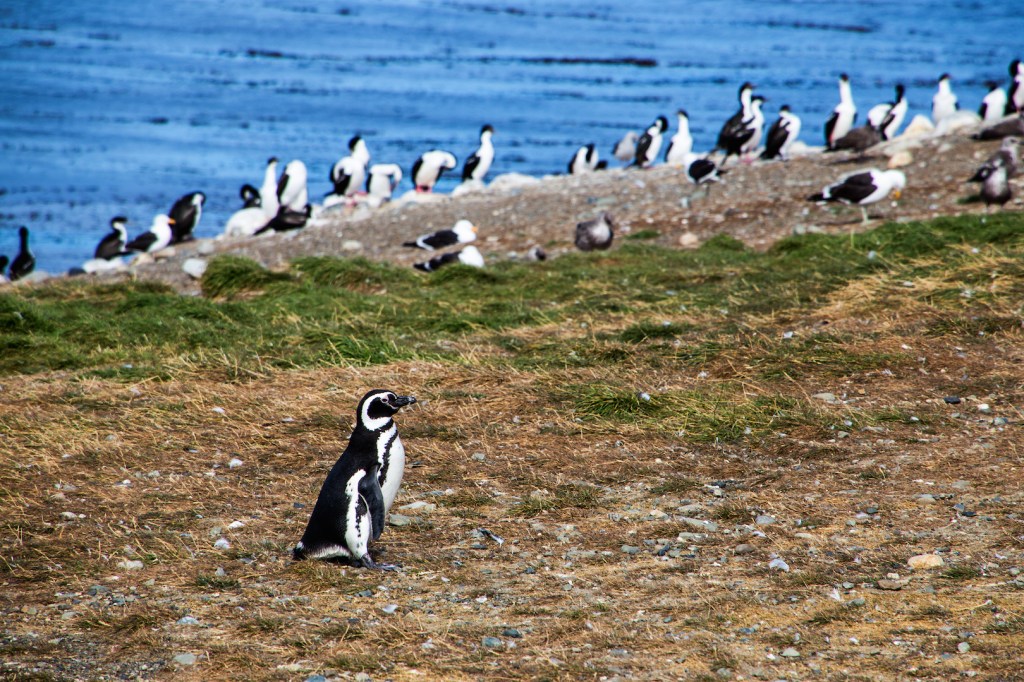
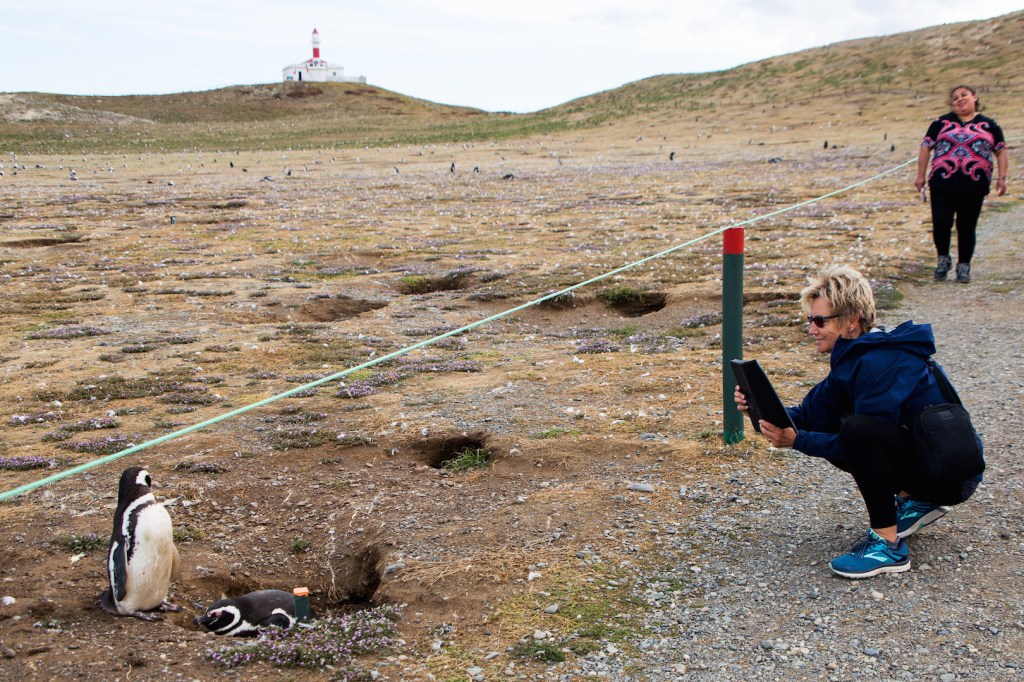
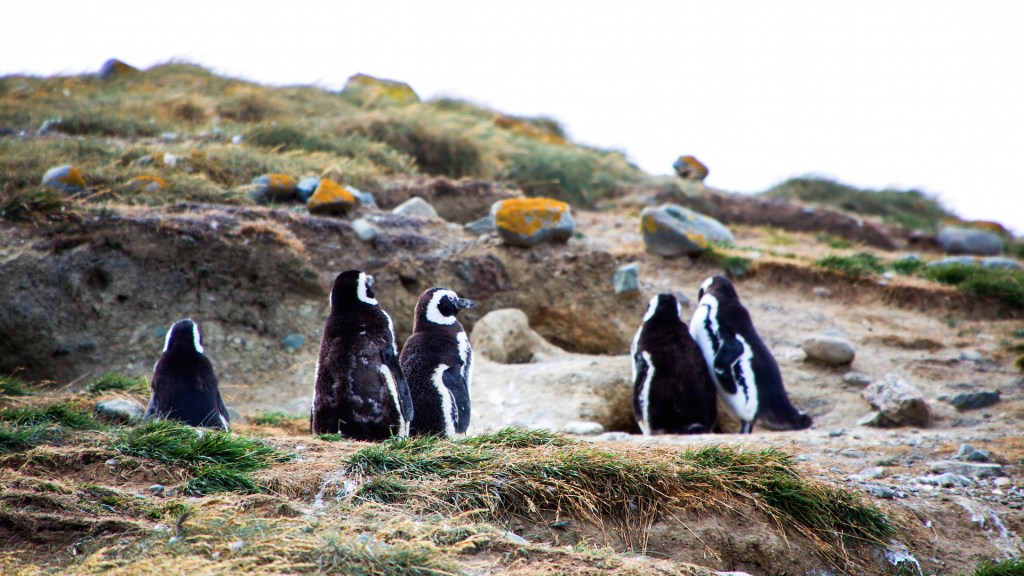
But enough about Punta Arenas. The entire point of 3 days of travel and budget-busting expense was to set foot on Penguin Island. And it didn’t disappoint. Never seen so many flightless birds at close proximity in my life. There’s a path that circles the refuge. There are strict rules to be followed as you walk this path, including what to do if a penguin attacks you. Apparently, it’s just like in the YRDSB – you just have to take it if an innocent penguin is triggered and lashes out.
Maybe we just got lucky, but we escaped without having to fill out any penguin incident reports. Just a lot of dozy birds hanging out in the sun looking bored. As you can see, Howie and Truus got some great pictures.
We leave Patagonia and the South of Chile, tired, battered, and somewhat bruised. As Shackleton’s men said upon being rescued, “All safe, all well.”
Next post – wine country and our perilous adventures on the beaches of Vina del Mar!
Inspired by Chaim Potok’s timeless book, the 1981 movie “The Chosen” illustrates the Hassidic Jewish approach to analyzing religious scripture in the pursuit of meaning. The presumption is that names are not applied accidentally. Words contain deeper meanings that can, if interpreted properly, reveal the wisdom of the universe.
One passage from the movie has always stuck with me. The Orthodox character is explaining a key Rabbinical interpretation to his more secular friend, using this concept to illustrate how an obvious truth can be hidden in plain sight, imbedded in terminology.
The Hebrew word for king, and head, is “Mel”. The Hebrew semordnilap of this (Palindrome spelled backwards) – a term coined for words that spell a different word in reverse – is “Lem”.
In Hebrew, Lem means fool, and is also the Hebrew word for heart.
The message is that with your head in front of your heart, you are a king; but with your heart in front of your head, you are a fool.
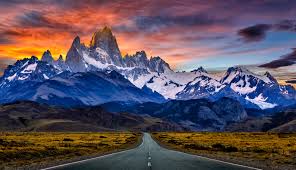
According to legend, the word “Patagonia” comes from “Patagones”, which was the name given by the Portuguese mariner Fernando de Magallanes (better known to us as Magellan). The story goes that Maggs and the boys came-a-looking for a new travel route. His five-ship expedition travelled south along the Atlantic coast of South America searching for a passage to reach the West Indies. Unsurprisingly, the insane weather and treacherous winds forced them to take shelter and park in this part of the world to wait for what he hoped would be calmer seas in the Summer (spoiler alert – the winds are worse in the summer).
Coming ashore, Magellan is reported to have seen huge footprints on the beach made by the native people. Magger is said to have coined this name for these strange large people, taken from the giant “Pathoagón”, a character from the knighthood novel Primaleon.
So that’s what the so-called experts say. Based on our experiences in Patagonia, my take is a little different. Let’s look at the root of the word – PatAGONIA.
The word Agonia comes from;
Greek – “struggle,” – “gathering, to contest for a prize”
Intense pain of mind or body.
a strong sudden display of emotion
of severe mental struggles and emotions, agony, anguish
The word Pat comes from;
1. Latin, where it has the meaning “suffer”
2. Late Middle English – a noun denoting a blow with something flat
No need to spend hours studying Talmud to figure this mystery out. Patagonia is a killing field – kills your spirit, your knees, your feet, your toes. Everyone we ran into had a war story about their own physical misfortune, or had a tale to tell about someone on the trail they had seen with a smashed face, broken leg, and worse.
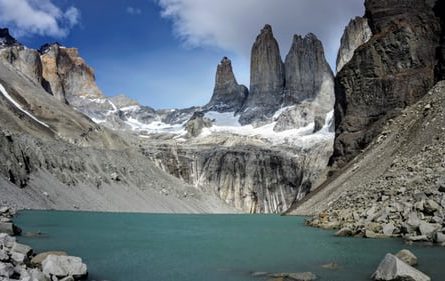
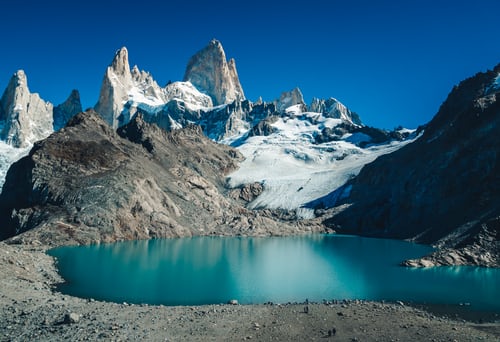
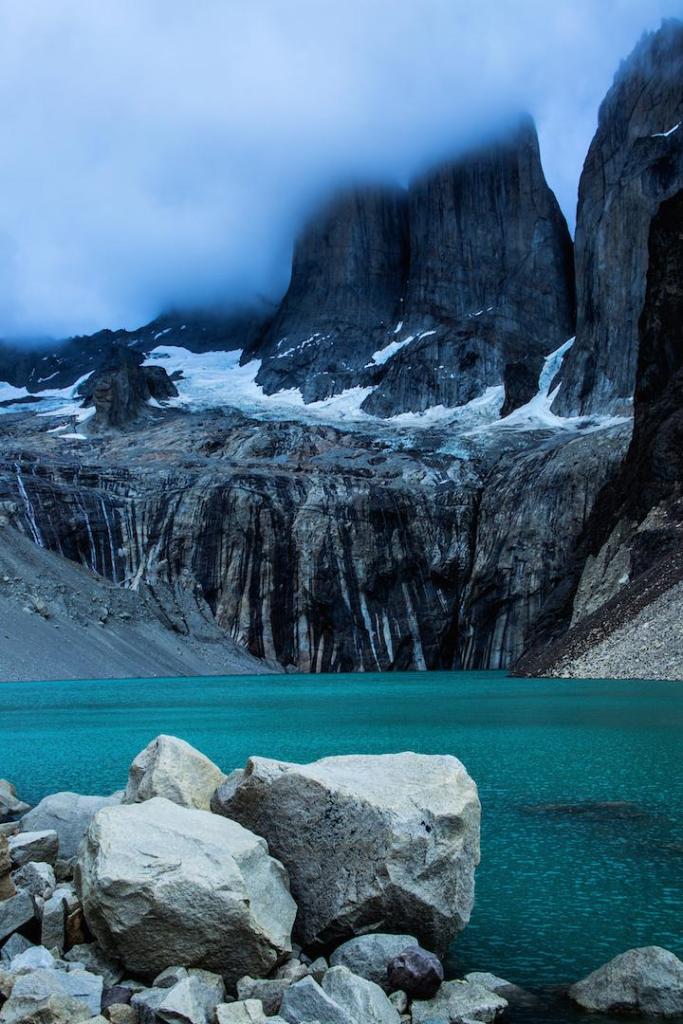
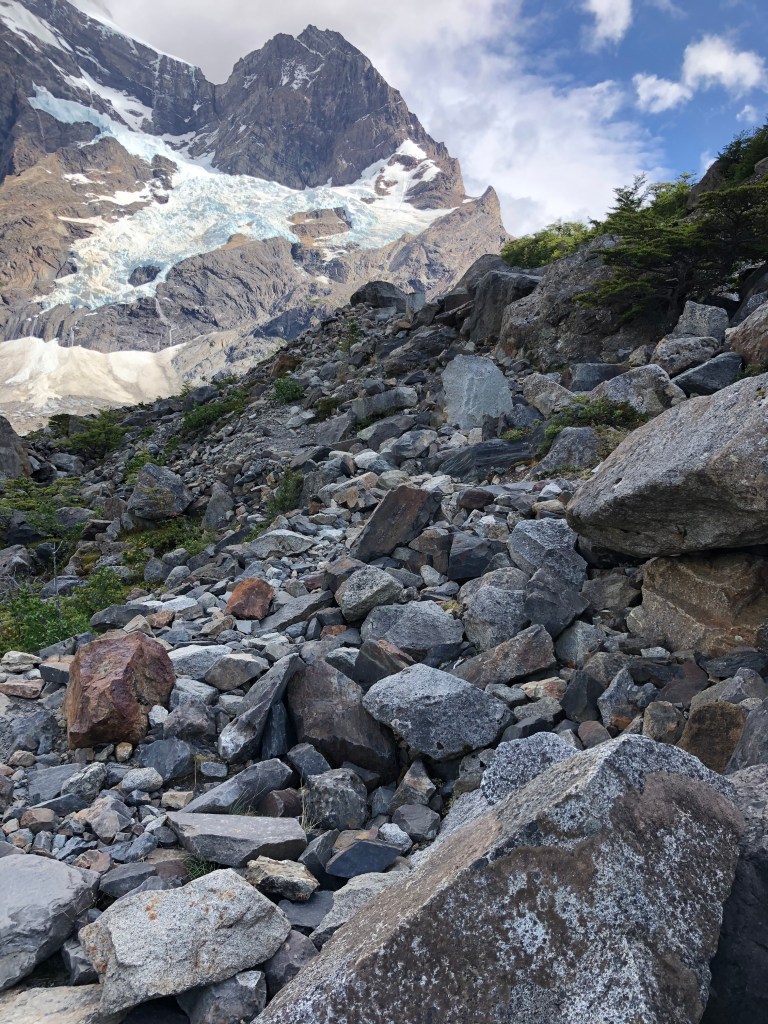
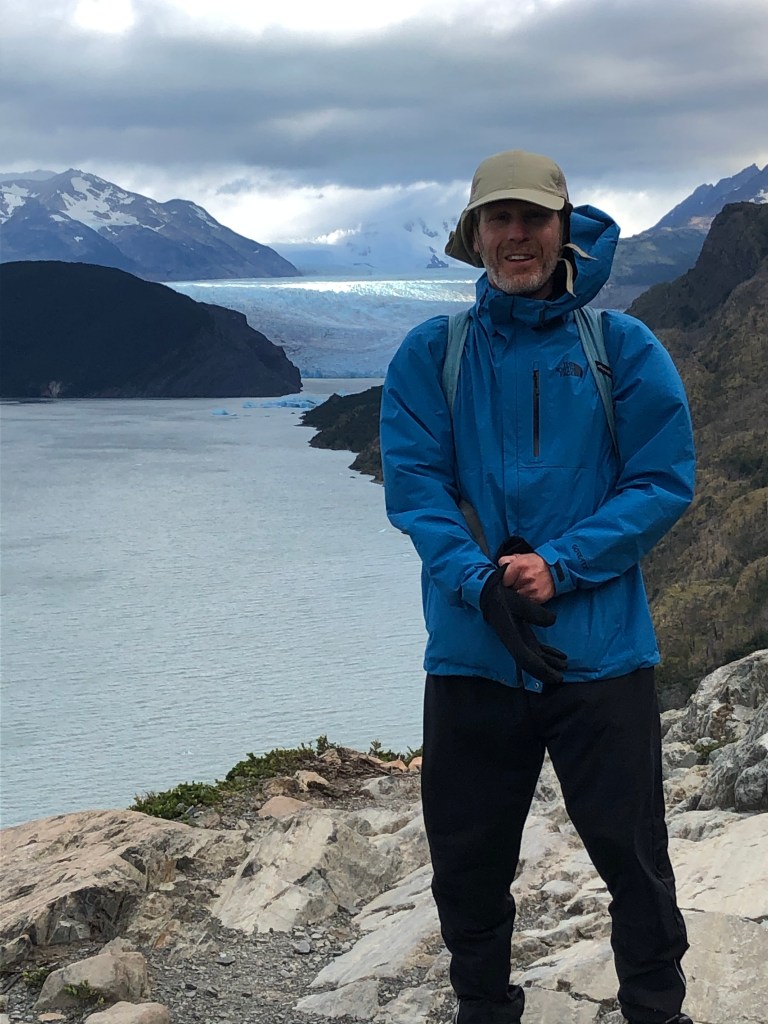
The W-Trek that we we’ve just completed is an exercise in humility. The “Towers of Pain” track lives up to its name. Though it’s breathtakingly beautiful, the views come with a hefty price. The elevations are staggering. You spend most of your time looking down at your feet so as not to trip on the billions of razor-sharp rocks, gnarly tree roots, and ankle-busting ruts along the way. One false step, and it’s a sheer drop down a rock face into an ice-cold glacial lake. Every year a couple of travellers unintentionally take this plunge, and the Chileans don’t even bother trying to look for the bodies.
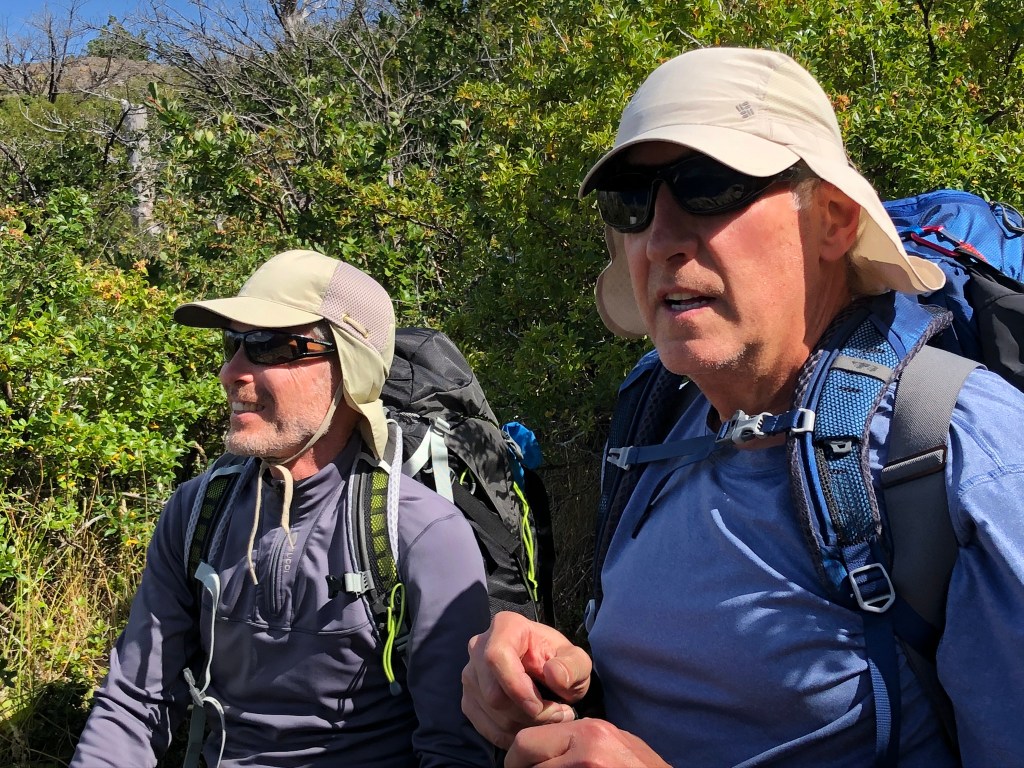
That being said, as tough as the walk is on its face, there is a wildcard that takes it to another level entirely. Patagonia’s climate is defined by a single meteorological element: the constancy and strength of the wind. This is the windiest place on the planet. On the second day of our W, Truus told Howie and me that we were scheduled for an “easy” day – relatively flat first section, followed by a climb to our next refugio. The day started fighting a rising wind, and a driving rain. When we got to the “flattish” section of the walk, the wind was at gale force. The gusts felt like they were in excess of 150 km/hour. The sound of the wind was unreal. It was all we could do to stand up in the face of these forces. The first time it hit, I got tossed into a thistle patch. At one point, all three of us were flattened for minutes at a time, lying on our backs, balanced on our backpacks, legs flailing in the wind like a family of aging beetles.
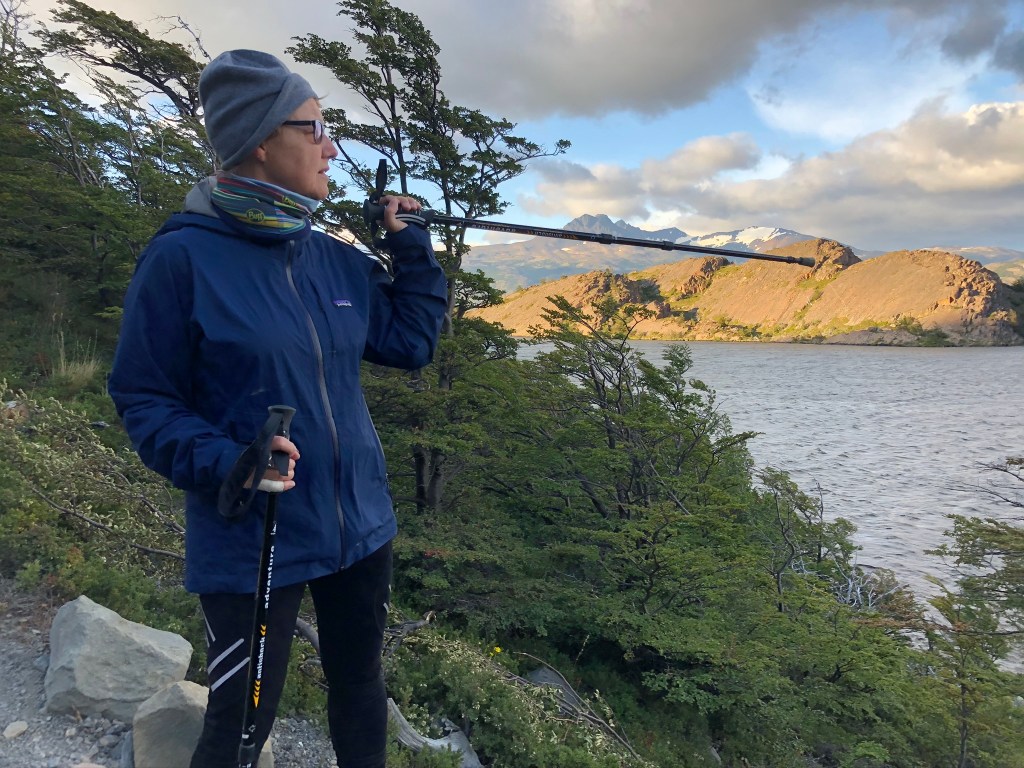
Somehow, we struggled through the worst of the wind tunnel. Unfortunately, we had another 7 hours of humping through hell in front of us to get to our overnight destination. It was our longest and hardest day. Truus led most of the way, as she did for most of the week. Her spirit (and body) was bruised, pretty badly, but never broken by Patagonia. Howie and me hung on somehow, clinging to the promise of cold beer and the illusion of “the worst is behind us.”
Still hard to wrap my head around the whole experience. It took a lot of heart to decide to take on the W-Trek, and our deepest reserves of determination to complete the task. Clearly this is one time when, for better and worse, foolishness carried the day.
Howie, Truus, and I arrived in Puerto Natales a couple of days ago. This is the staging town for various climbing and adventure travel in Patagonia. It’s a fairly prosperous and busting hub. There are plenty of people coming and going and sharing tales of travel in Chile and the rest of South America.
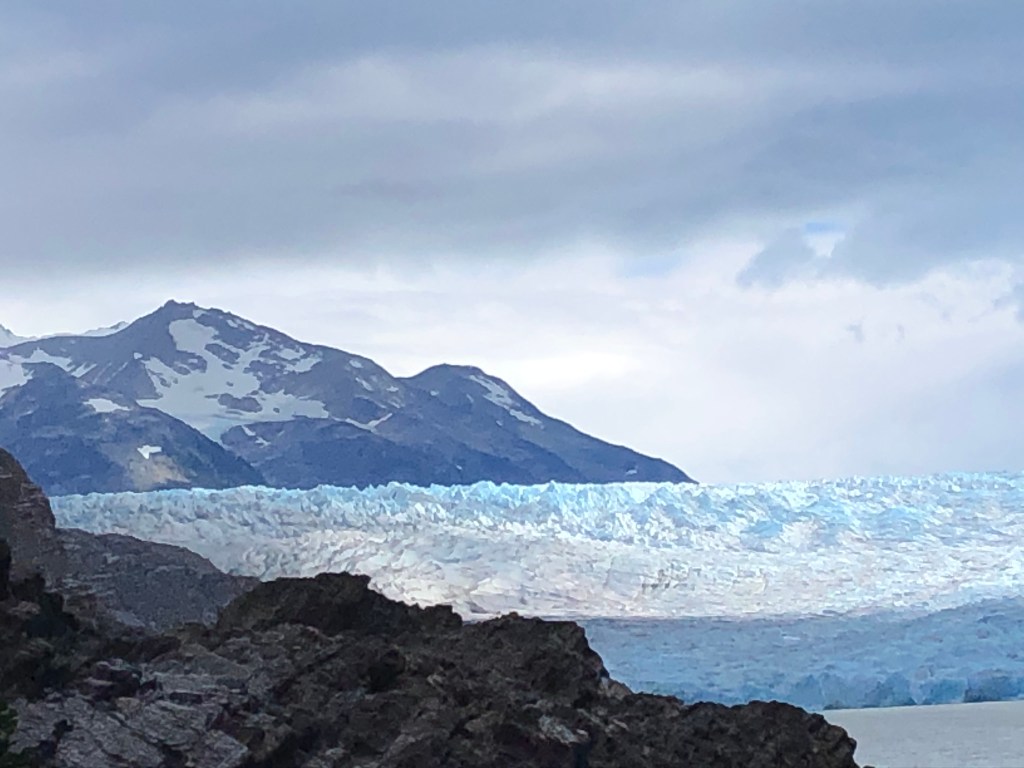
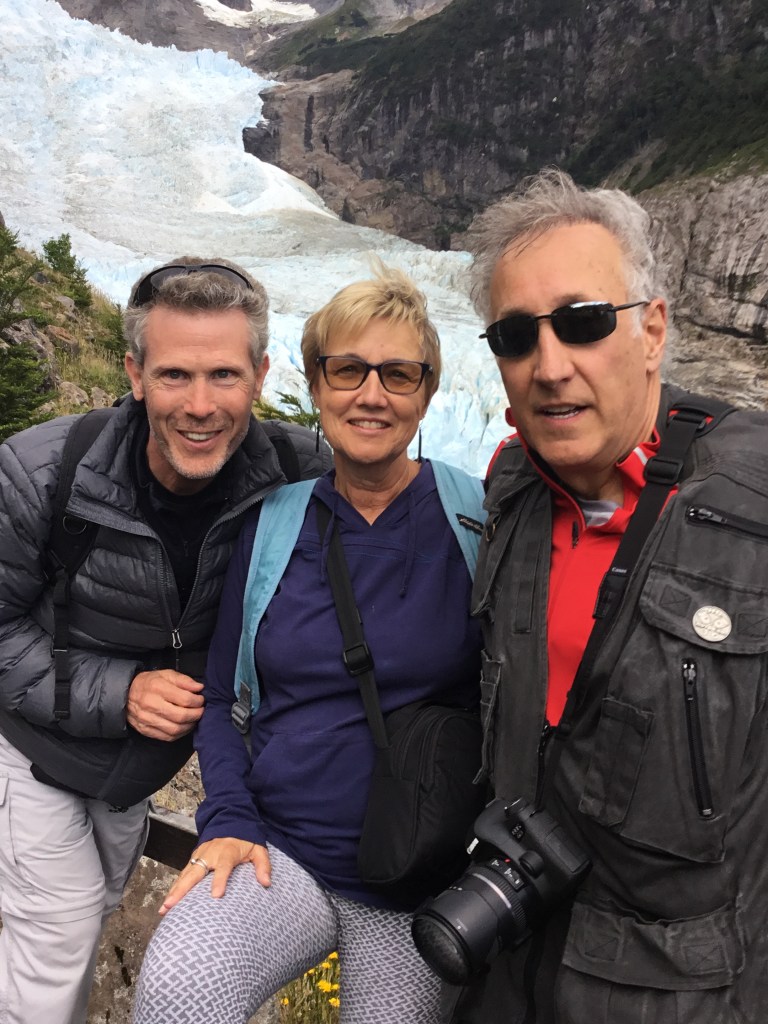
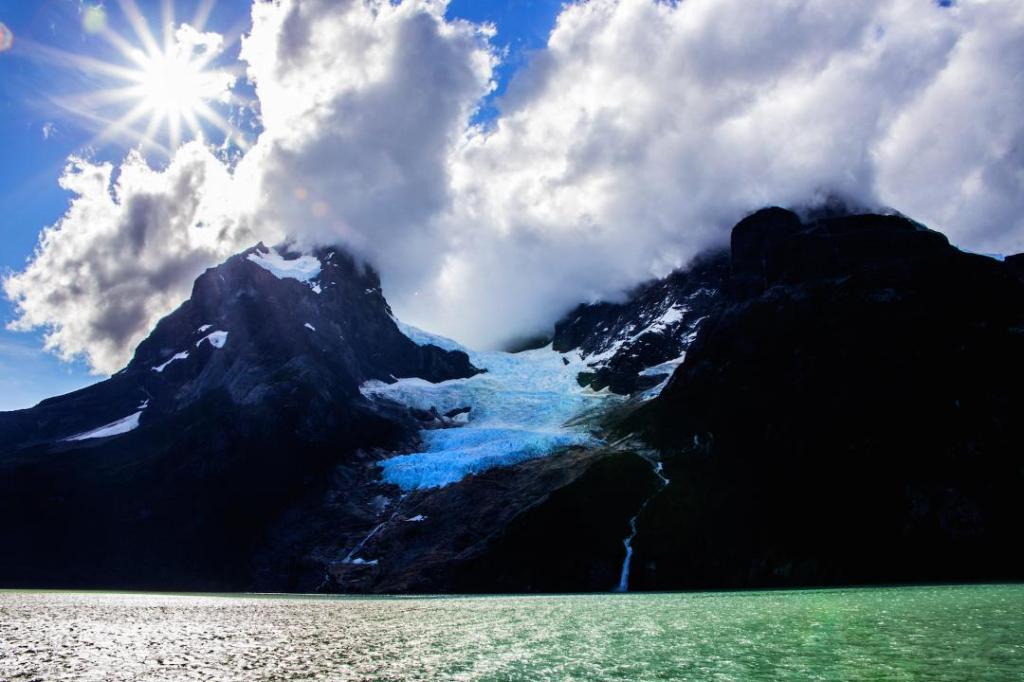
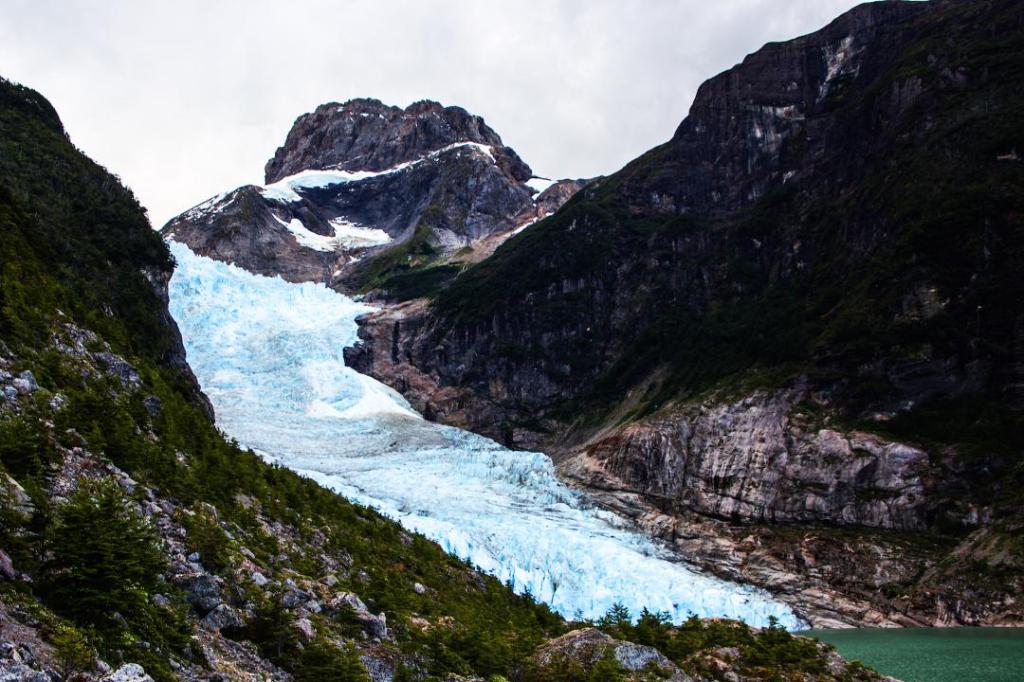
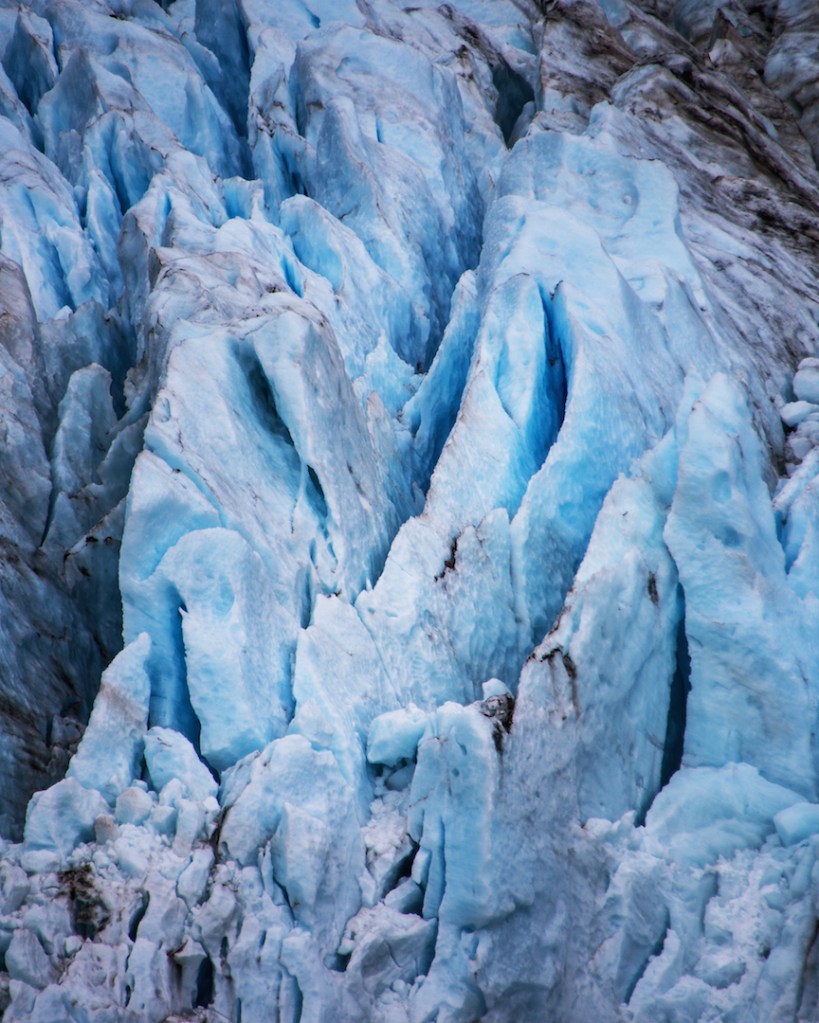
Yesterday, we had a chunk of time to fill in, and so we booked a day cruise through a fjord to a Glacier in Bernardo O’Higgins National Park. The day started off with calm water and bright sunshine, but the weather deteriorated throughout the 2+ hour ride to the Park. By the time we were set to leave, the wind gusts were up to 100km. The Park ranger that I spoke with said that it was a pretty calm day.
The trip back was a race to beat the worst of the weather. The crew passed out glasses of whiskey with glacial ice chunks to all passengers in an attempt to forestall any panic and encourage bonhomie among the passengers. When we finally got back to port, we were in the midst of a full-fledged storm. Passengers staggered of our listing ship onto another sister ship parked astride ours in the slip, and then white-knuckled across a metal gang plank onto a bobbing dock. Those who made it off and were already in the waiting coach busses watched as the rest of the folks fought the wind and stinging rain. The glacier was awesome, but the end of the trip was a priceless sight to see.
Nearly a year in the making, we are finally on the precipice of our “sprong in het niets” – the Dutch expression for a massive (ill-advised) leap of faith. Literally, the Dutchies describe it as jumping into nothing, or, pulling a Wyle E. Coyote and running full speed off of a cliff.
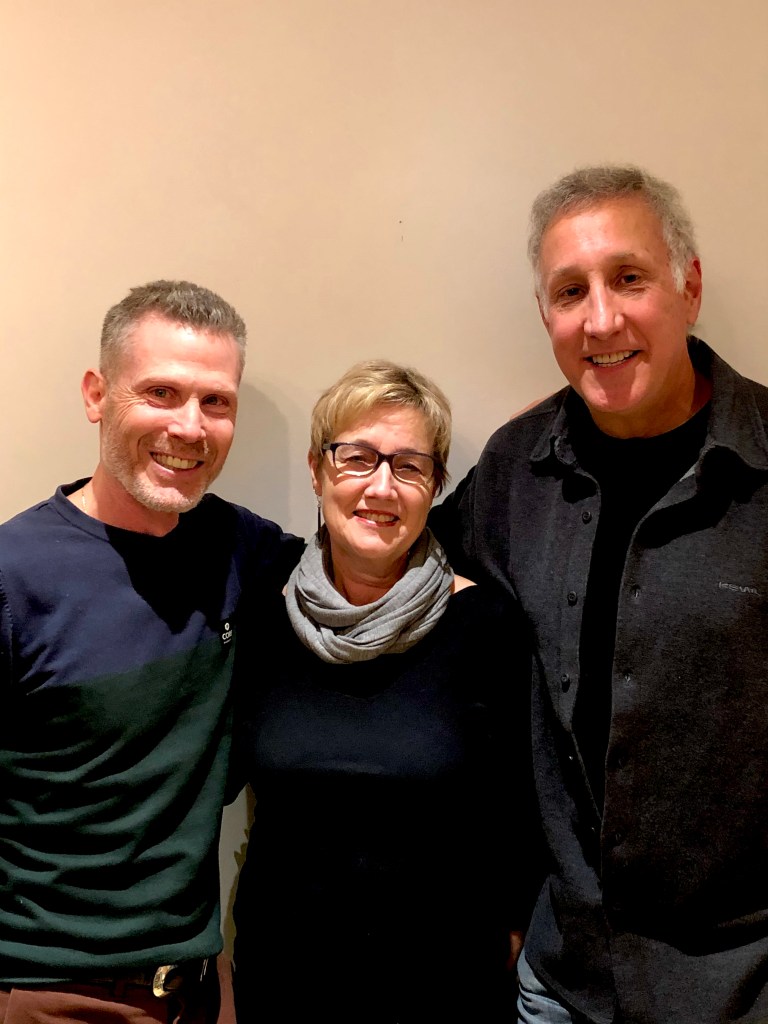
Tomorrow we Three Stooges embark on the first leg of our assault on Torres del Paine. We attended our tour briefing this evening from Fantastico Sur tours. The meeting was meant to establish ground rules and inform us about the daily schedule of self-inflicted torture as we progress along the W-trek over the course of the five-day odyssey.
The W-trek, so named for the approximate shape of the path, and representing symbolically the question that we will all be asking ourselves at some point – WHY did I want to do this?
For even more ambitious souls, there is also the O-trek, a circular path that circumnavigates the National Park, covering a distance of 140km. The O is named for the geometric form of the path, and also appropriately mirrors the mouth of Edvard Munch’s famous figure in his painting The Scream.
Having long passed the point of no return, Truus and Howie and I dutifully filled out the questionnaire regarding our physical condition. The majority of the group of folks in the briefing were young oblivious Americans. There were also a few other retired couples looking vaguely concerned, and whose pallor became more and more pale as the briefing progressed. And, of course, no event in any obscure corner of the globe would be complete without the requisite Dutchmen sitting in the back of the room. The Dutch are like Chicken Man – they’re everywhere.
So we’re set to go. Tomorrow we get the bus to the entrance of Torres del Paines mid-afternoon, and then a shuttle from the entrance to the Park to our first overnight “Refugio”. On Tuesday morning, we hike to the Three Towers and back. Let the games begin!
glacier cerranoGlacier balmacedAGlacier up closeglacier waterTaking a break on the boatSo happy to be there with the three of us!
Another day, another 320km slog through some of the earth’s least forgiving places. To see this locale, thousands of square miles of the Atacama Desert, is to truly understand the Old Testament God. You know, the psychopath who spoke to Abraham and demanded that he march his son up a hill and murder him, as a test of his faith. That guy.
Our tour guide in San Pedro (a trained air-traffic controller, turned geologist, turned guide) was a Bolivian national and devout Catholic. As we drove to the various points of interest, I noticed him gazing through the windscreen at the passing roadside shrines to the victims of traffic accidents. He crossed himself, put his first two fingers to his lips and silently offered a kiss & a prayer to the heavens. Given that there was a “memoria” every 2-4 kilometres, this practically qualified as an aerobic activity.
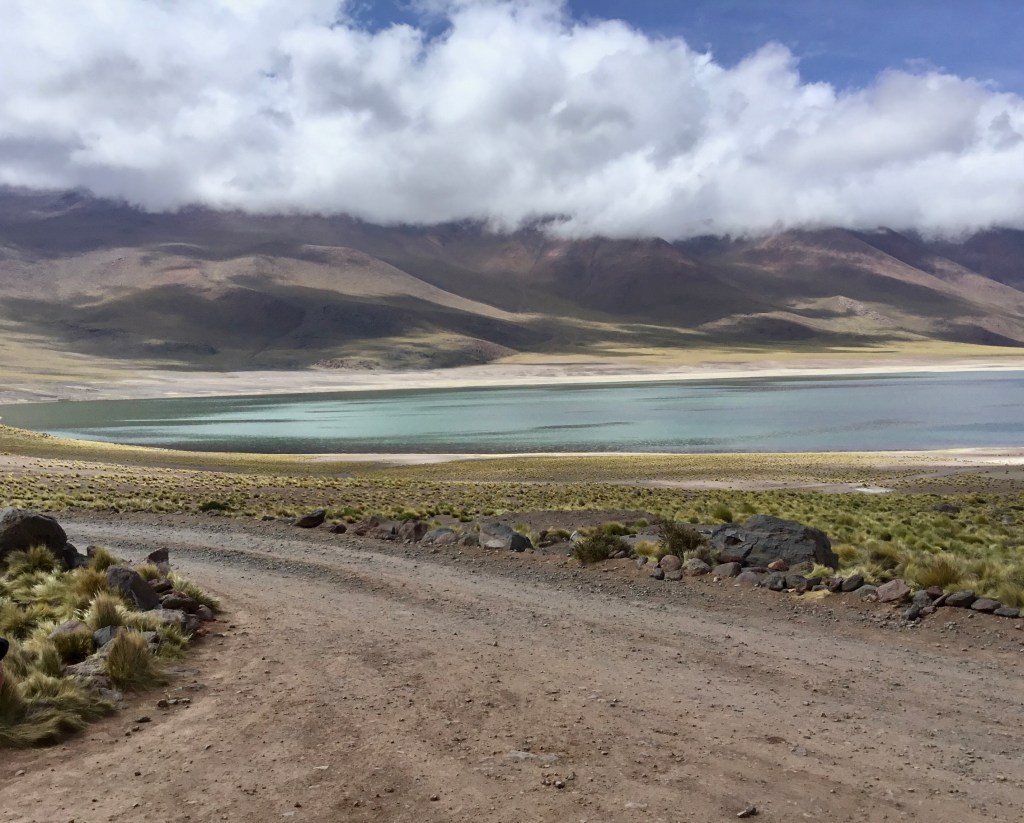
When we were at one of the Lagunes, situated in the shadow of 2 massive volcanoes, the guide said that, back in the day, the indigenous people would annually hike up the biggest volcano and sacrifice a sheep, sprinkling the blood on the side of the volcano as an offering. The idea was to placate the anger of the Gods with a gift, and a prayer that roughly translates to, “Don’t go blowing your top, for Christ’s sake”.
After spending 1 week, in the Atacama Desert, I can appreciate the need for a belief in the supernatural. According to the internet, the Atacam Desert occupies 128,000 square kilometres, if the barren lower slopes of the Andes are included. The terrain is made up of sun-baked rocks, salt lakes (salares), sand, and felsic lava that flows towards the Andes.
· Average rainfall in this region is about 1 mm per year. Some locations within the desert have never had any rainfall whatsoever
· Soil samples from this region are very similar to samples from Mars; for this reason, NASA uses this desert for testing instruments for missions to the red planet. Other parts of the desert are more moonlike, based on rock formations and colours. Practically 0% of the Atacama Desert look like the planet earth, or a facsimile capable of sustaining human life
· The oldest artificially mummified human remains have been found in the Atacama Desert. These mummies predate the Egyptian mummies by thousands of years, and the extreme lack of moisture helps in the preservation of these samples. So, we may have been wandering the desert for 1 week, but the good news is that we likely haven’t aged a day
Back in 2013, the Chilean government announced that they were going to become the Saudi Arabia of solar energy. The project was called “Cerro Dominador”, or Hill Dominator – unselfconsciously pretensious in name and scope. The idea was to introduce a new technology that was supposed to allow for solar energy production 24/7 (Concentrating Solar Power). It was designed to have a sea of solar panels and mirrors all focusing to a point on a tower 250 meters above the desert. We drove past the place on our way to our stop for the day.
Currently, Chile buys the majority of its electricity from cheaper providers in Argentina/Bolivia – fossil fuels such as coal, natural gas and oil. But, as with most things in Chile, the government decided that the best way to get this done was through the power of the invisible hand of the private market.
The sun didn’t let them down, but the financiers and the market went dark nonetheless. The project almost went bankrupt, and wound up being sold. It’s kind of hobbling along now, not unlike the entire country. And it’s both a cautionary tale of the limits of profit-driven ventures, and a reminder of the untapped potential of this place.
That being said, we’re both pretty happy to be seeing the back of this desert. We’ve got 2 days in a gritty beach city called Antofagasta, then we fly to Santiago to pick up nuestro amigo“Howardo”, and then follows our great and grand Patagonian adventure.
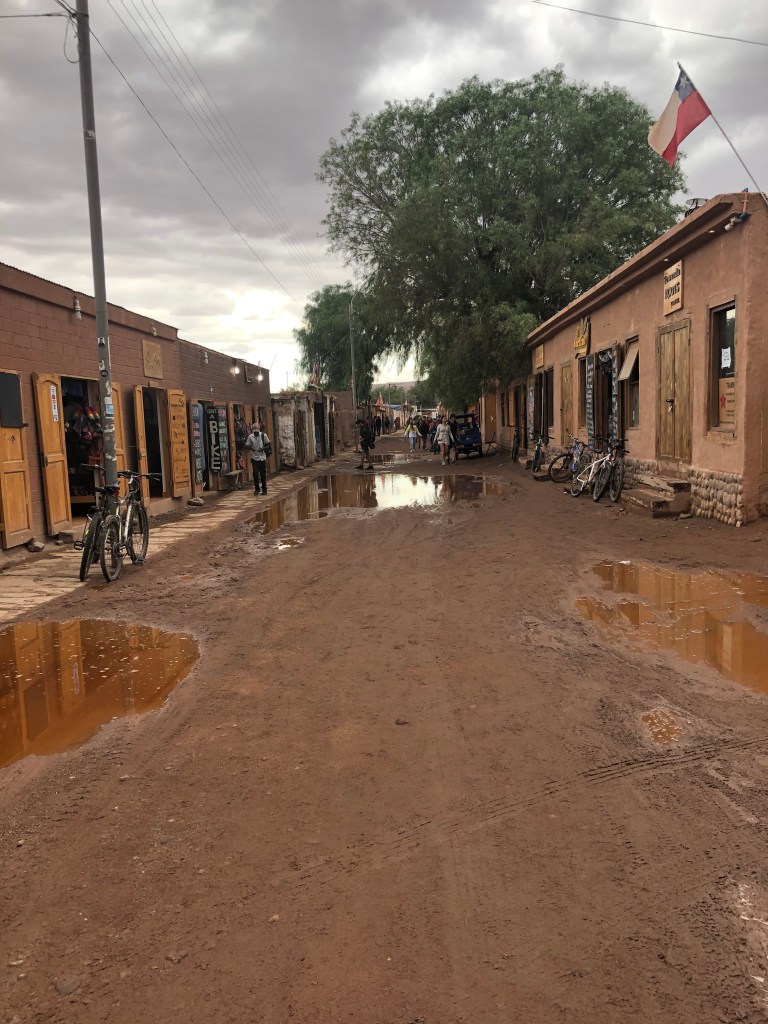
A little village we visit on our tourAgain 4200m altitude and a beautiful lagoonleaving san pedro de atacamaThe road to antofaGasta – note the mEmoria to the driver CLOSER TO THE ROAD san pedro de atacama street after a thunderstorm
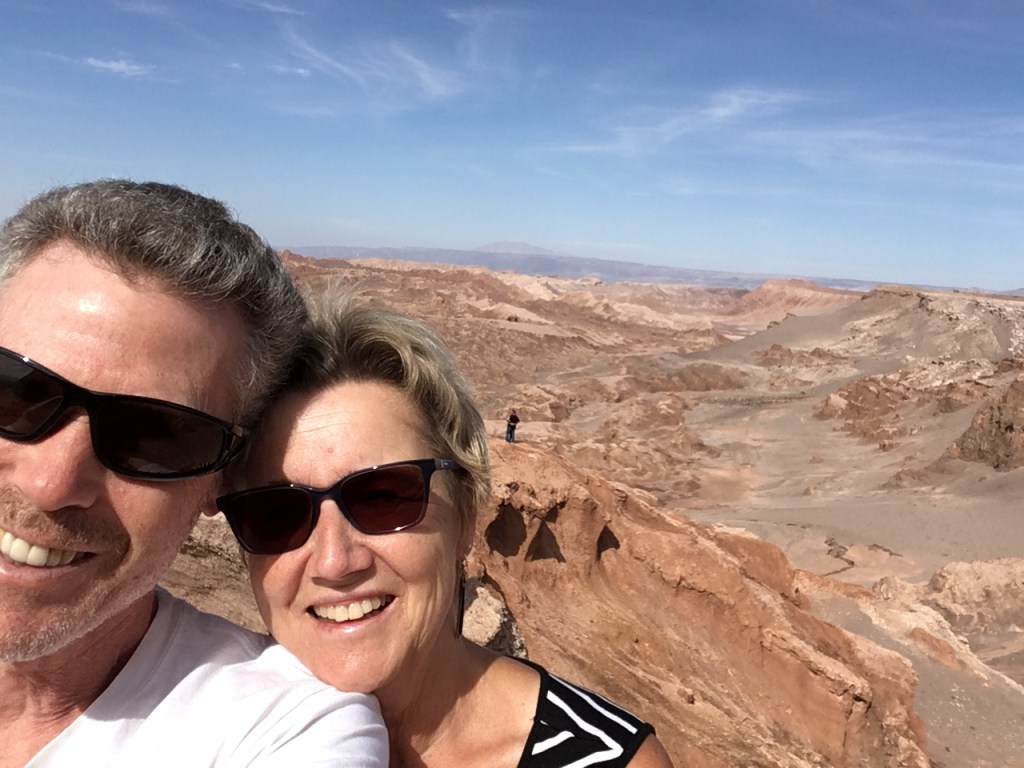
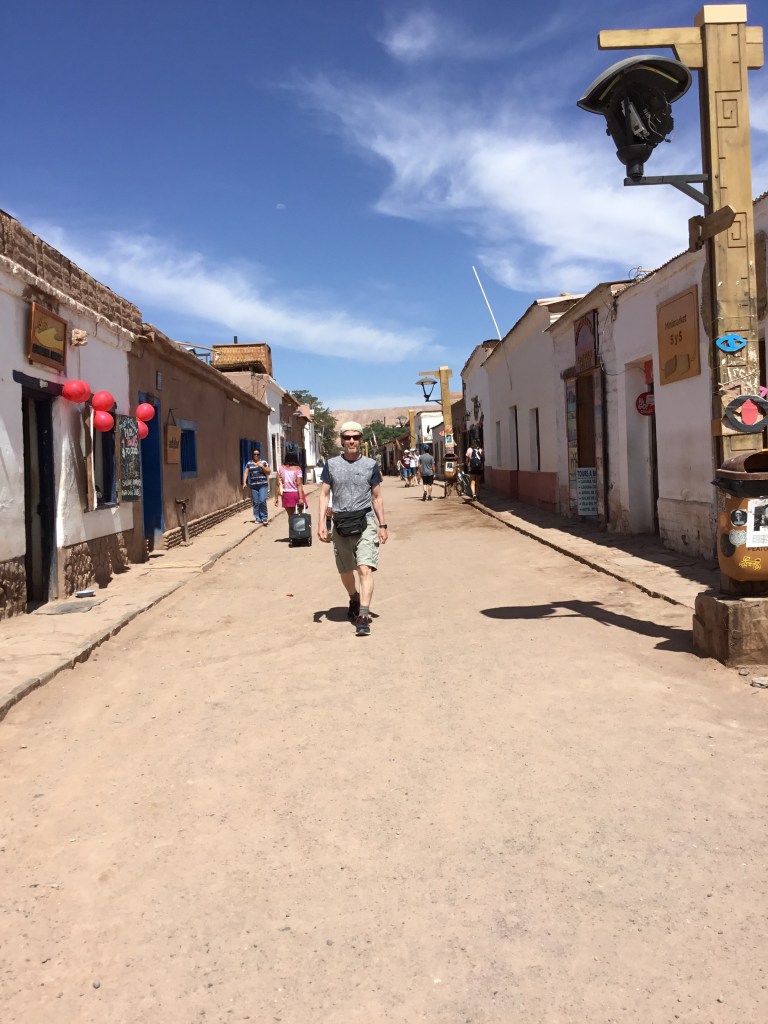
San Pedro de Atacama, our mailing address de jour, is the driest dessert in the world. We’re surrounded here by a moonscape of sand-blasted stone, with a foreboding backdrop of parched mountains, and sheer cliffs. The place makes Mad Max’s neighbourhood look like Ferry Lake.
San Pedro (named for St. Peter – patron saint of this place) was originally taken from the native peoples by the Inca. The indigenous people had built a tiered fort that they thought was cutting edge. The Inca came in and said, “Thanks for saving us the trouble”, and took things over in the early 16th century. The Inca were the badest boys in the hood at the time, but, being an advanced civilization and in the interest of good relations, they gave the tribal leaders a place of marginal power in order to win hearts and minds. The locals in general figured they could do worse, and accepted that a new sheriff was in town.
Shortly thereafter, like within 30 years, the Spanish hit town. The Spaniards at the time were living the original “Vida Loca” across South America. No one in these parts had ever fought against men riding horses, so it really wasn’t a fair fight. Kind of like an NFL championship team from the 1920’s lining up against the present day KC Chiefs, and being told just before kick-off that the forward pass had been invented and made legal. The smart money was on the Spanish interlopers.
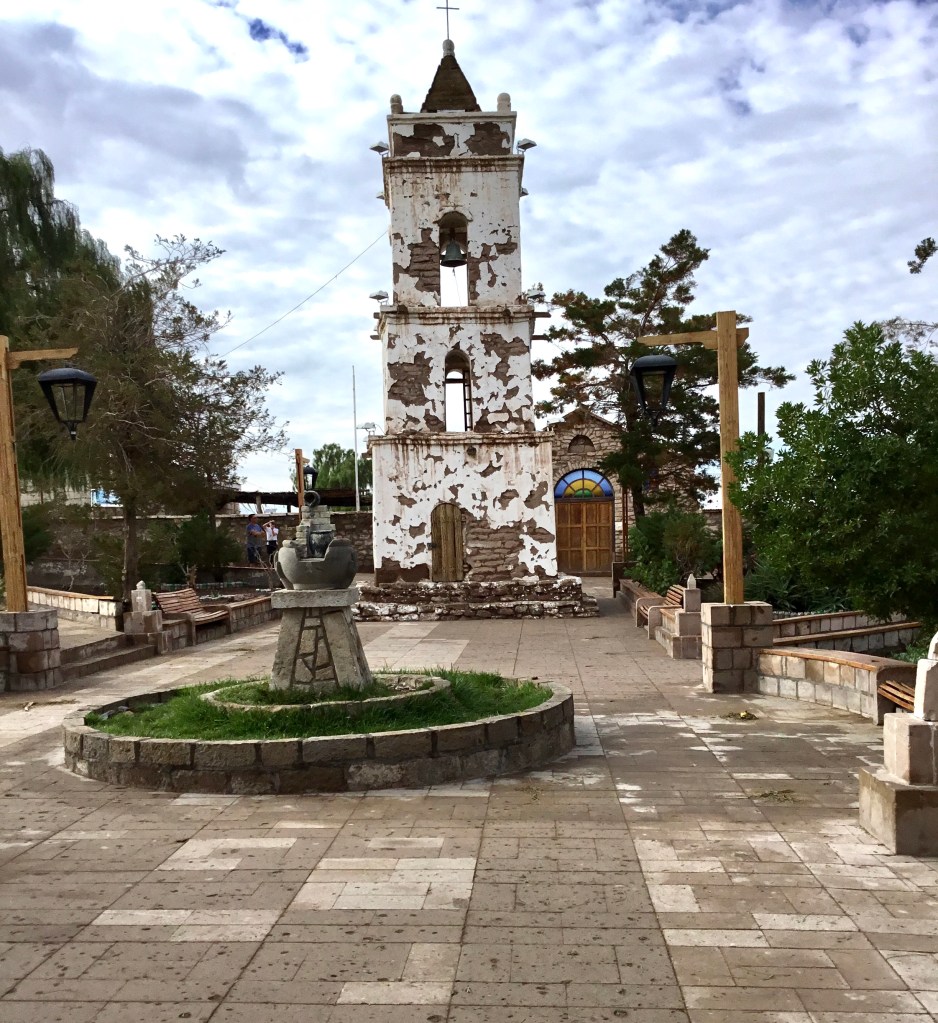
The Spanish, being a generally despicable lot, not only chased off the Inca and took charge, but they gathered the leaders of all the various indigenous tribes, and cut their heads off in the main square. Unfortunately, this lesson was not lost on los Chilenos (see earlier posts about Pinochet, Pinero, etc.). The locals here in San Pedro still call their main square, a wonderfully picturesque plaza with a super cute Catholic church, the “place of heads”. Lest we forget.
The drive to even get here was a trek through hades. First a 2-hour white-knuckle winding climb from the beach town of Iquque along the Chilean version of the Pacific Highway. The two-lane road hugs the edge of the continent. On your right – a sheer drop to the Pacific Ocean. On your left – a whole lot of nothing but sand, rock, the occasional South American slum town near to one or another factory. Along this stretch of ocean, down below on the broad beaches, there are also official and unofficial campgrounds/holiday bungalow parks. It appears that this is the Chile version of the Santiago middle-class going to the cottage. We stopped a few times in the first few hours for scenery pictures. Truus says that this part of our trip reminded her of her time touring through Mexico.
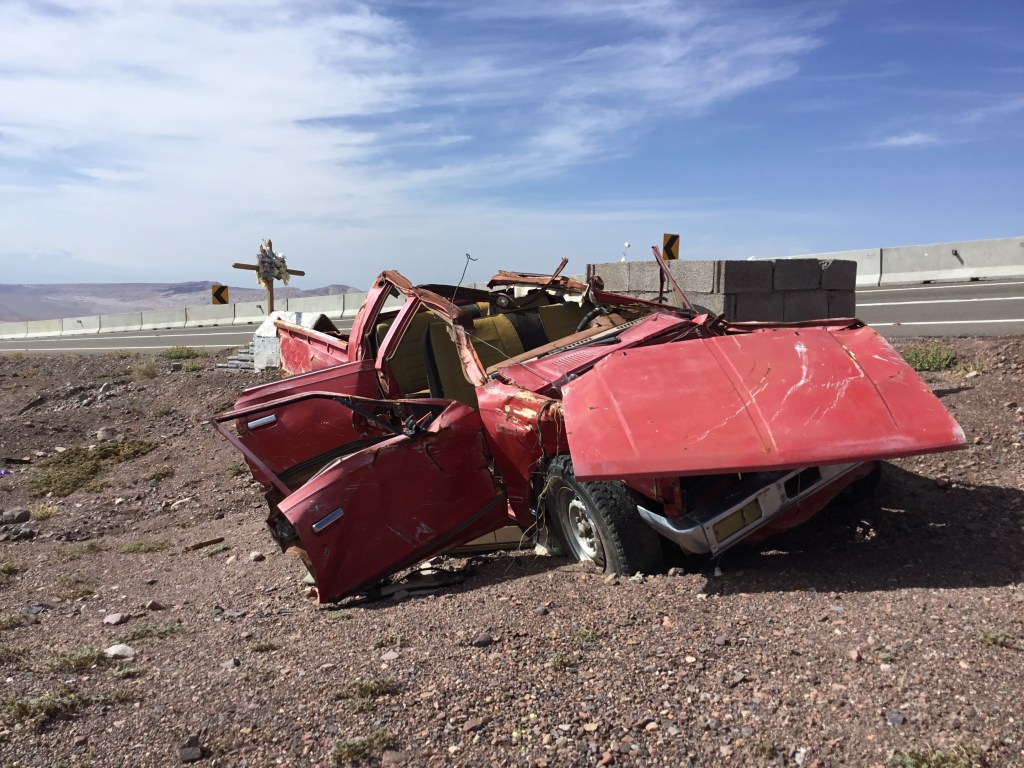
The next 4-5 hours went by in a blur. We made a hard left turn away from the ocean, climbed up thousands of feet to the high plains, and cut across a sun-baked, Outback-like dessert. The only things breaking the monotony of sand were the countless “memoria” shrines along the route for the dead. We’ve literally seen hundreds of these. Some of them are extremely colourful and detailed, including bench seating and canvas roofing to shade the loved ones who come to pay their respects. The shrines are a reminder of how treacherous the driving is here. The mountain passes are bad – crazy changes in elevation, deadly corners, tractor-trailers passing willy nilly – but the bone-straight dessert roads are greasy and unforgiving. One moment of lost concentration at 110km/hr and it’s feeding time for the condors. The Chileans don’t clean up after a crash scene. The bodies are removed, but the vehicles are left where they lay. We’ve seen untold burned out abandoned wrecks. You can tell how long they’ve been there by the degree to which they’ve been stripped by the road vultures. On the way to San Pedro, we saw an SUV that was freshly crashed. The airbags had popped. The windows were blown out. The tires, wipers, and upholstery were still there, and the engine block was still visible under the collapsed hood. Fresh meat.
Tomorrow we’re putting our fates in the hands of someone else. We’ve booked a full-day driving excursion with one of the dozens of companies running tours of the local sites. Walking around town this evening going door-to-door getting prices, haggling, and dodging the hordes of other tourists, San Pedro felt a bit like being in Gas Town from the movie Thunderdome. Surrounded by an unforgiving dessert, this oasis of commerce draws all sorts folks, each for their own reason. Me, I’m here with the small Dutchy with the sharp elbows who decided 6 months ago that this would be a good place for us to visit. And it happens to be the only place for 100km that you can fill your tank.

 Chilean Adventure 2020