As I was packing up the SUV getting ready to leave our little-slice-of-heaven in Santa Cruz, one of our fellow residents in the compound walked by the vehicle and stopped by to chat. It was one of those, “Where are you heading? What’s next?” conversations that travelers like to share.
The previous evening, I had engaged this gentleman and his wife in an animated Spanish conversation (“animated” being the operative word – lots of hand and foot gestures on my part to be able to communicate) around and about the fig tree between our apartment and theirs.
That morning, I mentioned, we were heading to Vina Del Mar and Valparaiso. “Vina Del Mar is nice, very peaceful”, he said, “but watch yourself in Valparaiso”. I nodded solemnly, saying that I understood. The seat of the Chilean government is in Valparisso. It is the Wolf’s Lair, and, not coincidentally, also the beating heart of the social revolution movement that is underway in Chile. Everyone in Chile knows about Valparaiso. The government and the establishment have successfully demonized the place. Most Chileans know to stay away from Valparaiso, and encourage others to do the same.
When the spouse of my well-intentioned travel amigo wandered over to pick up on the conversation, she offered the following advice, “Valparaiso is full of delinquents and malcontents. It is very dangerous, as most of these people will try to rob you – take care!”
The approach of the Chilean government has been to play the long game. The protest movement started in the last months of 2019. Under fierce pressure and civic disobedience, the government reluctantly agreed to hold a plebiscite as to whether the people of Chile want to approve changing the National Constitution. Tactically, this was done to forestall a collapse of social order. The vote is scheduled to take place in May 2020.
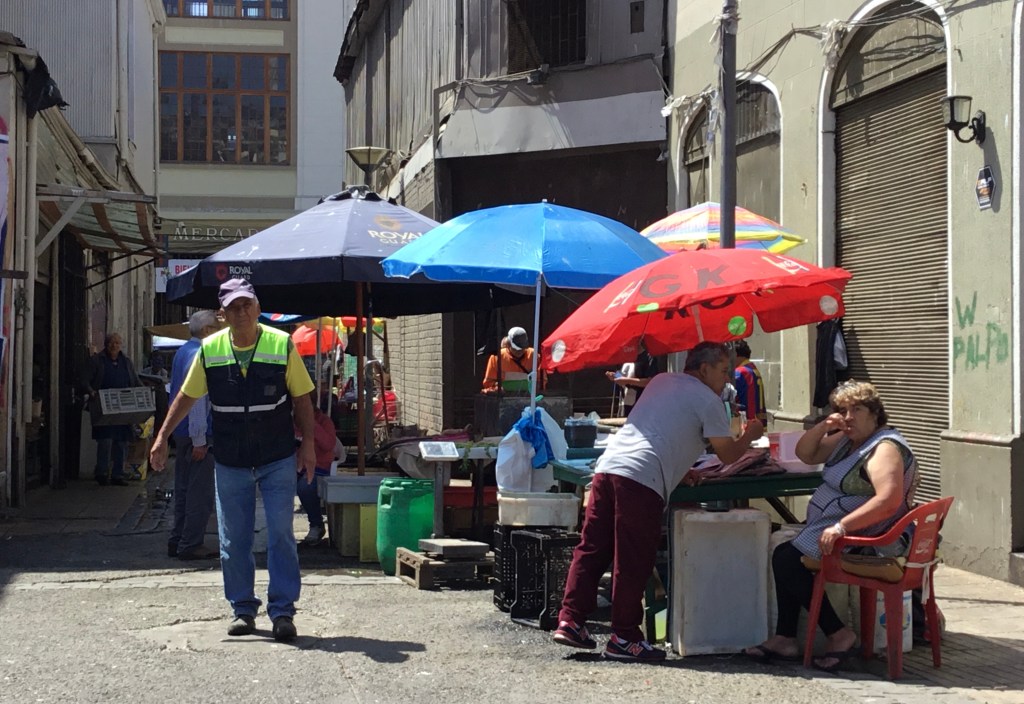
In the meantime, the government has tried everything possible to disrupt the daily lives of people across the country under the auspices of “safety” and “order”. It started with the enforcement of a general curfew. Since the curfew was lifted, many “emergency” measures have remained in place. Banks are only open 4 hours per day. ATM currency withdrawals have a daily cap, and availability/hours are severely restricted. Some Metro subway stations in Santiago have been closed since riots occurred back in December. Street lights in big cities that were damaged months ago haven’t been repaired. Traffic at these intersections is directed by junkies and vagrants wearing makeshift fluorescent orange vests, who are tipped by grateful motorists and pedestrians as they pass by. Access to many public spaces and buildings has been severely restricted.
The Government’s playbook is to have the general population associate all of these bad things with the protest movement, in order to dissuade popular support for a “Yes” alternative. The message is ‘Better-the-devil-that-you-know’, than the potential for Venezuela type chaos if Chile votes to go down the “social justice road”. There has also been a concerted propaganda campaign to use fear and people’s natural inclination for order to plant doubt in the minds of the middle class. Sad to say, but it may yet prove to be effective.
No matter what the government does, they’ve got their hands full in Valparaiso. The city has a long and rich history of defiance. The Chilean Navy is based in Valparaiso. We walked by lots of military and police buildings across the city. As we passed the Royal Naval base, a group of commandos, locked and loaded in full combat gear, were boarding a troop transport bus. The government was expecting trouble in the city that evening, and wanted to be ready to respond.
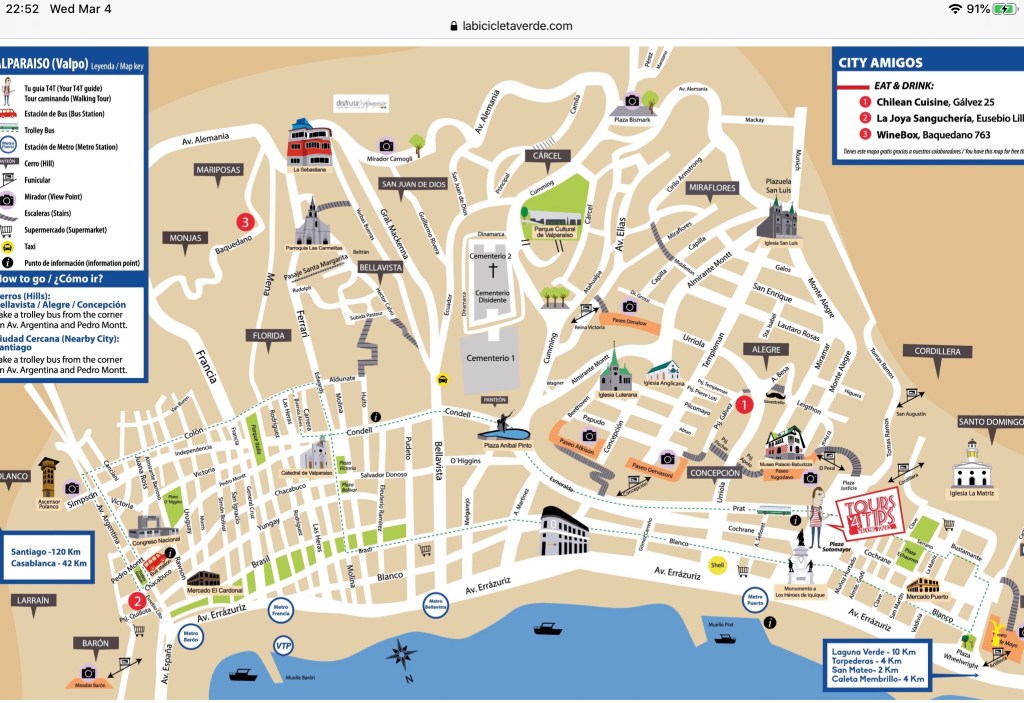
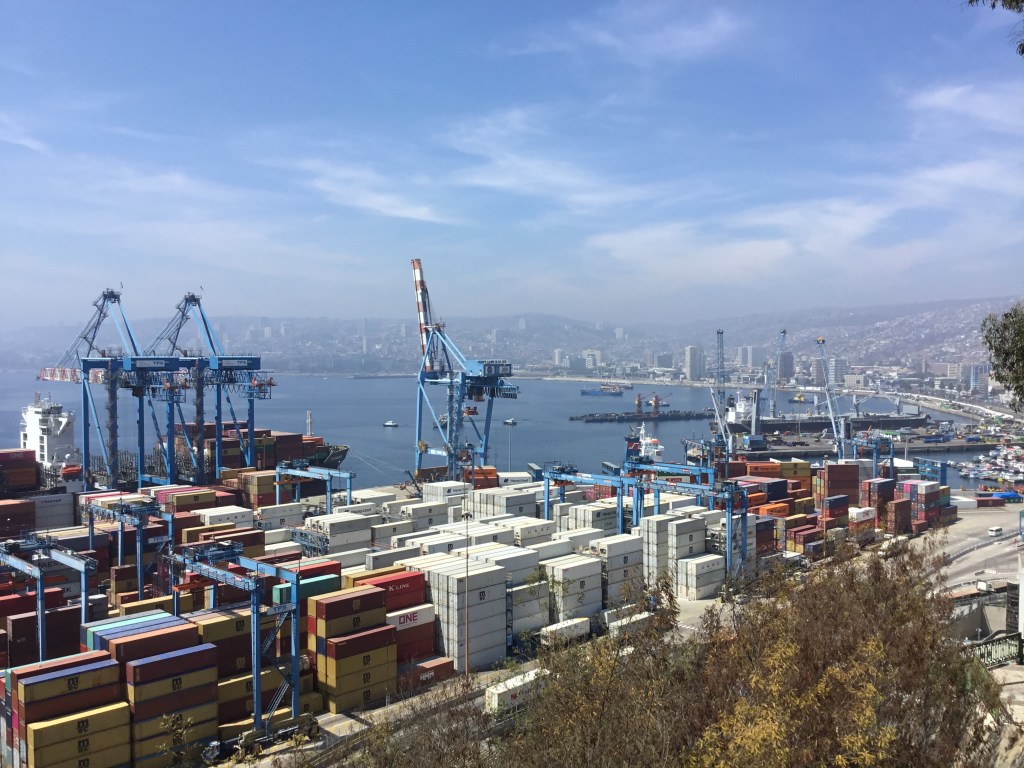
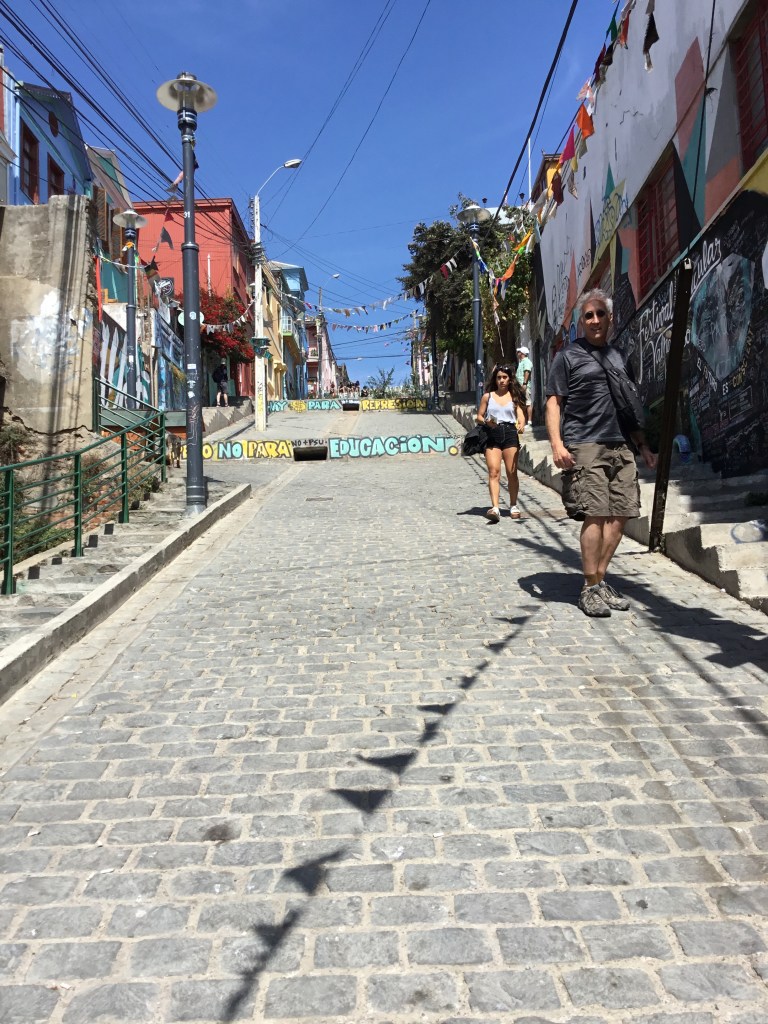
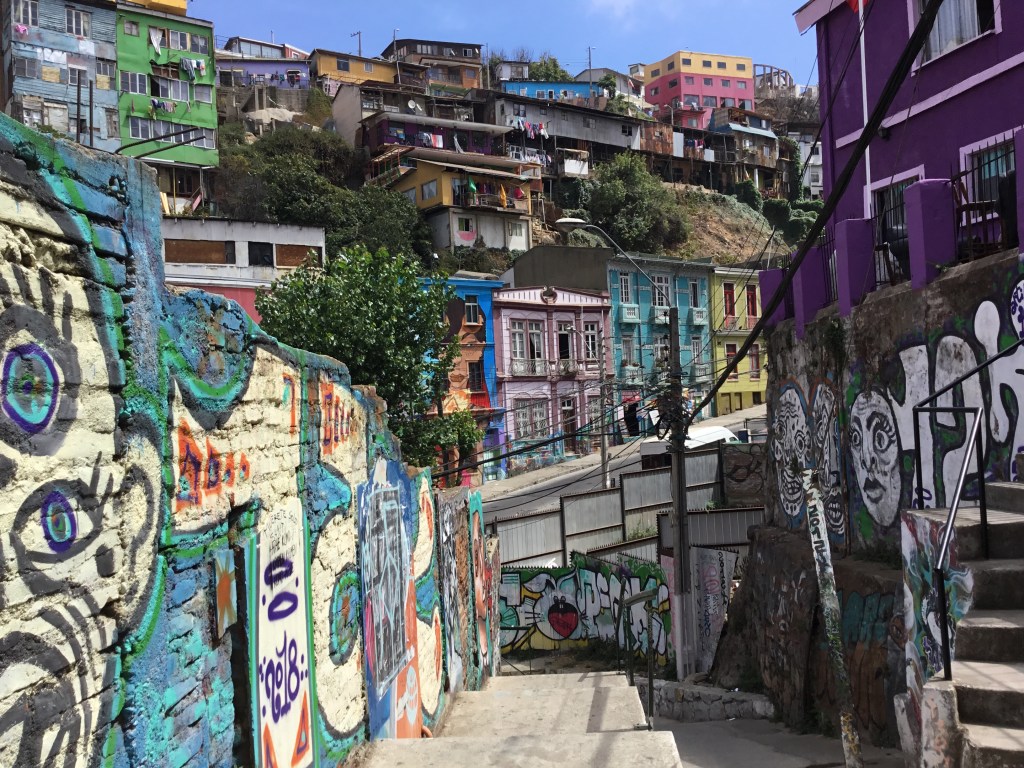
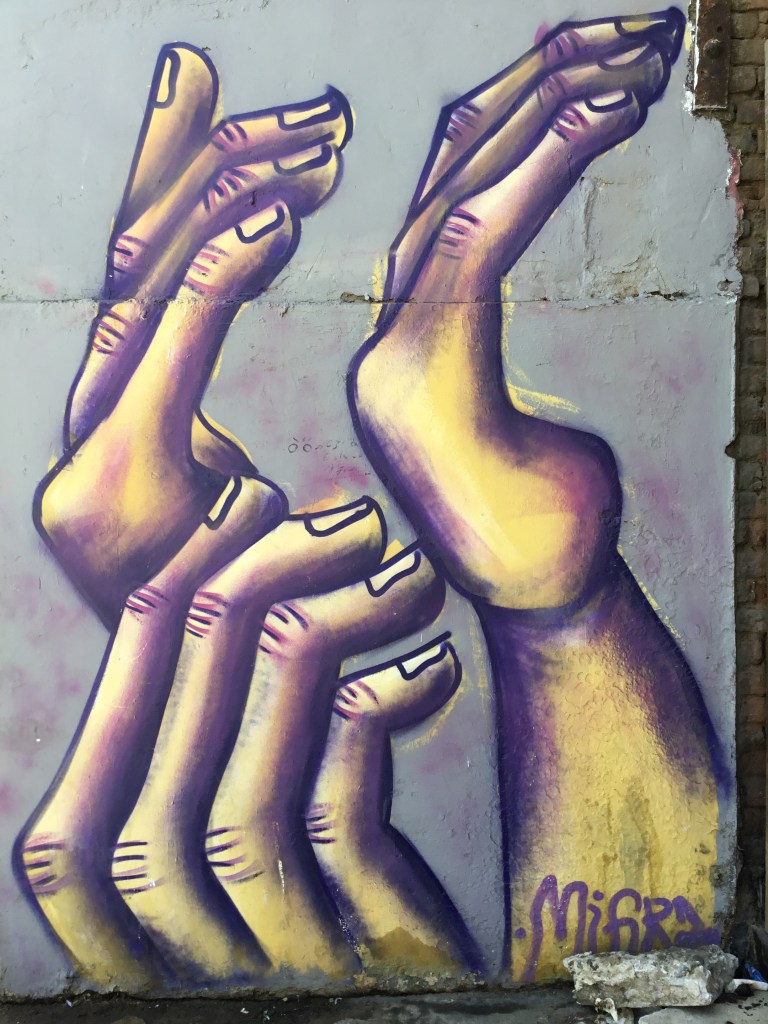
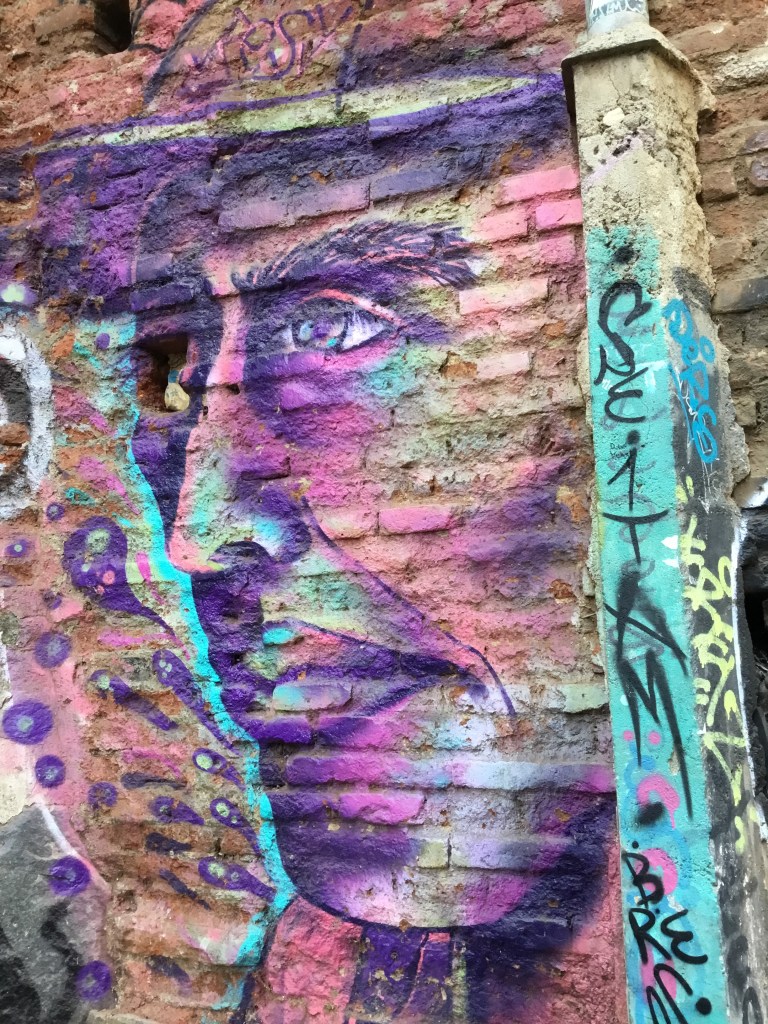
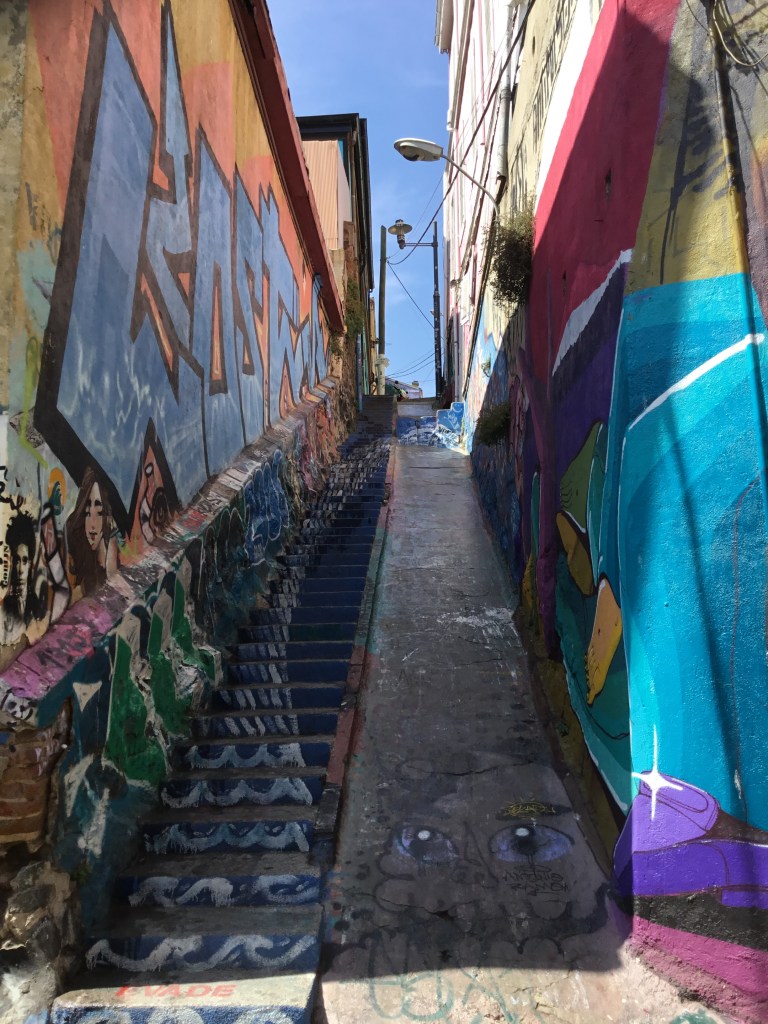
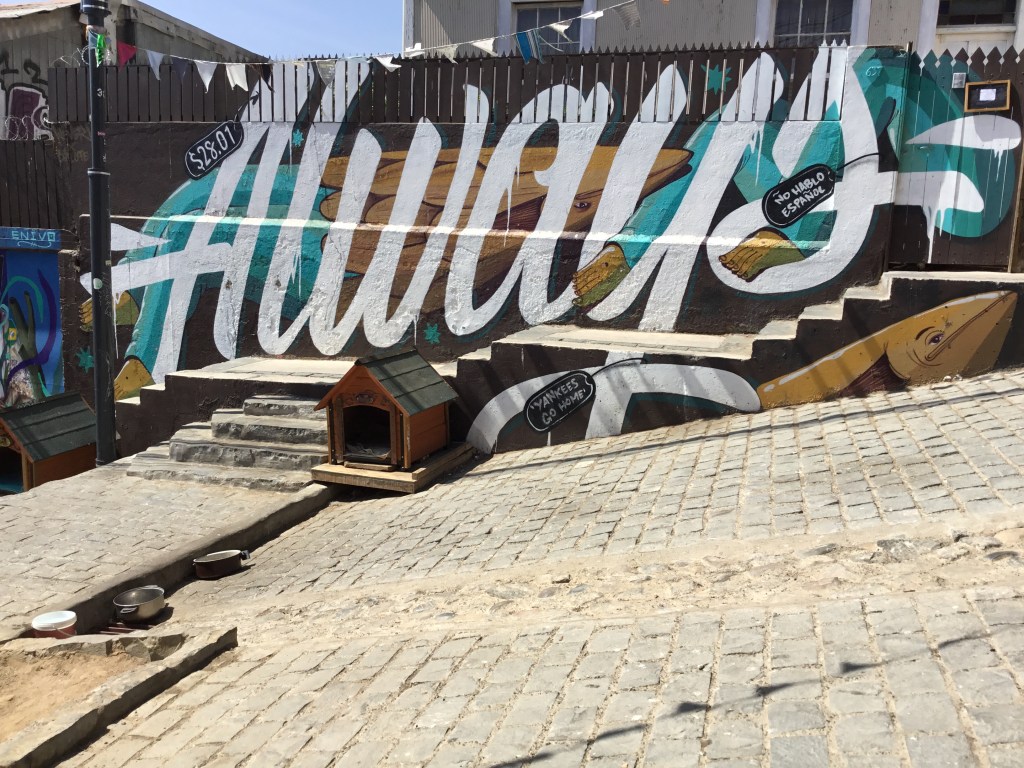
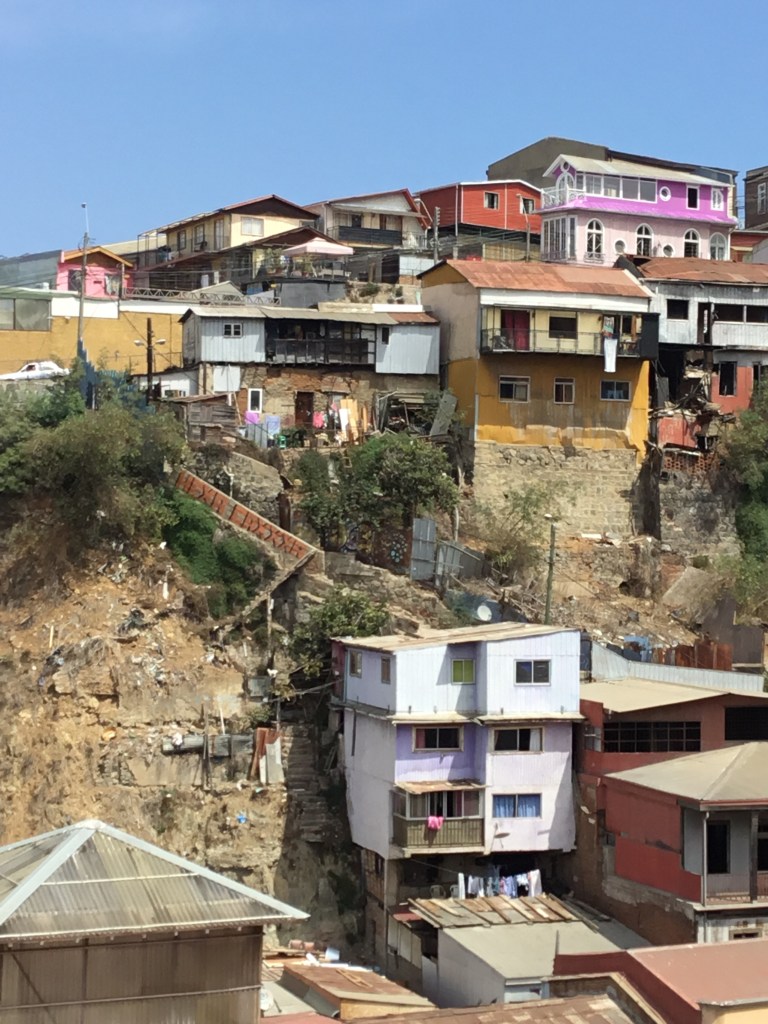
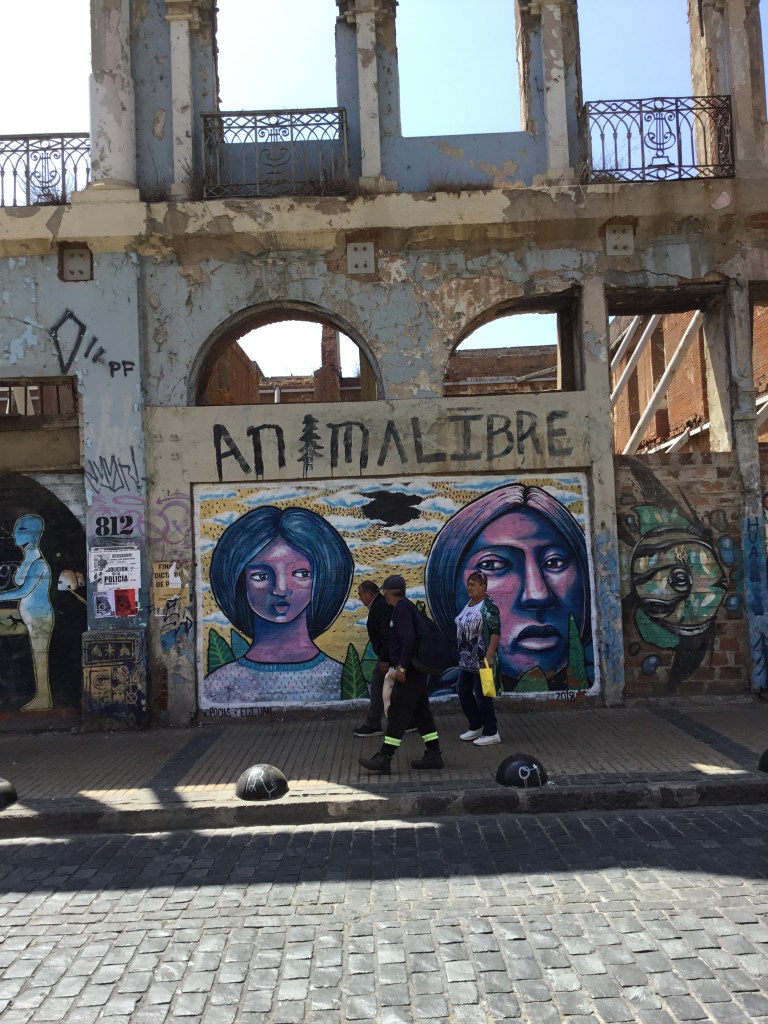
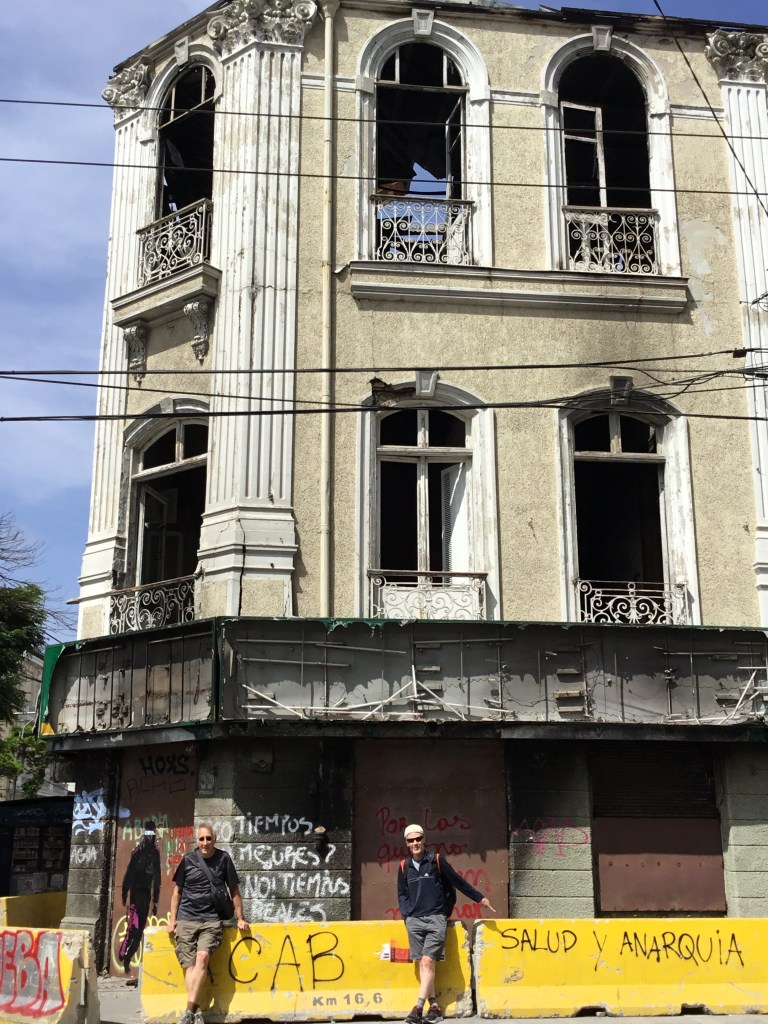
Valparaiso is a vibrant, artistic, bohemian hub. The waterfront is dominated by a very busy, bustling container port. The surrounding neighbourhoods overlook the water, balancing precariously on the hills that rise sharply and connect in a horseshoe pattern above the bay. The blue-collar grit of the city is contrasted by the abundance of colours of the painted houses, and the world-famous murals that illuminate the streets. Graffiti is everywhere. It takes the form of words, images, sculptures, and street art. Some of it is beauty-for-beauty’s-sake, but much of it reflects a social/political bent.
Our time in Valparaiso was short – only one full day. We had booked our apartment in the neighbouring community of Vina Del Mar, about a 10 minute ride by subway. Ironically, this place proved to be the more irritating and confounding of the two cities. Far from being a sea of contentment and idyllic beachfront living (fake news), Vina Del Mar is a South American version of Florida’s South Beach. Not a great blueprint to follow.
The drive into Vina Del Mar was choked with Manhattan grade traffic. The maze of one-way streets confused even Google Maps – the directions on Truus’ phone kept switching every 10M, as if Dr. Google was saying, ‘I give up, good luck, you people are on your own’. When we finally arrived at the appointed address, there was a tremendous mix up at the condo. Truus was told at the front desk that we had to go elsewhere to first pick up our room key. Howie was stuck in purgatory, parked at the entrance to a locked parking garage in front of the building, not able to enter, but not daring to leave for fear of not being able to find his way back. I was bouncing between Truus + the concierge, and giving updates to a somewhat anxious and weary Slim at the wheel of the Suzuki.
Finally, reluctantly, Truus and I walked outside with directions to the other place to be able to pick up our room key. However, when we exited the building, there was not a single sign of Howie. It was as if aliens had beamed him and the two ton SUV up to the Mothership. Traffic was still completely clogged in front of the building, but Slim and the vehicle, and all or our belongings, were gone.
This was one of those absurd moments that don’t make it to most travel blogs. You’re tired and starving after an entire day driving. The logistics are unwinding wildly and unexpectedly, and there’s no one there to solve your problems. You’re in a strange city, speaking your 3rd or 4thbest language, and the guy who is least equipped to navigate these rapids – no cell phone, no GPS, no city map, and has only learned how to say “Beer, please” and “Fuck the cops” in Spanish” – has suddenly gone AWOL.
Truus looked at me with a WTF look, and a can-this-evening-get-any-worse shake of her head. I just shrugged and said, “Don’t worry… Slim is resourceful. He’ll figure it out.” About 15 minutes later, as I was still looking for signs of the lost SUV in the tangle of traffic, an out-of-breath Howie ran around the corner and suddenly appeared next to Truus. “I’m parked about a mile away”, he said. “I had to leave, ‘cause there was a car exiting the parking garage and another one behind me wanting to enter the garage. I was trapped.”
This was Slim’s Captain “Sully” Sullenberger moment. In the face of disastrous circumstances, Howie manoeuvred blindly though brutal traffic in an urban wasteland to a place of safety, and then made his way back to get us. Shackleton would have been proud.
 Chilean Adventure 2020