Tales of travel often sound romantic and dreamlike. My first big trip after university was literally a life changing odyssey of discovery of the world and its people. More importantly, it was a post-grad twelve-month PhD in endurance. The trip was a physical and psychological sea voyage – more like a plague ship than a luxury cruise. Many days felt like a symphony of bad luck, filled with wrong turns, unfortunate events, and boatloads of bad people encountered. However, truth be told, I experienced a greater number of kindnesses and good fortune.
So our plan for today was to go to a famous National Park in the mountains with our guide Augusto. Last night, somewhere around 2am, I noticed Truus stirring. No choice, really. The only way I could not have noticed the thrashing, turning, and moaning was if I had been in a medically induced coma or some other vegetative state. This had all of the earmarks of early stage stomach flu (worst case), or food poisoning (best case).
Getting sick while travelling is almost inevitable. You’re eating strange-and-not-always-grand food. You’re exposed to a host of unfamiliar (in this case, Spanish-speaking) pathogens. You’re pushing your body and mind to the point of exhaustion and beyond. The worst is that there’s often no time built in to your travel plan to accommodate “down days”. You just have to suck it up and keep going.
Today was an exception. I was lying next to Truus, in the quiet hours of the night, hearing the street dogs barking and her even less optimistic suffering. In my mind I was planning the best Spanish phrases I could use to explain to our guide (in a few short hours) that “Mi Esposa”, was at death’s door and unable to spend the next 8 hours twisting through the mountains in his pick-up truck. “Truus can stay in bed, and hopefully be in decent shape for our big road trip back down South on Wednesday”, I thought to myself.
At some point, I drifted off to sleep. When the alarm went off at 7:30am, I asked Truus how she was feeling. “I’m good. Better. Ready to go.” Lourdes’ water apparently has nothing on the power of a lifetime of eating Dutch Stampot, because this was a recovery of religious proportions.
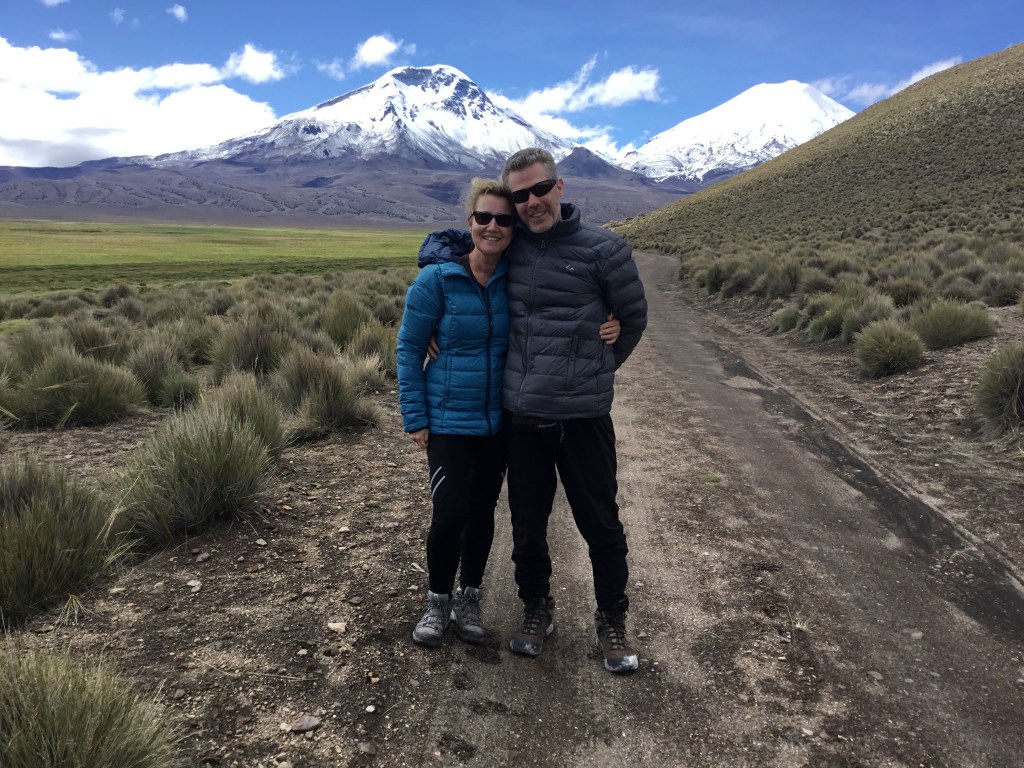
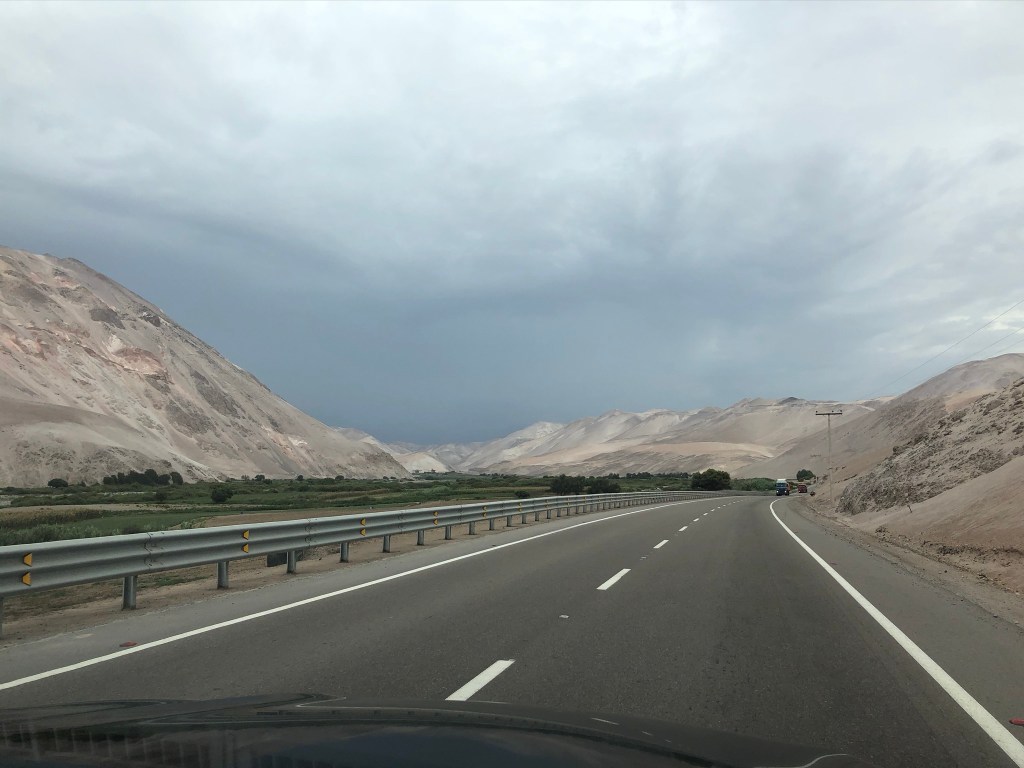
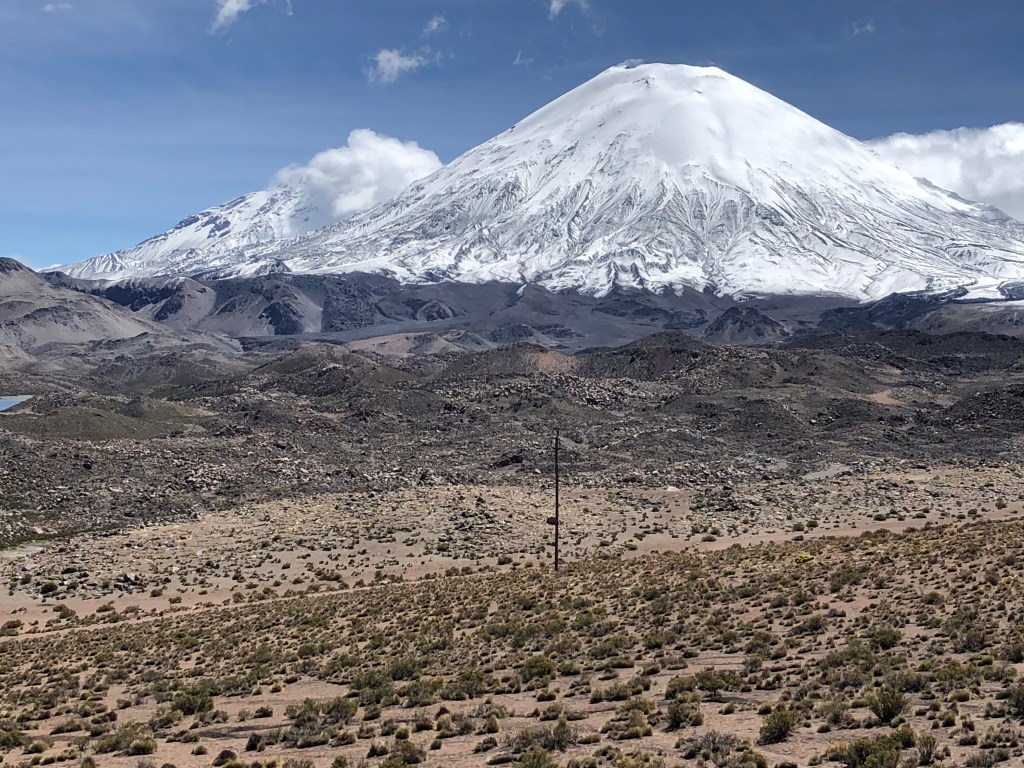
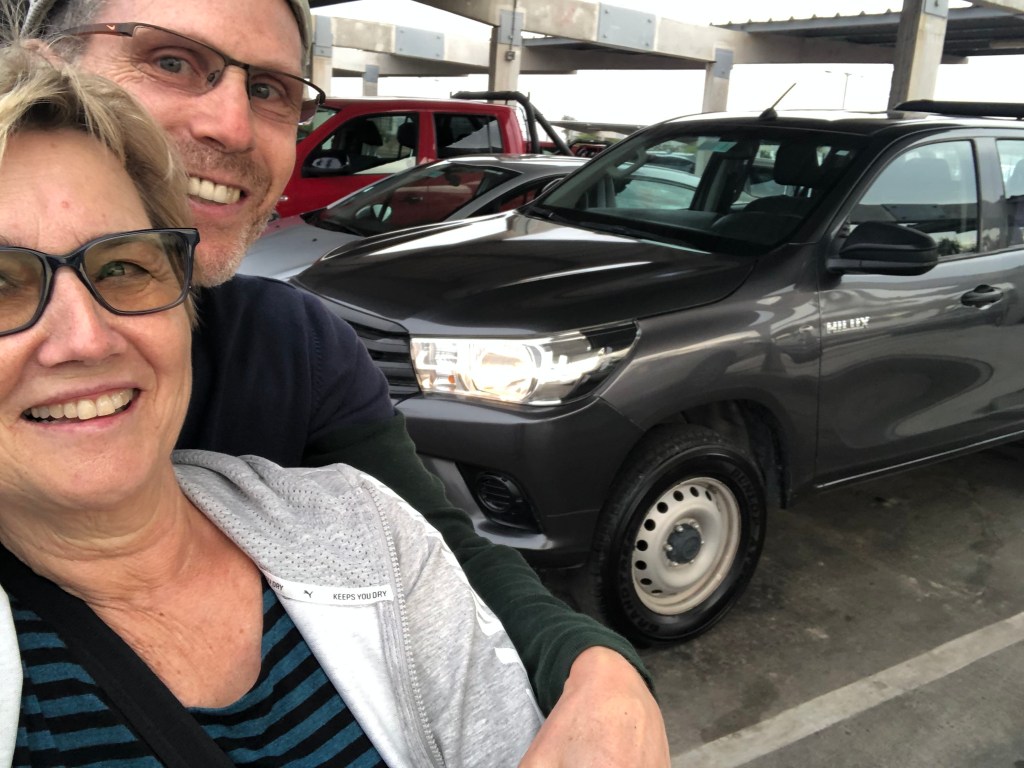
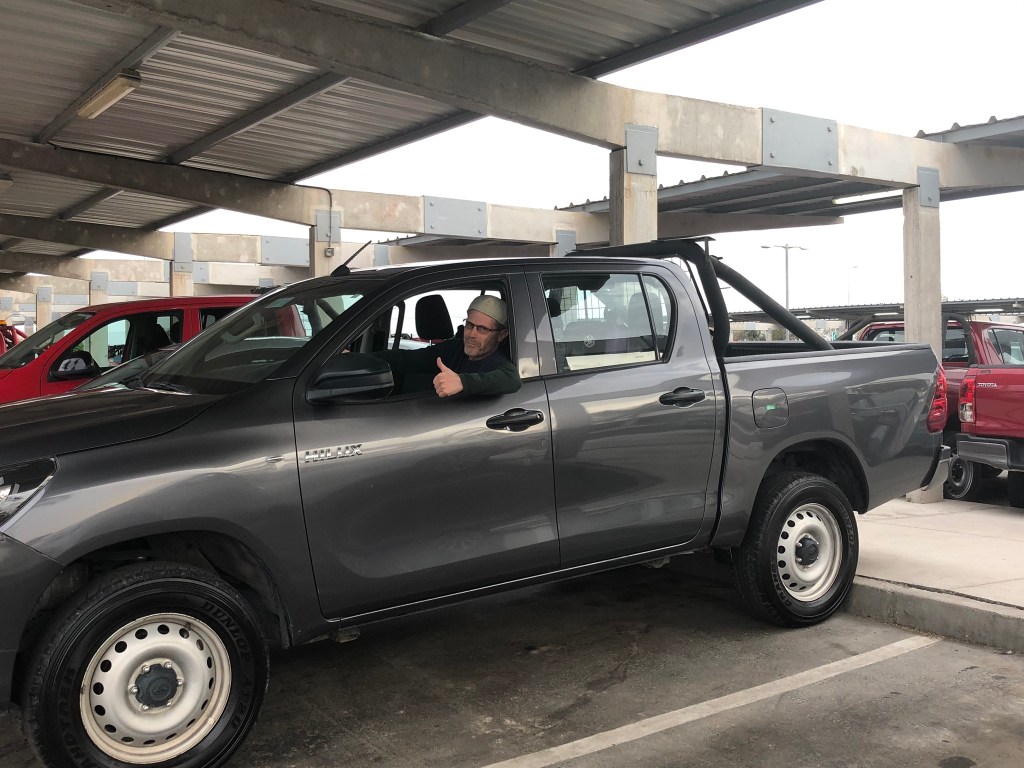
So off we went with our guide Augusto, in his 4-wheel drive pick-up. His Peruvian wife cleaned the windows inside and out, and bid us farewell. Truus and I had travelled this road on Monday, so we were anticipating the turn-off for the National Park. Along the way, Augusto gave us lots of information, and we stopped in a few places of tremendous beauty that we had previously blindly passed. When we got to the turn-off, Augusto kept going towards the lake we had seen the day before. After a few moments of back-and-forth, it was clear, not surprisingly, that we had had a failure-to-communicate moment. I was in the back seat, and Truus and Augusto were discussing options. In the end, we agreed that he would take us to the back side of the mountain, close to the Volcano. We would also see some villages on this route, and be back in Putre at the agreed upon time.
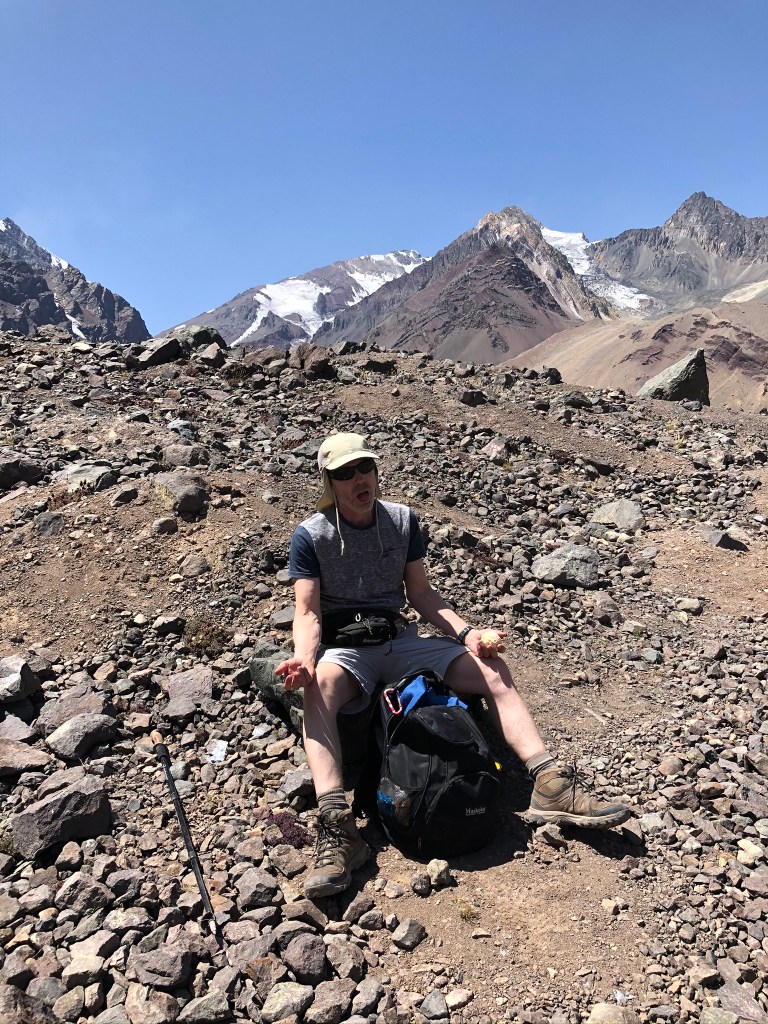
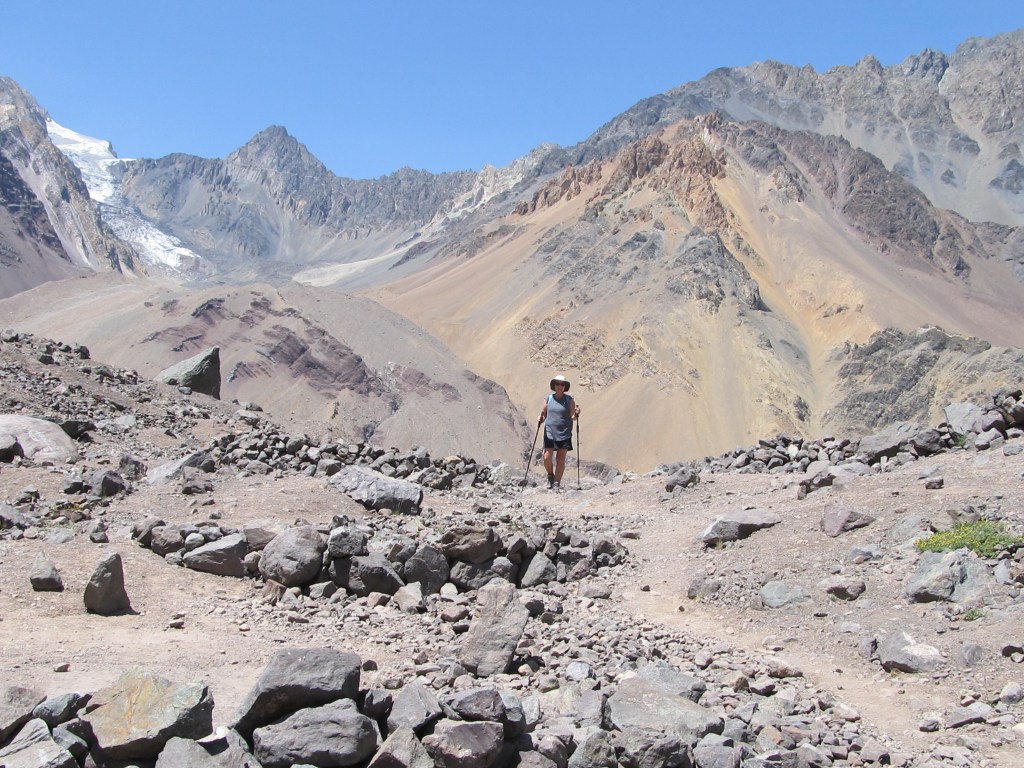
What we didn’t quite appreciate until later was that Augusto was primarily an alpine guide. He has climbed every mountain and volcano of significance in the North multiple times. He is of this place, and knows the topography like the back of his hand. He told me that he doesn’t even use maps, but can climb autonomically, ever aware of his location relative to the mountain. He is indigenous, and a climbing savant. Truus and I were suffering mightily at the 5000M elevation, but he was fully in his element. “Sometimes when I’m climbing a steep section of a mountain”, he explained, “It’s like it’s nothing, like it’s as flat as a pancake.” “Good to know”, I wheezed.
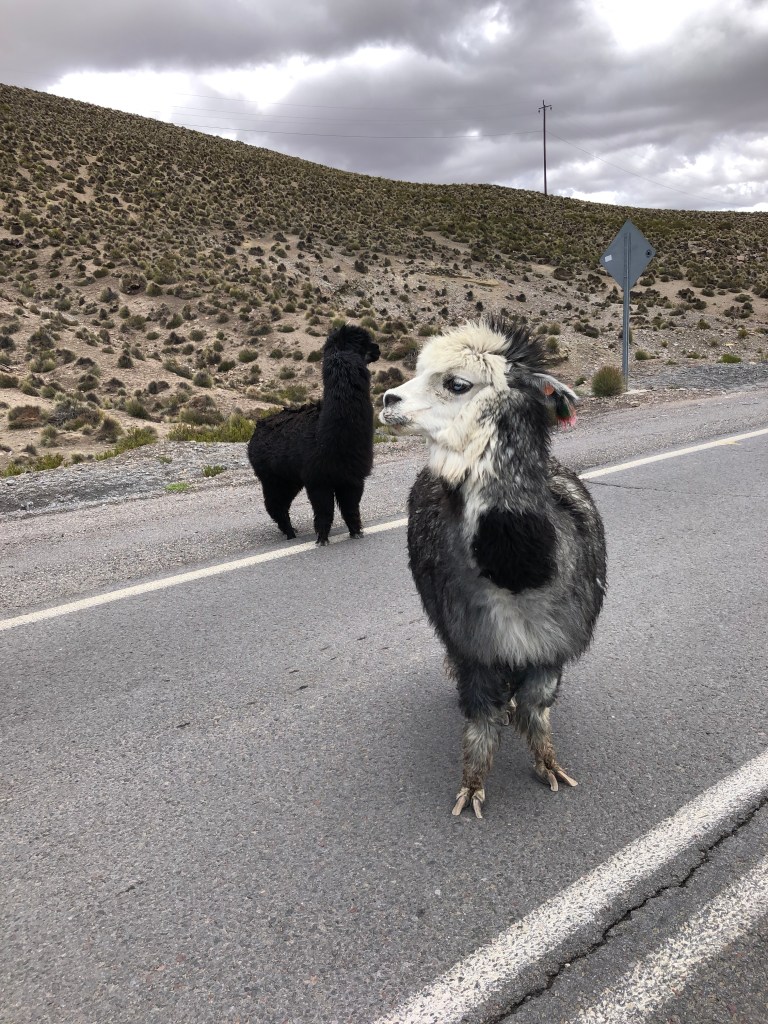
So our improvised day with Augusto turned into an amazing experience. We saw countless vicunas, alpacas, llamas, and another animal called a Viscacha. The Viscacha looks like a cross between a small kangaroo (stands on hind legs and hops) and a big rabbit. They’re actually oversized South American rodents – similar to chinchillas. They have long hindlimbs, and a long, bushy tail that curls behind them, making them look like something you might see in a StarWars movie.
We also visited a number of near ghost villages in the mountains. The former residents, mostly indigenous people, have largely abandoned these places. The young people left first, and the elders have mostly given up their homes. There are still a few stubborn folks who refuse to leave. Many come back once per year for a religous fiesta, led by a priest who travels to the village for the 3-day party.
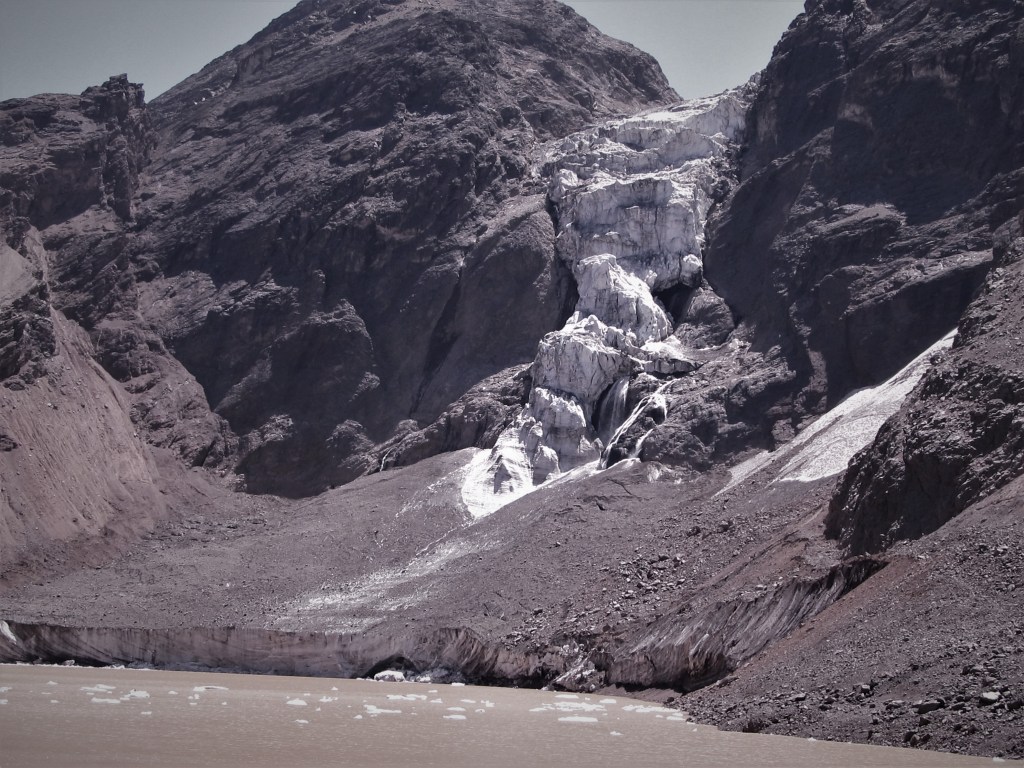
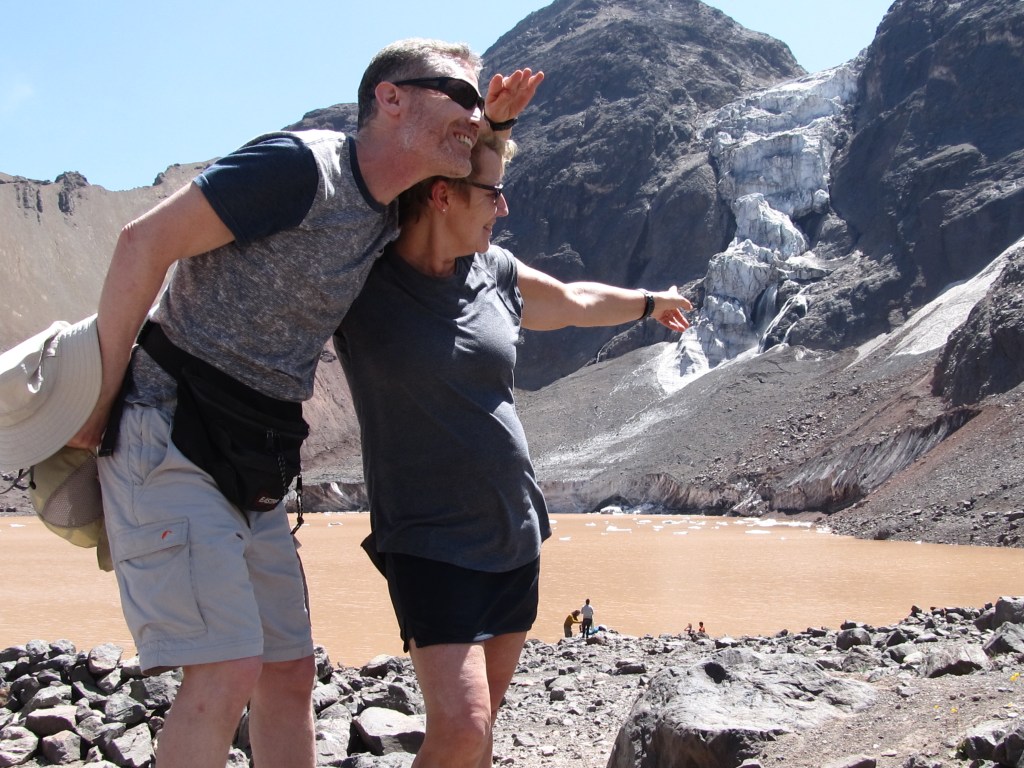
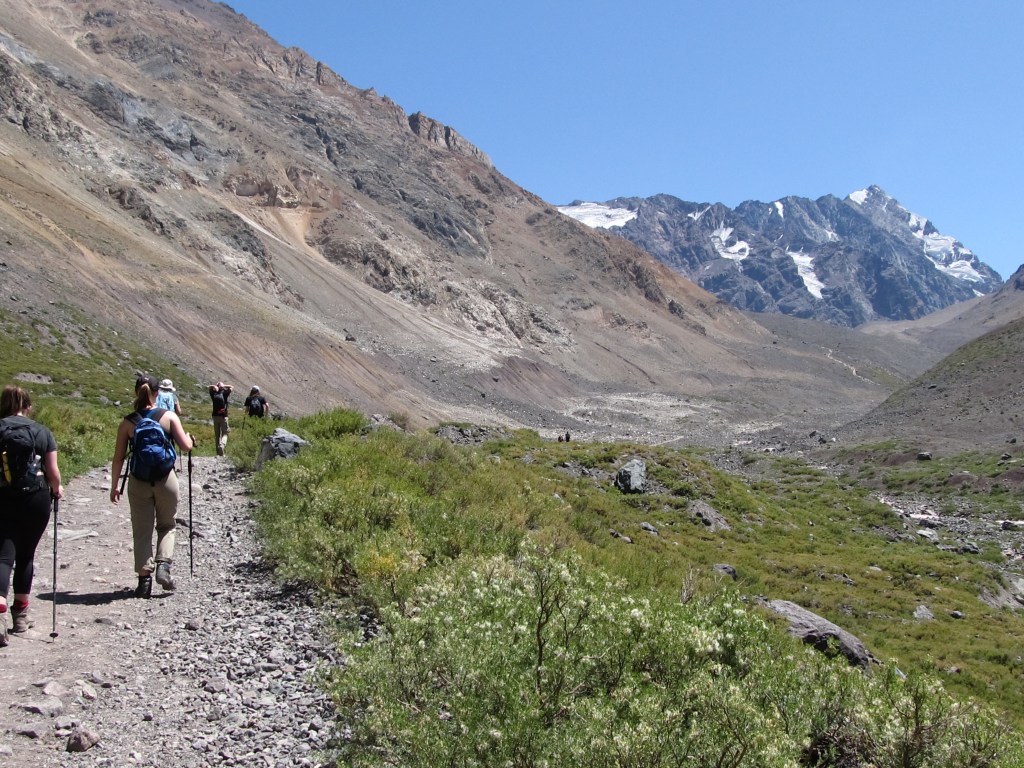
Truus, an aesthete of buildings in a state of collapse, was in her element. The missed flamingos promised by the trip to the National Park were fully forgotten, and we revelled in the beauty of the High Plains in the magical places between Chile and Bolivia.
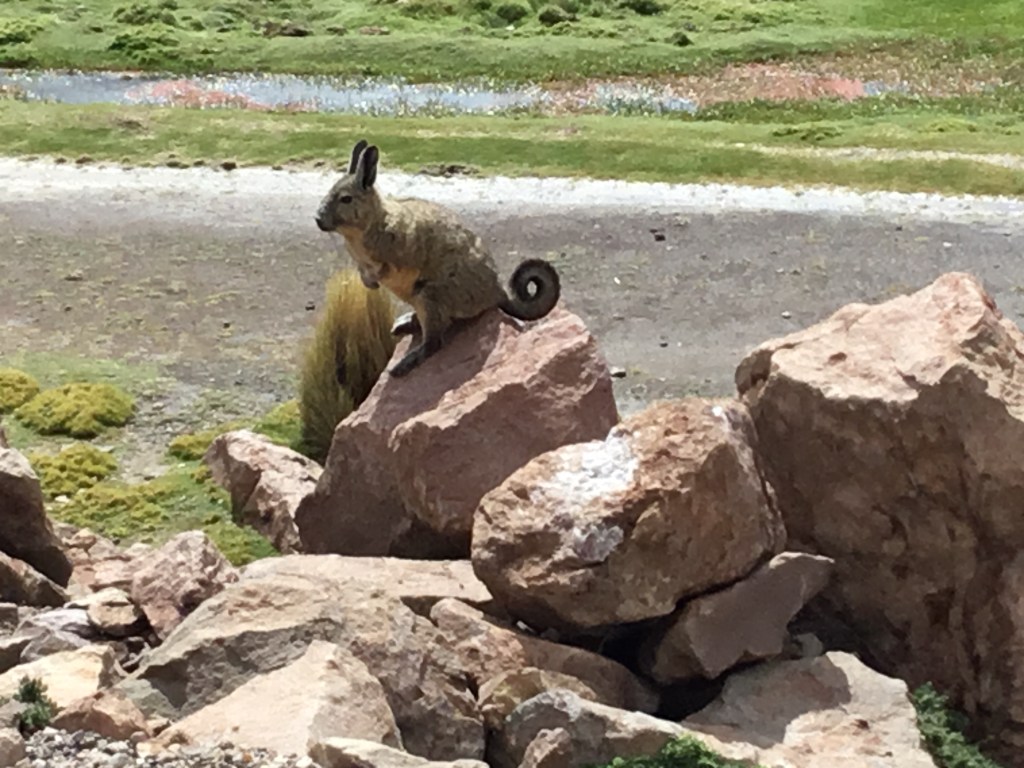
viscacha 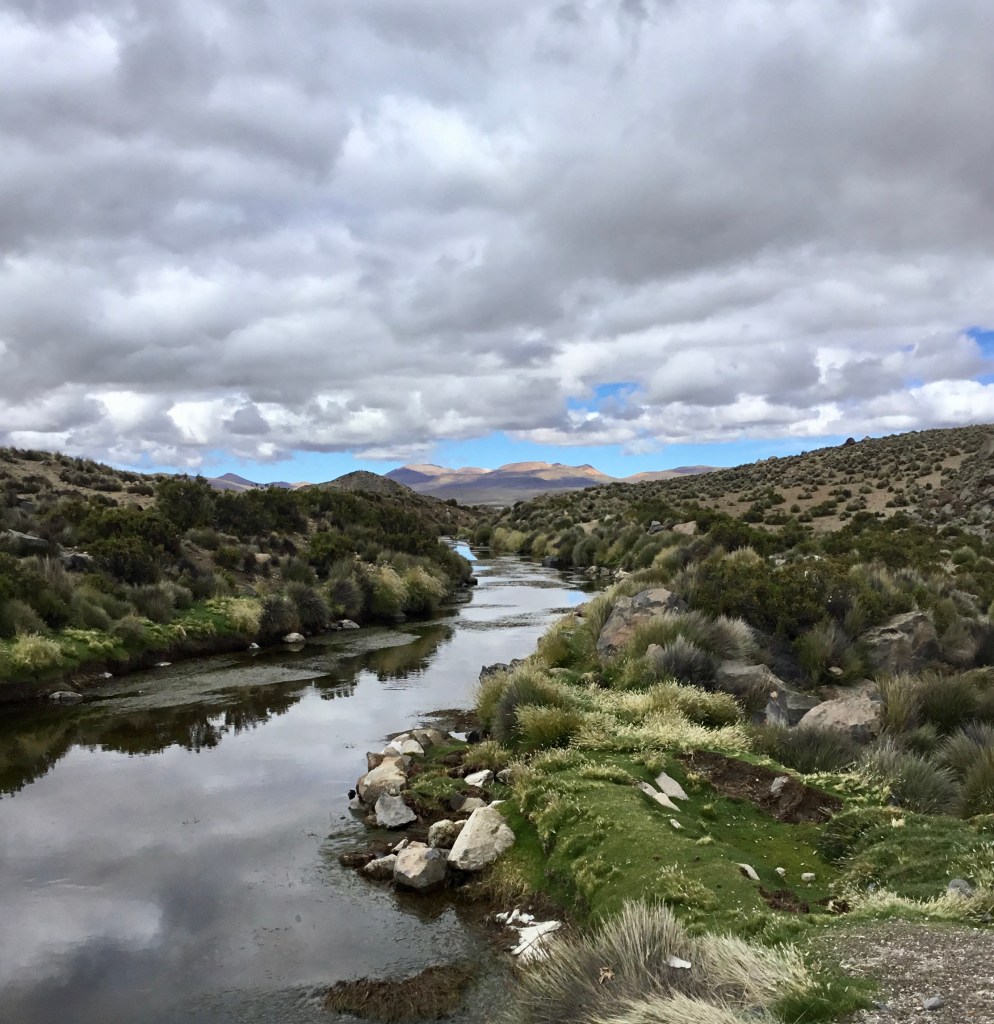
another MAGNIFICENT View 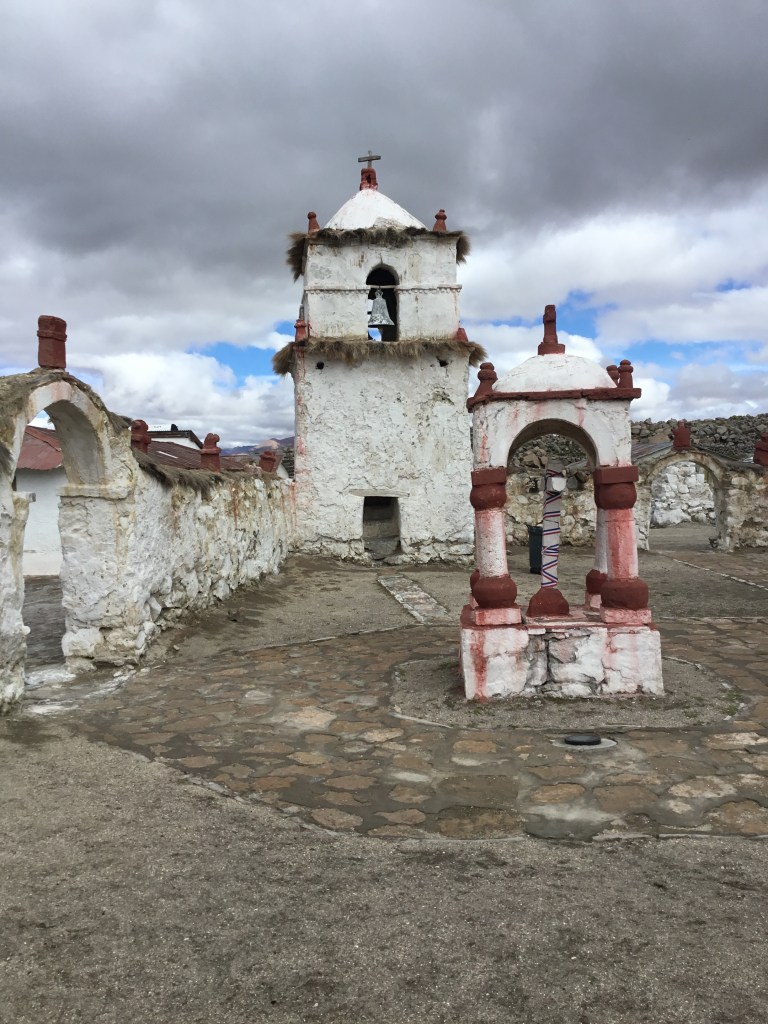
gHost village 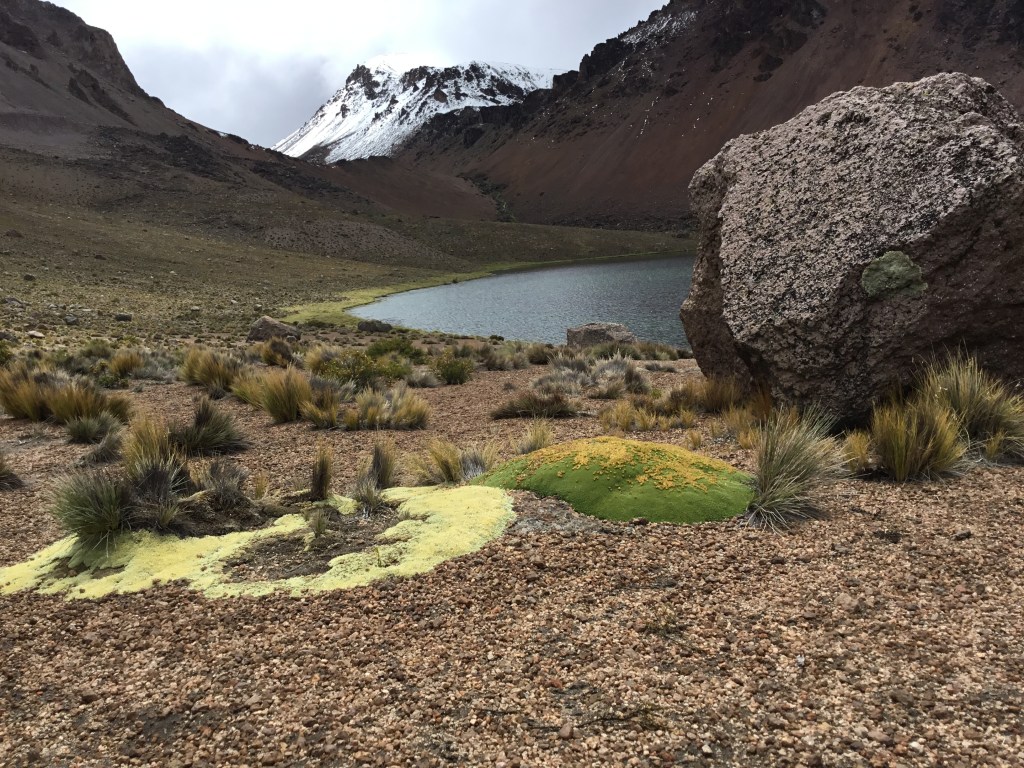
little lake at almost 5000m high
 Chilean Adventure 2020