Inspired by Chaim Potok’s timeless book, the 1981 movie “The Chosen” illustrates the Hassidic Jewish approach to analyzing religious scripture in the pursuit of meaning. The presumption is that names are not applied accidentally. Words contain deeper meanings that can, if interpreted properly, reveal the wisdom of the universe.
One passage from the movie has always stuck with me. The Orthodox character is explaining a key Rabbinical interpretation to his more secular friend, using this concept to illustrate how an obvious truth can be hidden in plain sight, imbedded in terminology.
The Hebrew word for king, and head, is “Mel”. The Hebrew semordnilap of this (Palindrome spelled backwards) – a term coined for words that spell a different word in reverse – is “Lem”.
In Hebrew, Lem means fool, and is also the Hebrew word for heart.
The message is that with your head in front of your heart, you are a king; but with your heart in front of your head, you are a fool.
According to legend, the word “Patagonia” comes from “Patagones”, which was the name given by the Portuguese mariner Fernando de Magallanes (better known to us as Magellan). The story goes that Maggs and the boys came-a-looking for a new travel route. His five-ship expedition travelled south along the Atlantic coast of South America searching for a passage to reach the West Indies. Unsurprisingly, the insane weather and treacherous winds forced them to take shelter and park in this part of the world to wait for what he hoped would be calmer seas in the Summer (spoiler alert – the winds are worse in the summer).
Coming ashore, Magellan is reported to have seen huge footprints on the beach made by the native people. Magger is said to have coined this name for these strange large people, taken from the giant “Pathoagón”, a character from the knighthood novel Primaleon.
So that’s what the so-called experts say. Based on our experiences in Patagonia, my take is a little different. Let’s look at the root of the word – PatAGONIA.
The word Agonia comes from;
- Greek – “struggle,” – “gathering, to contest for a prize”
- Intense pain of mind or body.
- a strong sudden display of emotion
- of severe mental struggles and emotions, agony, anguish
The word Pat comes from;
1. Latin, where it has the meaning “suffer”
2. Late Middle English – a noun denoting a blow with something flat
No need to spend hours studying Talmud to figure this mystery out. Patagonia is a killing field – kills your spirit, your knees, your feet, your toes. Everyone we ran into had a war story about their own physical misfortune, or had a tale to tell about someone on the trail they had seen with a smashed face, broken leg, and worse.
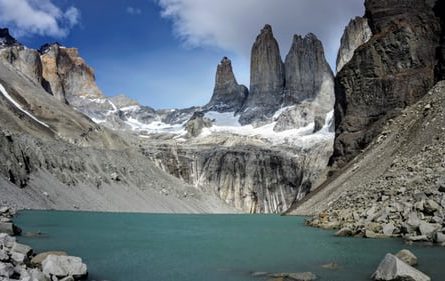
The W-Trek that we we’ve just completed is an exercise in humility. The “Towers of Pain” track lives up to its name. Though it’s breathtakingly beautiful, the views come with a hefty price. The elevations are staggering. You spend most of your time looking down at your feet so as not to trip on the billions of razor-sharp rocks, gnarly tree roots, and ankle-busting ruts along the way. One false step, and it’s a sheer drop down a rock face into an ice-cold glacial lake. Every year a couple of travellers unintentionally take this plunge, and the Chileans don’t even bother trying to look for the bodies.
That being said, as tough as the walk is on its face, there is a wildcard that takes it to another level entirely. Patagonia’s climate is defined by a single meteorological element: the constancy and strength of the wind. This is the windiest place on the planet. On the second day of our W, Truus told Howie and me that we were scheduled for an “easy” day – relatively flat first section, followed by a climb to our next refugio. The day started fighting a rising wind, and a driving rain. When we got to the “flattish” section of the walk, the wind was at gale force. The gusts felt like they were in excess of 150 km/hour. The sound of the wind was unreal. It was all we could do to stand up in the face of these forces. The first time it hit, I got tossed into a thistle patch. At one point, all three of us were flattened for minutes at a time, lying on our backs, balanced on our backpacks, legs flailing in the wind like a family of aging beetles.
Somehow, we struggled through the worst of the wind tunnel. Unfortunately, we had another 7 hours of humping through hell in front of us to get to our overnight destination. It was our longest and hardest day. Truus led most of the way, as she did for most of the week. Her spirit (and body) was bruised, pretty badly, but never broken by Patagonia. Howie and me hung on somehow, clinging to the promise of cold beer and the illusion of “the worst is behind us.”
Still hard to wrap my head around the whole experience. It took a lot of heart to decide to take on the W-Trek, and our deepest reserves of determination to complete the task. Clearly this is one time when, for better and worse, foolishness carried the day.
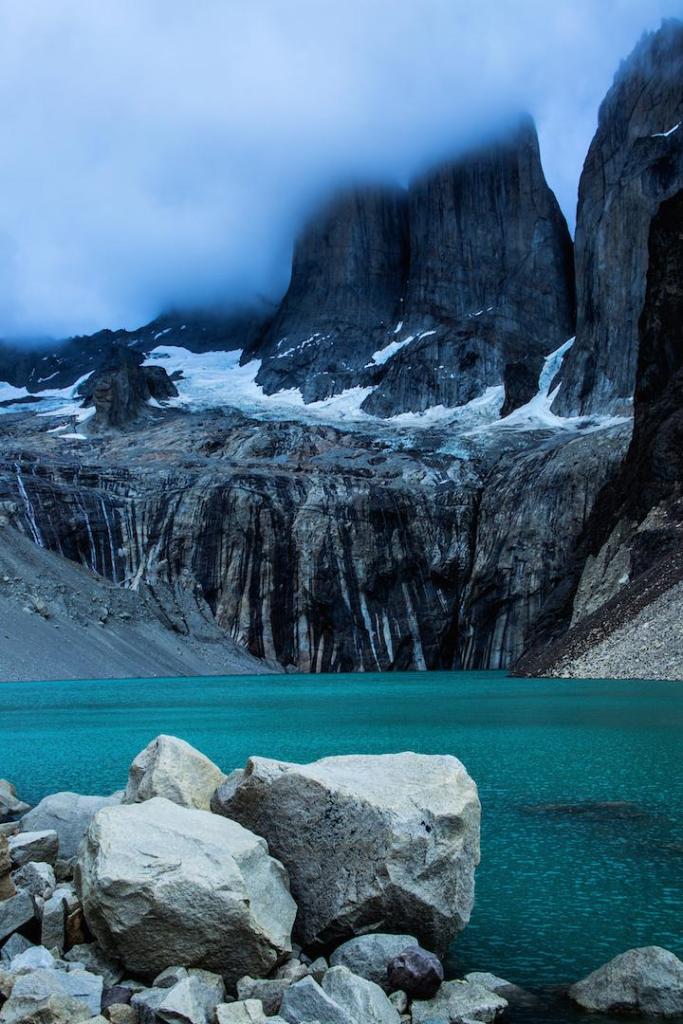
Day 1: base of the torres del paine 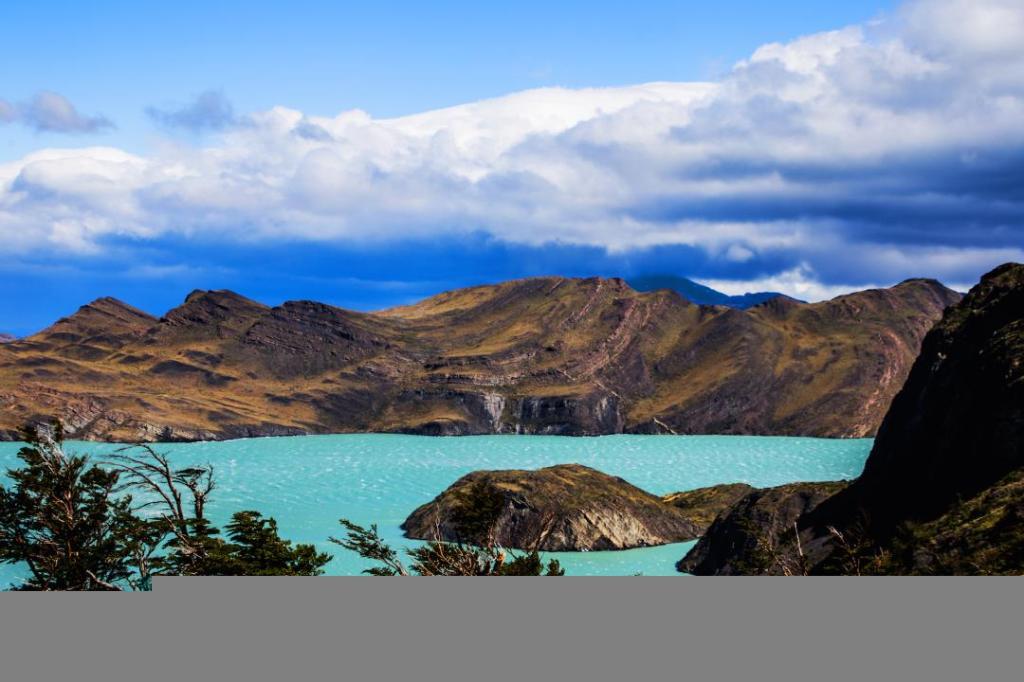
day 2: nordenskjöld lake 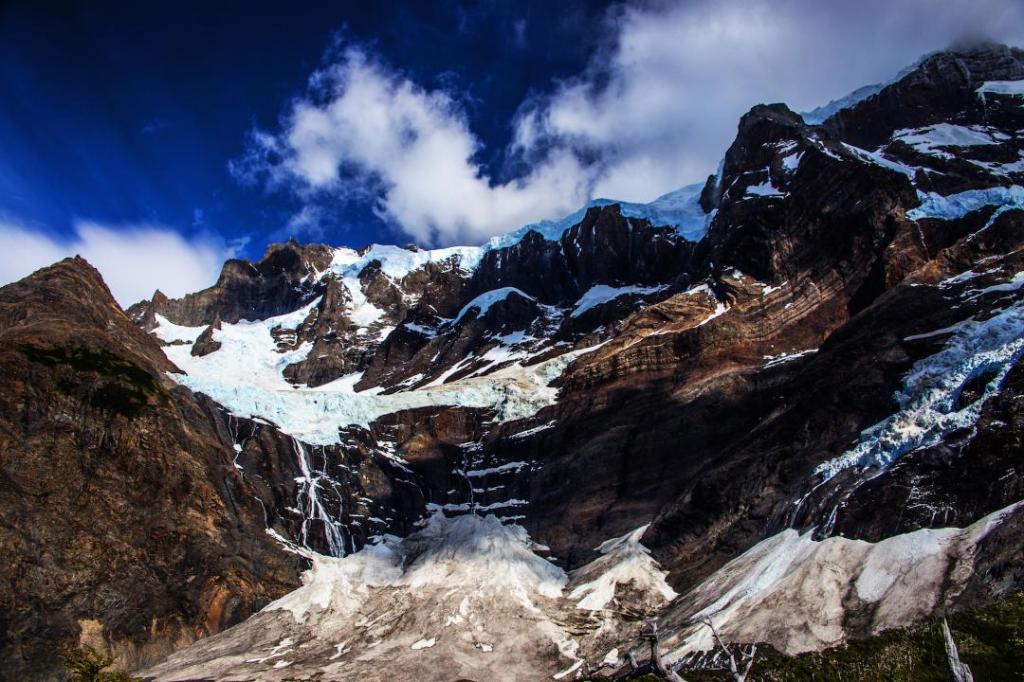
Day 3: lookout french glacier 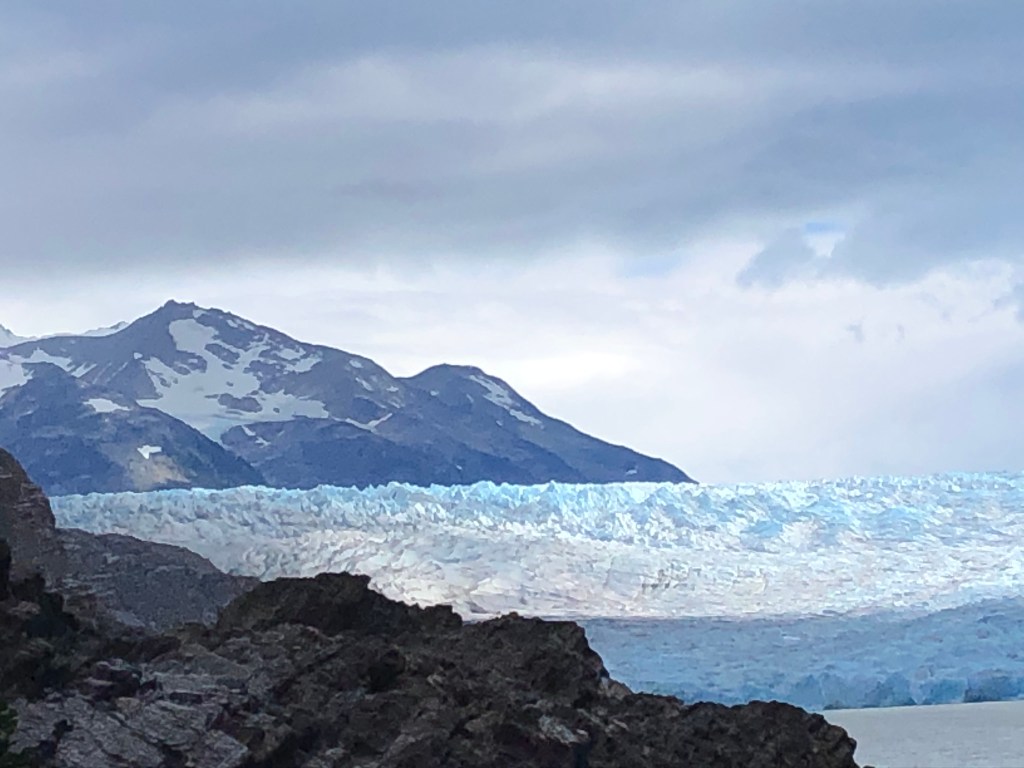
Day 4: grey glacier 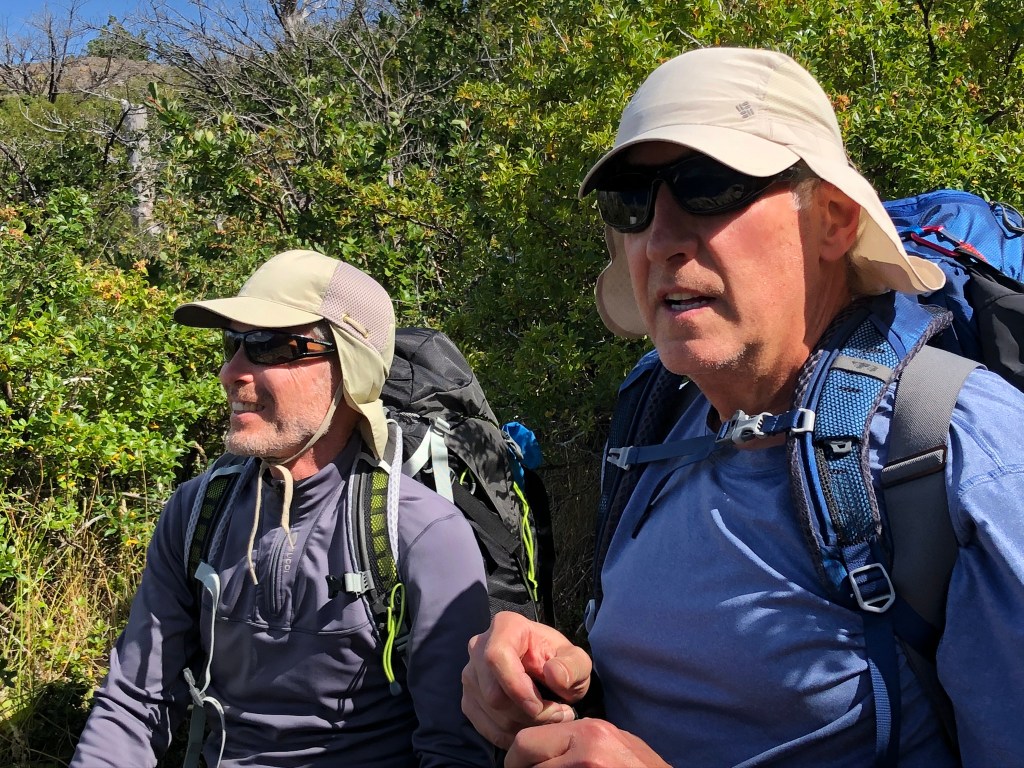
Priceless moment
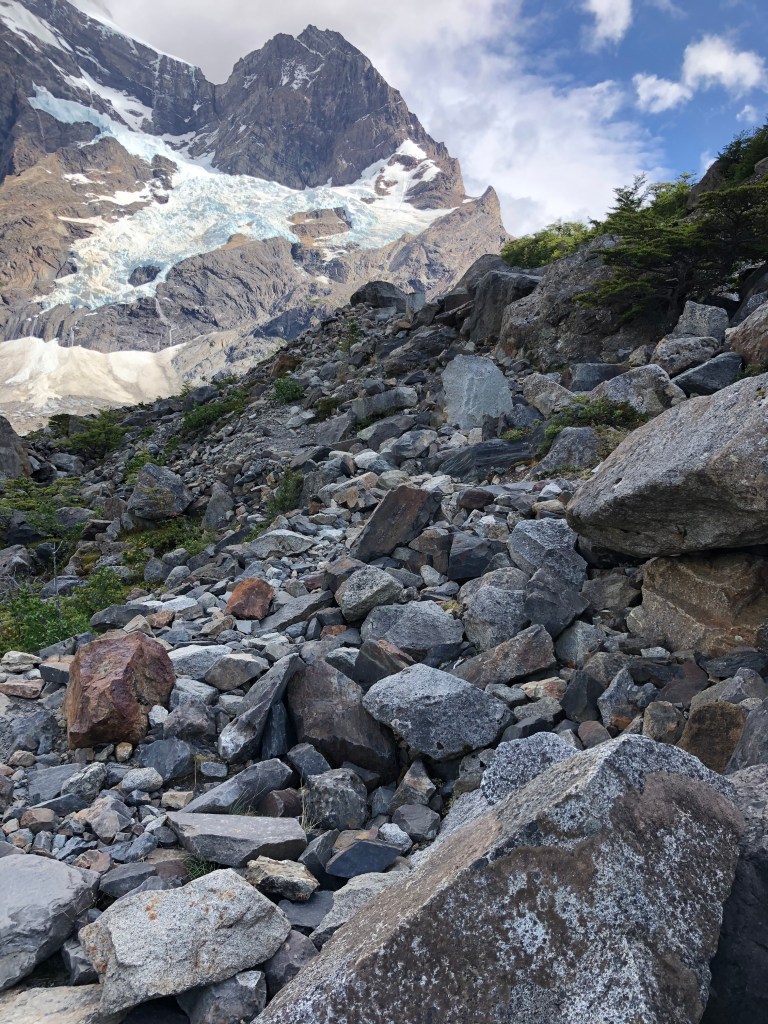
A trail we encountered daily! 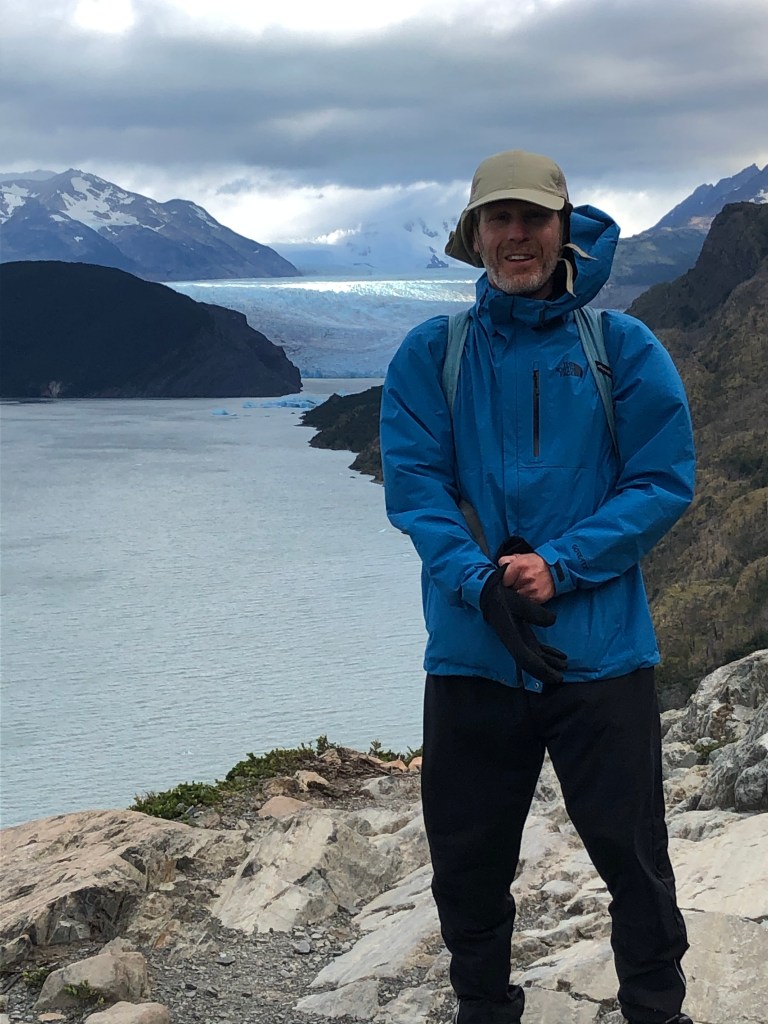
The last hike to grey glacier 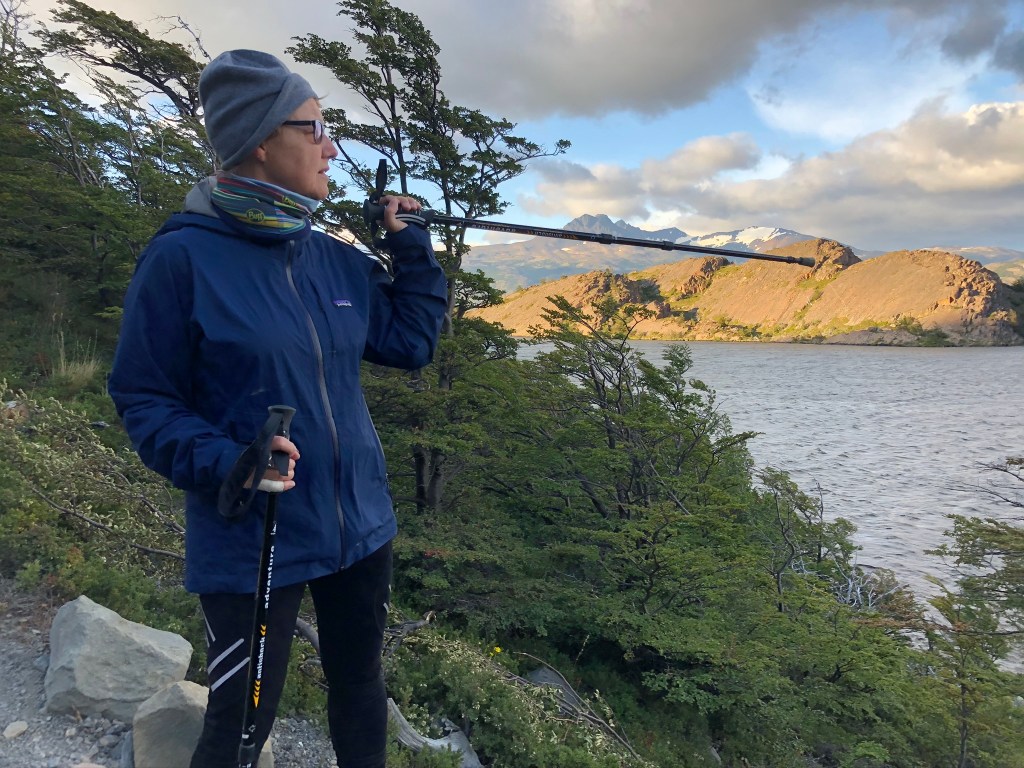
Again priceless scenery
 Chilean Adventure 2020
What an awesome accomplishment. Definitely not something I would even consider taking on. Beautiful pictures.
LikeLike
Sounds like the biggest adventure of all! Amazing pictures and stories to share. Glad you all made it through safely:)
LikeLike