Today we ventured out into Santiago to see some of the most important places before we leave for parts unknown a week or so from now.
Truus had a few places on our list. In the morning, we wanted to see the “Cemantarios General”, also known as the General Cemetery. For me, nothing says Saturday morningvacation like an early morning jaunt to a place of immense sadness.
Actually, it’s not entirely what you might think. This cemetery is more than a place of remembrance and reverence. The cemetery is, in its scale and structure, kind of a roadmap Chilean society and recent history.
First a bit of info for you, to put things in perspective. The cemetery is one of the largest in all of South American. It was founded 200 years ago. The number of “residents” is more than 2 million. It is likely the size of a very large London Park – covering 210 acres. The grounds are filled with trees and hundreds of ornate sculptures. There are many mausoleums, large and small, housing multiple members of well-to-do families. The cemetery is the final resting spot for former Presidents, famous writers & artists, and dozens of other persons of renown.
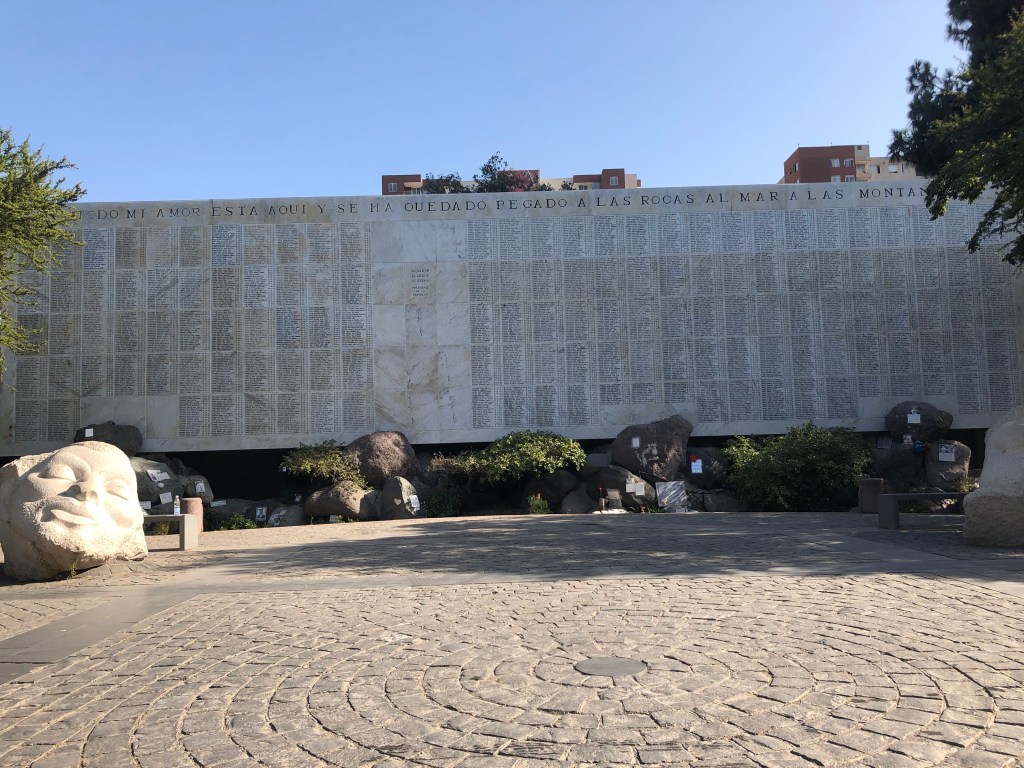
Augusto Pinochet is not buried here, but, in the centre of the Northern half of the grounds, is a massive wall and monument to the dead and disappeared – victims of the Pinochet government directed genocide that lasted for nearly 20 years. The monument is stark and simple but the families of the victims have humanized it by adding pictures and remembrances to those who were taken from them. In the centre of the wall is the name of Salvadore Allende. His body is actually buried in another part of the cemetery, but I’ll get back to that.
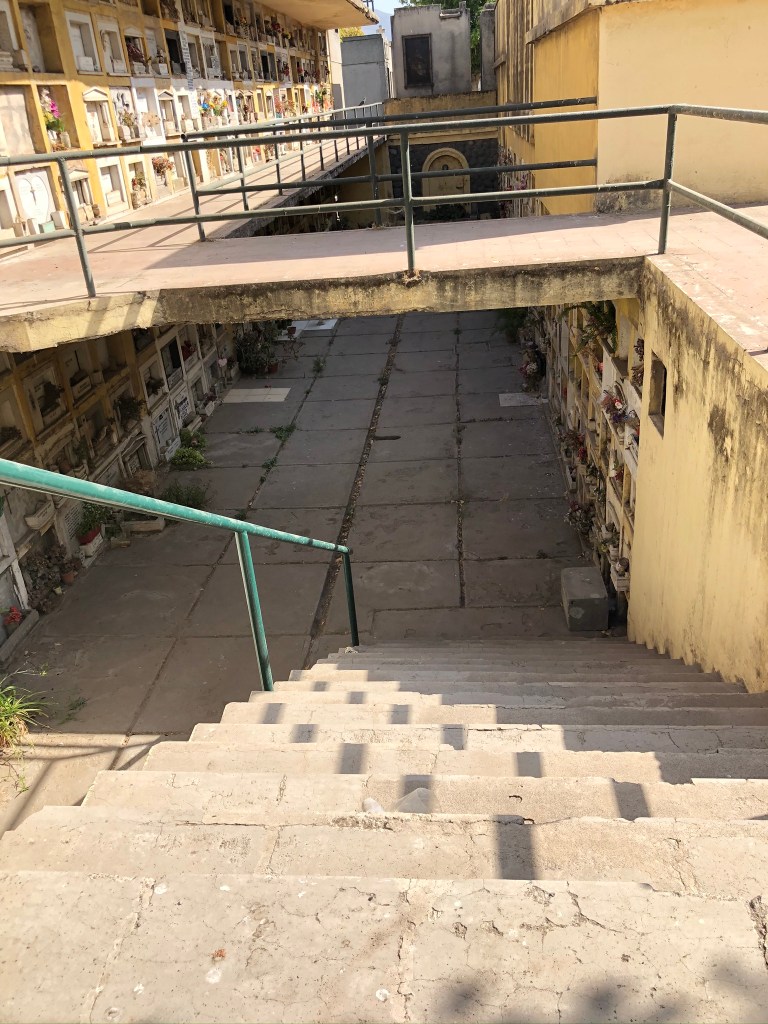
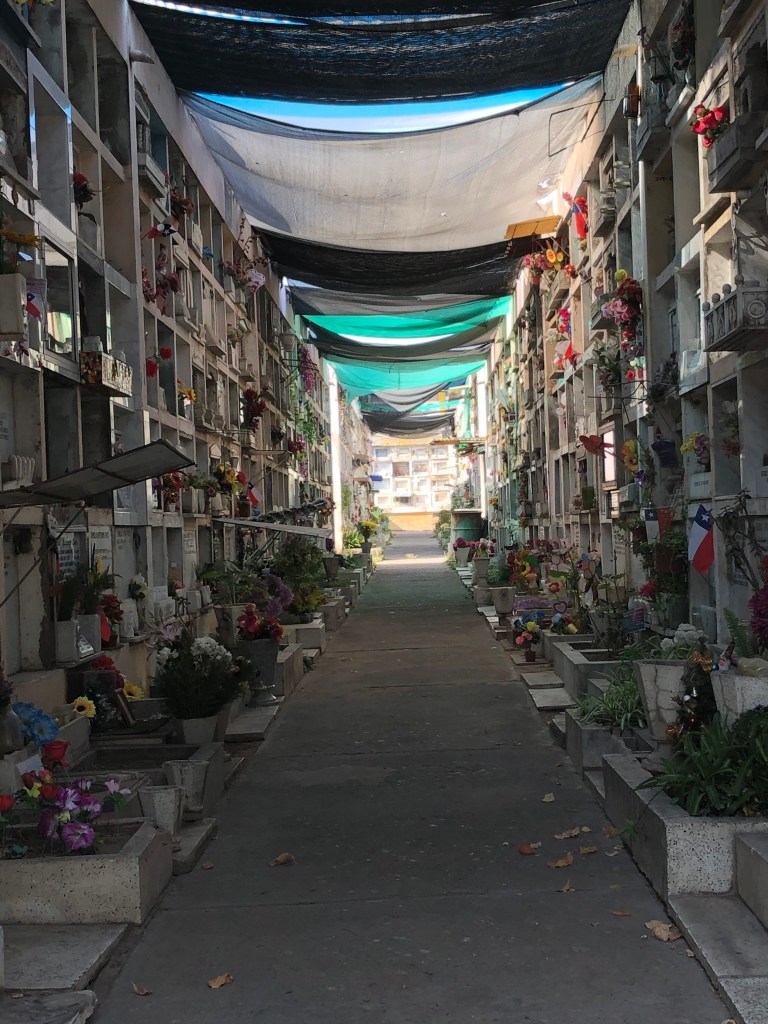
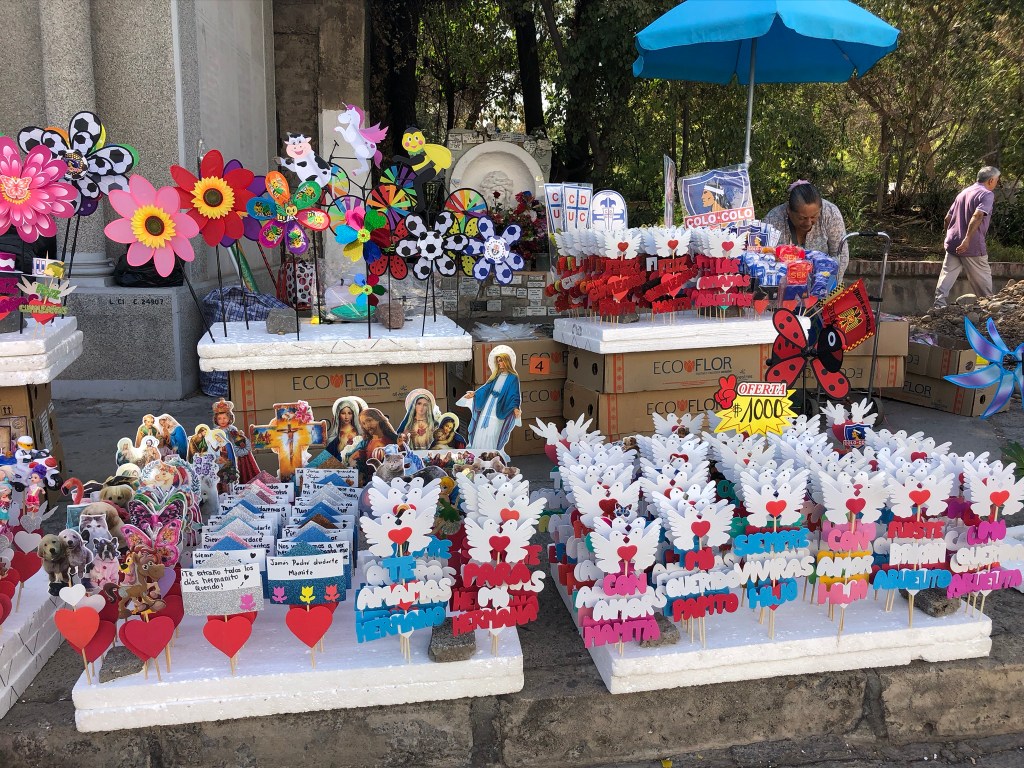
As we progressed further to the North, we were struck by the immense scale of the place. We passed many vendors setting up stands to sell refreshments, flowers, and grave novelties for those visiting their loved ones. The streets in the cemetery – yes there are roads and avenues inside the cemetery with names like, O’Higgins Way, Horwitz Road, and Monkeberg St. – fan out to the horizon. The structures housing the dead started to take on the appearance of low-rise Soviet Bloc apartments. These 3-4 story post-mortem condo barracks were massive. It basically felt like one giant Cosco of death. The grounds here are kept by a small army of male and female caretakers. On the walls, discretely placed, are signs saying “Your tips are our livelihood.”
As the morning wore on, we walked further and further into this place of grief. The number of Chilenos coming to visit relatives and place flowers or an offering on their resting place was truly astounding. This was a regular Saturday morning in Santiago, and the people, old and young, singular and in groups, came quietly and dutifully to pay respects.
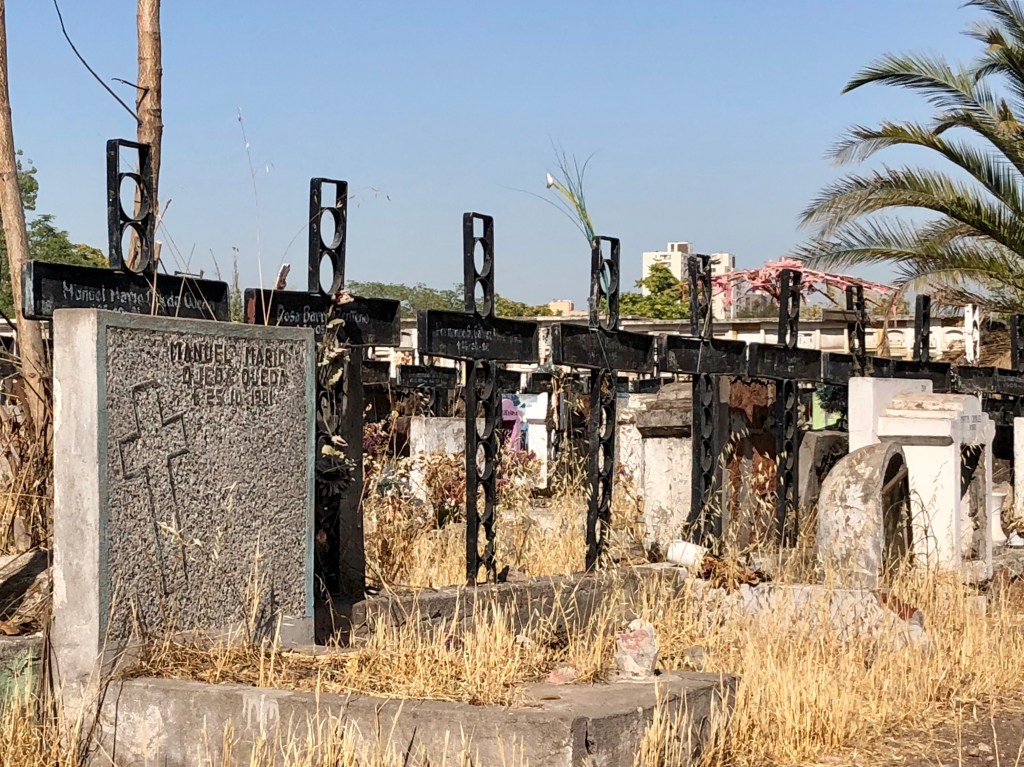
Towards the Northern border of the cemetery, we came upon an open field of sheet metal crosses. There were hundreds of them. The name of this place is “Patio 29”. At the beginning of the coup d’etat in 1973, government forces would randomly dump some of the bodies of the murdered in this place overnight. They erected crude crosses with the marker, “NN” or “no name” (no nombre). In the decades since the government has transitioned to a democracy, forensic scientists have worked diligently to try to identify the victims. It has not been an easy task, due to the fact that, in some instances, multiple bodies were buried together. Also, the victims had been beaten and disfigured beyond recognition. The importance of this undertaking to the people of Santiago cannot be overstated. Nearly all of the original makeshift crosses has been given a name. It doesn’t in any way reduce the pain and tragic loss, but it restores a kind of dignity that was taken from the victims.
No visit to this cemetery is complete without a pilgrimage to the burial monument of President Salvadore Allende. The late morning heat was rising fast, and we had, according to Truus’ fitness step counter, already covered a lot of miles. We pushed on and spent 20 minutes going around and around the Northern labyrinth like we were chasing Algernon the mouse. Multiple questions in broken Spanish to different people, helped not at all. We were lost, and I was ready to pull the plug. Truus, no surprise, was on a mission and wouldn’t relent. Back at the entrance to the cemetery for the third time, and a super friendly security person put us on the right path. Ayenda’s resting place was on the SOUTH half of the cemetery.
The Southern half of Cementario General is a different world. This is the high rent district. The crypts and mausoleums are beyond grand. We’re talking Trump mausoleum grand. The moneyed people of Santiago have/had a serious case of grave envy. The names of the architects are carved into the sides of these structures as a kind of advertising to future clients. Most of the biggest structures are for people that are not listed in the guide as persons of note. They were/are not kings, but rather aristocrats and captains of industry. The irony is almost too much to bear – they mostly paid for their luxurious final places of internment via the labours of those many souls resting in the North.
We turned to the pathway leading to Allende’s place. On the way, we came face-to-face with a friendly-faced Chilano boomer riding a massive Kowasaki motorcycle. He pulled off to the side of the pathway and stopped to let us pass by him single-file. He smiled at us and said in Spanish, “Looking for Allende? You’re almost there, just another 60 metres straight ahead.” A little further on and we saw a large wooden cross looming. When we got around to the front we could see it was a massive crucifix. Around the figure were candles and tributes to relatives passed. Turns out that there are two versions of this crucifix. The one we were looking at was “Christo Rico”, or Rich Christ. On the North side of the cemetery, a more modest “Christo Pobre”, or Poor Christ, looks after the economy passengers. Even in death, perhaps especially so, the line between the haves and the have-nots is stark in Chile.
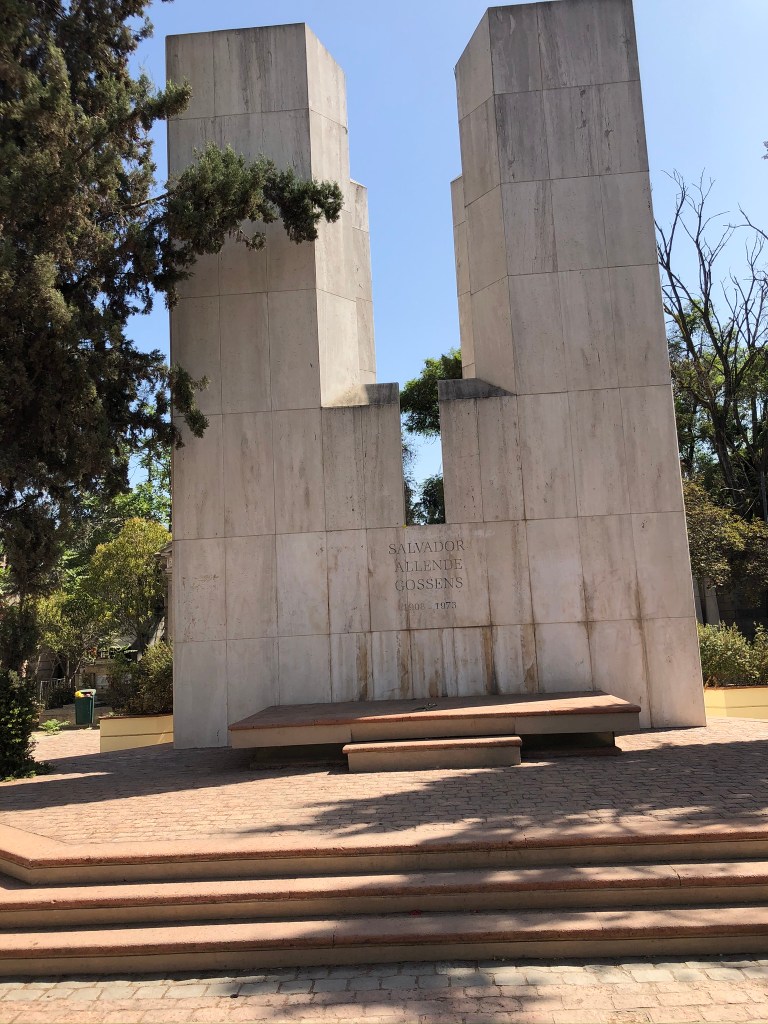
Salvador allende
canchas deportivas
 Chilean Adventure 2020
Ahhhh….I bet it ain’t no Pardes Shalom!
LikeLike